Many investors assume that the lower the passive fund fee or tracking error, the higher the return. This is not always true. We dispel these notions using material for a talk we are preparing for.
1. ETF tracking errors published are non-representative. All tracking errors are highly non-intuitive and hard for normal investors to appreciate. For ETFs, the problem is that tracking errors are computed with the NAV, not the price. The returns we get are based on the ETF price. So, the tracking error should also depend on the price, which is how we compute it for our monthly ETF screener.
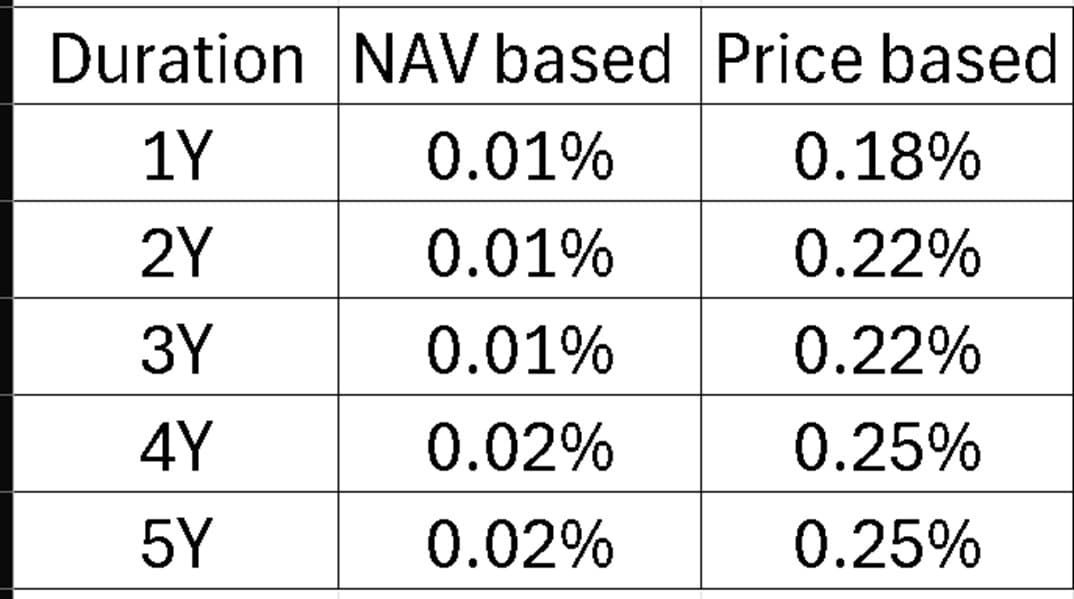
Notice that the price-based tracking error is ten times larger! Shown below are tracking differences based on NAV and price. This is just the ETF return minus benchmark return and should be the metric of choice for investors as it is simpler to understand.
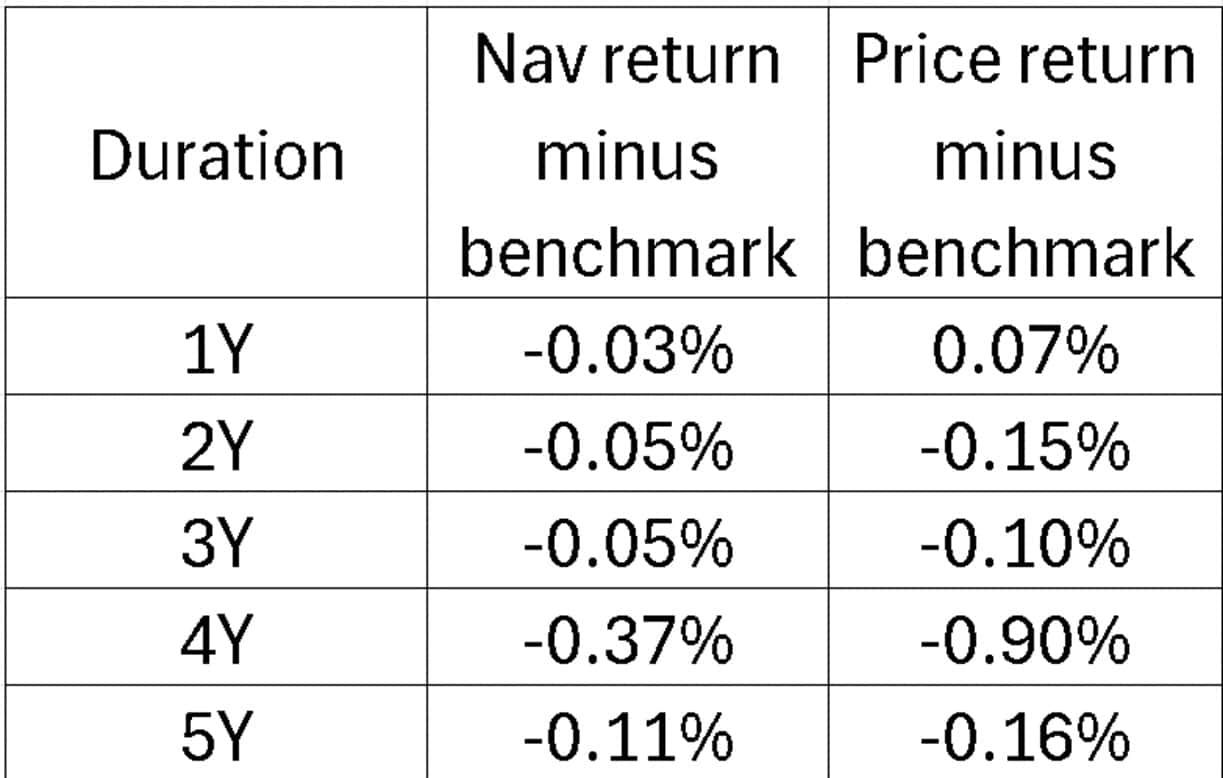
Both tracking error and tracking difference should be ETF price-based.
🔥Secure your future with our Robo-advisory tool trusted by over 3,500 investors and advisors. From effortless retirement planning to funding your children’s biggest dreams, turn your financial goals into reality. 🔥
Subscribe for money management solutions via email! (Link takes you to our email sign-up form) Join 32,000+ readers in our community.
👉 New Tool Alert! NaviPlan: A Privacy-Focused Multi-asset Tracker and Goal Planner 👈
2. Low fees do not mean higher return
Five and ten-year rolling returns of Nippon India Nifty 50 Bees ETF (price) and UTI Nifty 50 Direct Plan Growth Option. The forum for which these graphs were prepared prohibits mentioning specific product names. Hence, there is a vague legend in the graphs.
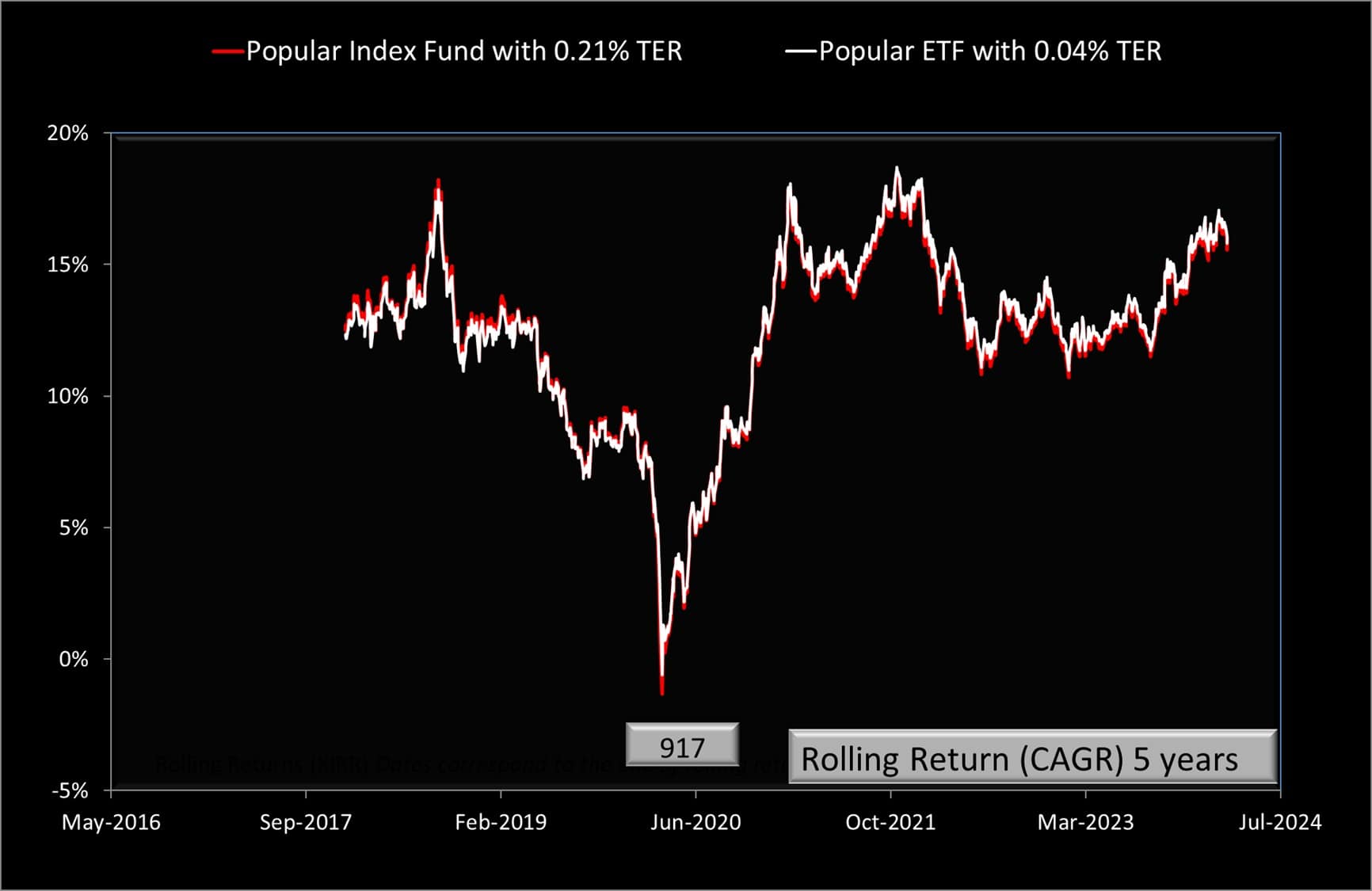
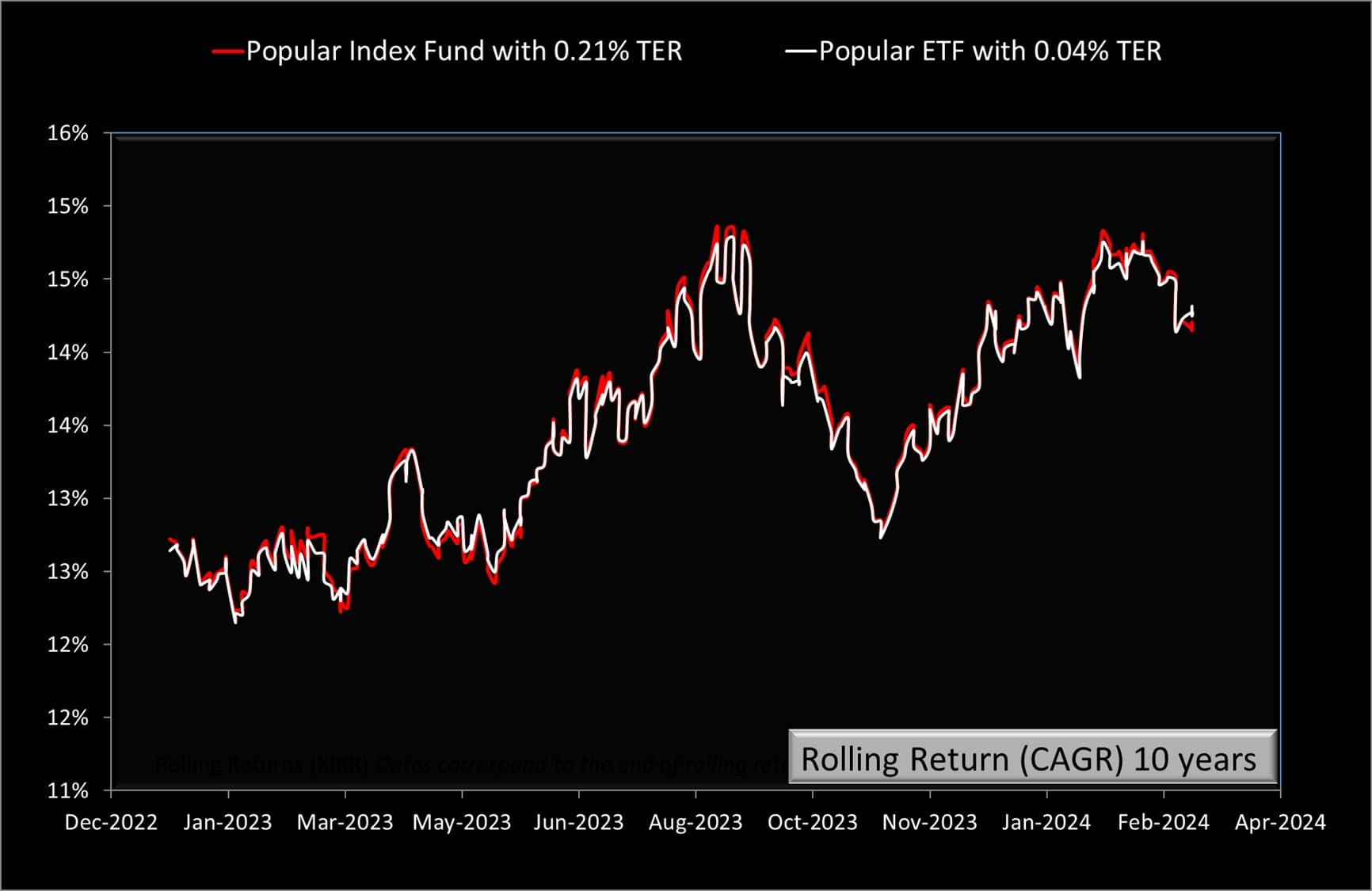
A lower fee does not always mean a lower return. On the other hand, a higher fee implies the fund manager may have to take some risk with the cash component of the portfolio.
3. Why price-based tracking differences are simpler and better.
Let us consider:
A: Most popular Nifty ETF (Nippon India Nifty 50 Bees ETF)
B: Nifty ETF with ten times lower AUM and volume traded 56 times lower. Amt traded: 59 times smaller (Mirae Asset Nifty 50 ETF, as of 13th March 2023)
Comparing the price-based tracking error, we may assume ETF B is “better”.
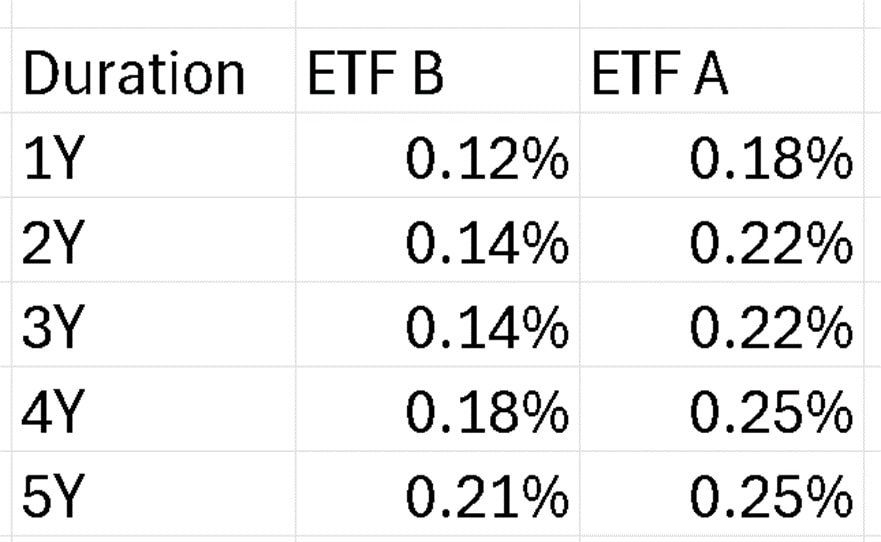
However, ETF A has outperformed if we consider tracking differences and returns based on price.
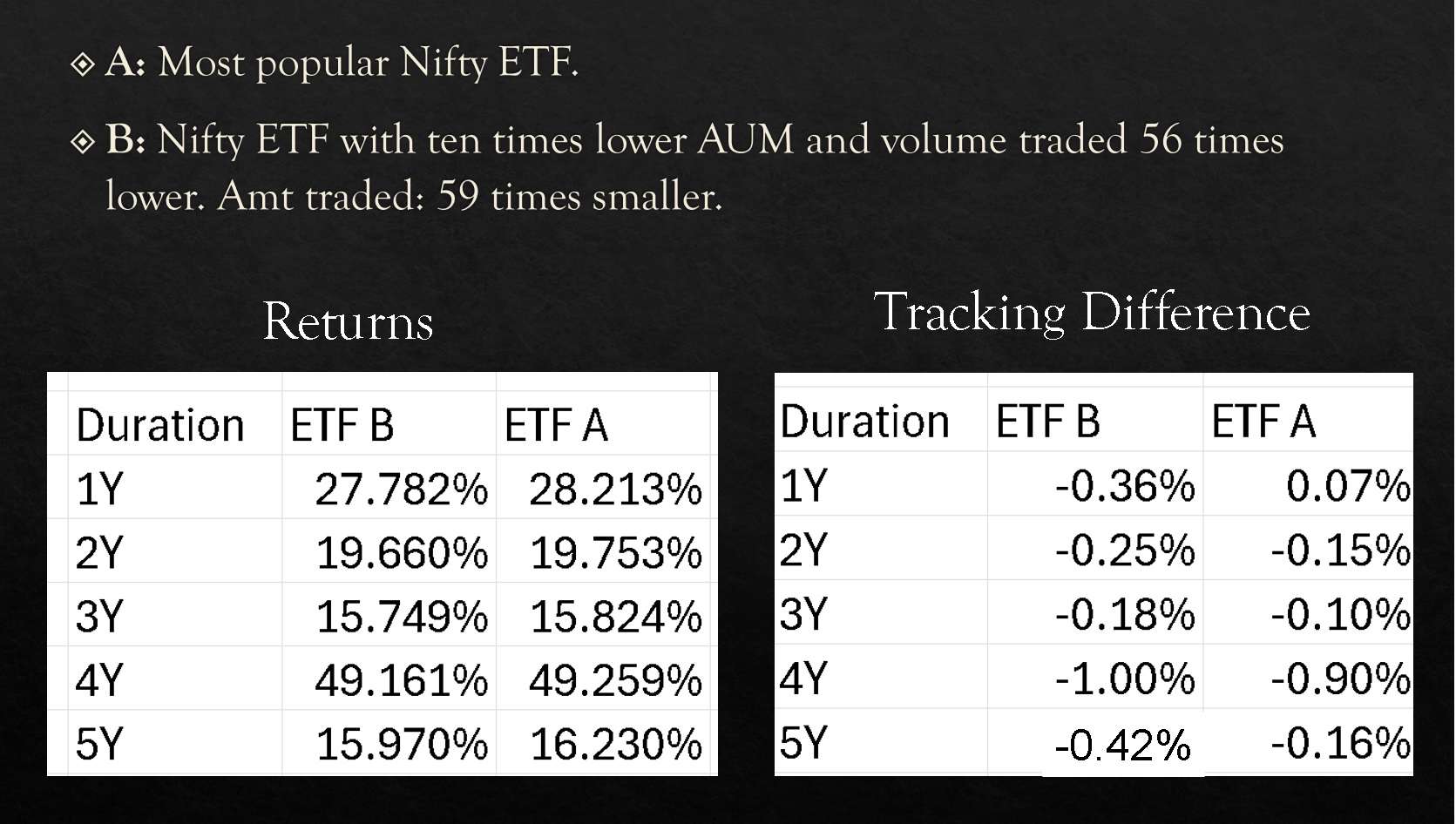
In summary,
- Tracking errors and tracking differences for ETFs should be price-based, not NAV-based.
- A lower fee does not mean a higher return.
- Lower tracking error does not mean higher returns.
- We recommend using tracking differences for both index funds and ETFs. This is simpler than studying traded volumes for ETFs.
- ETF or Index funds? Index funds are the best choice for retail investors unless you are trading in real time.