Last Updated on December 29, 2021 at 5:43 pm
In the past week, gilt mutual funds fell between 1-2%. Dynamic bond funds fell 0.8% to 1%, Banking and PSU funds, corporate bond funds and all categories of debt funds holding medium to long term bonds fell by varying extents. Why did this happen? Will it impact the stock? What it means to your investments.
The key player is inflation. In July it moved to 7% and RBI’s Households’ Inflation Expectations Survey pointed to a further increase in the coming months. This meant the overnight rate was kept unchanged by RBI this month and an increase is expected in the next meeting.
This means the demand for existing bonds has sharply come down in the expectation that new bonds with higher rates are around the corner. Since the NAV of a mutual fund depends on the current market price of bonds, it also fell.
🔥Secure your future with our Robo-advisory tool trusted by over 3,500 investors and advisors. From effortless retirement planning to funding your children’s biggest dreams, turn your financial goals into reality. 🔥
Subscribe for money management solutions via email! (Link takes you to our email sign-up form) Join 32,000+ readers in our community.
👉 New Tool Alert! NaviPlan: A Privacy-Focused Multi-asset Tracker and Goal Planner 👈
Investors must recognise that this will impact all types of bonds and all types of mutual funds. Gilt funds and dynamic bond funds would fall the most. Non-gilt funds such as Banking and PSU fund, corporate bond funds, credit-risk fund etc would also be impacted as their risk premiums are typically linked to gilt supply and demand.
The demand and supply in the bond market is measured via bond yield. Bond yield = interest income/ current price. When prices fall, the yield shoots up. Longer the duration of the bond more will be the fall in price if demand falls, more will be the increase in yield, more will be the fall in NAV.
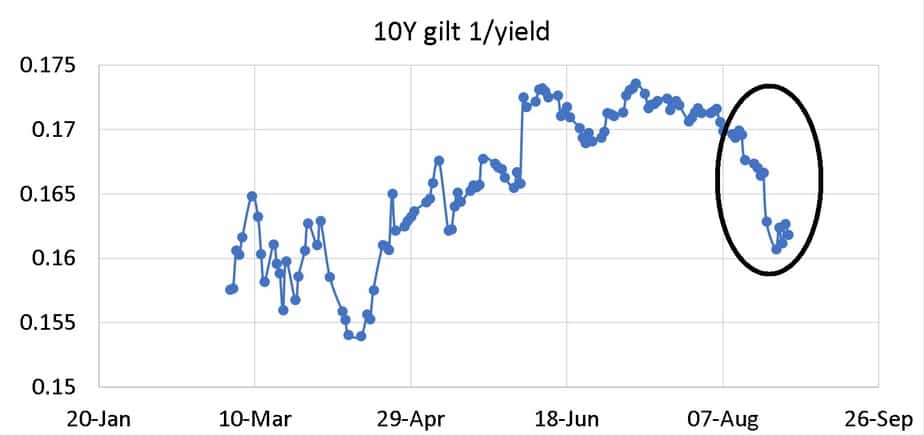
The 10-year gilt bond yield closed at 5.826% on Aug 5th. It shot up to 6.203% on Aug 26th. The RBI push the yield down to 6.147% on 27th by buying bonds maturing in 4-12 years (price increased by enhanced demand). The mere announcement that it would do so pushed yields down by 1% on 25th.
The inverse of the 10-year gilt yield from March 2020 to Aug 27th 2020 representing the sharp fall in bond prices and subsequent RBI rescue action.
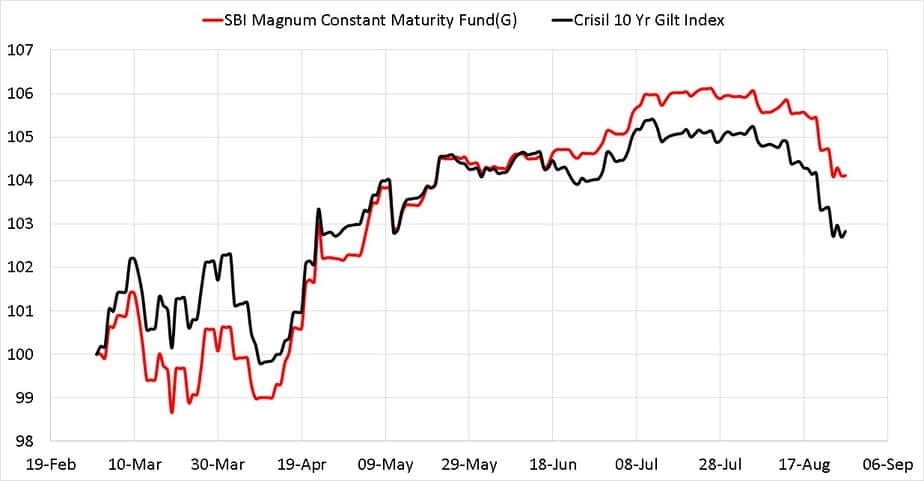
The NAV of SBI Magnum Constant Maturity Fund and Crisil 10 Yr Gilt Index from March 2020 to Aug 27th 2020 also shows the fall over the last few days.
If you are thinking, “small saving scheme interest rates and bank FD rates would increase again”, remember higher inflation means less money in your hands. So the “real return” from these investments would actually become lower. This is an extreme but illuminating example: Did You Know 10-year SIP return of Merval Index is 36%
Will this impact the stock market? What should investors do?
The gilt party is over. RBI cannot stop the yields from moving up beyond a point. Inflation is expected to be high over the next few months and the rates will have to go up. This is bad news for both the stock and bond market. Investors holding any kind of medium and long-term bond (gilt or otherwise) should expect significant volatility and poor returns over the next few months.
If you are shocked by the recent fall in debt fund NAV then you are invested in the wrong product. The worst mistake an investor can do is look at “good returns” from gilts and enter only to see the NAV keep dropping because the rate cycle has reversed.
The inexplicable stock market recovery may be expected to at least slow down due to these developments. Higher inflation and higher rates will affect both consumption and productivity. Like we have been saying for a while now, a sideways movement over the next couple of years seems likely. Read more: 150% profit but only 9.6% return?! Why you should fear sideways markets
So what should investors do? Use medium and long-term debt funds only for long-term goals with proper risk management. If you are using gilt funds there are only two options: (1) systematically rebalance with equity and manage risk as per the financial goal or (2) time entry and exit via a method such this: A tool for tactical buying and selling using moving averages. The associated backtest study is here: Can we get better returns by timing entry & exit from gilt mutual funds?
As regards the stock market, if your goal is decades away, this is the perfect time to regularly accumulate mutual fund units or stocks without wasting time waiting for a market fall. The only caveat is that you should not expect returns immediately! See: Avoiding these common mutual fund mistakes can make a difference!