Last Updated on October 15, 2025 at 11:08 am
A reader says, “I am 30 years old and currently invest in the HDFC Sensex Index Fund for my equity allocation and the Parag Parikh Dynamic Asset Allocation Fund for my debt portion. Articles from freefincal have been very helpful in understanding and making investment decisions for myself. While I must not seek financial advice as mentioned, I would still like to gain some insights on the risks associated with a debt-oriented fund like the Parag Parikh Dynamic Asset Allocation Fund, particularly when considering it for long-term debt allocation. Are there any key metrics one should track for such a fund? I am also interested in understanding whether long-term debt funds can be considered a good option for rebalancing from equity. Any relevant articles or insights you could share on this topic would be helpful”.
Debt mutual funds are tricky objects. Their risks can be sudden and nknown. For example, a rate hike can result in a prolonged period of poor returns. Bonds can change their credit rating or even default. Most retail investors have a poor understanding of these risks.
Then there is the issue of tax. Tax from debt funds (holding more than 65% bonds) is taxed as per the slab. This typically discourages those in higher tax slabs. The main attraction towards Parag Parikh Dynamic Asset Allocation Fund (PPDAAF) is its tax status.
Tax status for funds like PPDAAF holding less than 65% and more than 35% Indian equity: Gains from units purchased on or before 2Y are short-term gains and taxed as per the slab, and gains from older units are taxed at 12.5%.
🔥Secure your future with our Robo-advisory tool trusted by over 3,500 investors and advisors. From effortless retirement planning to funding your children’s biggest dreams, turn your financial goals into reality. 🔥
Subscribe for money management solutions via email! (Link takes you to our email sign-up form) Join 32,000+ readers in our community.
👉 New Tool Alert! NaviPlan: A Privacy-Focused Multi-asset Tracker and Goal Planner 👈
The point is, we should never choose a fund only for its tax status without considering risks. Let us delve into the portfolio of PPAAF to learn more.
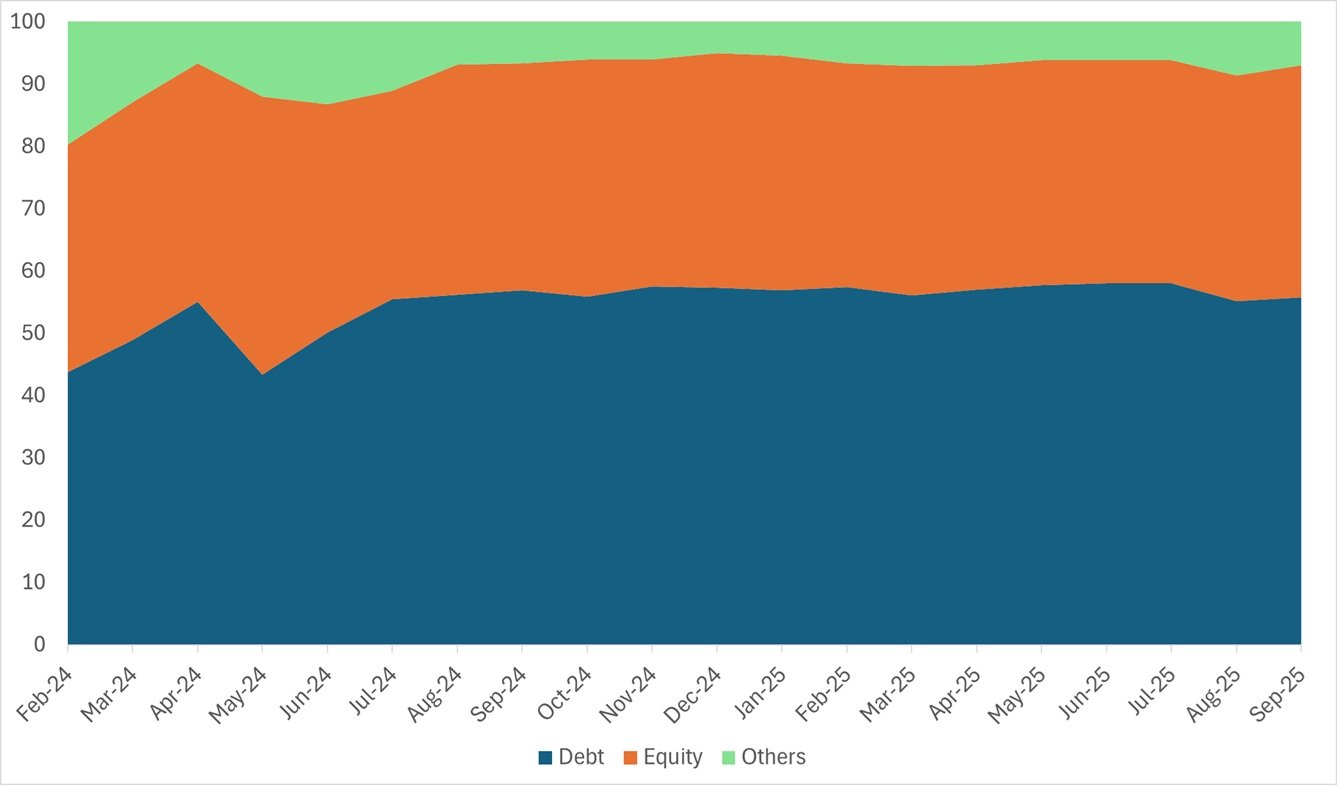
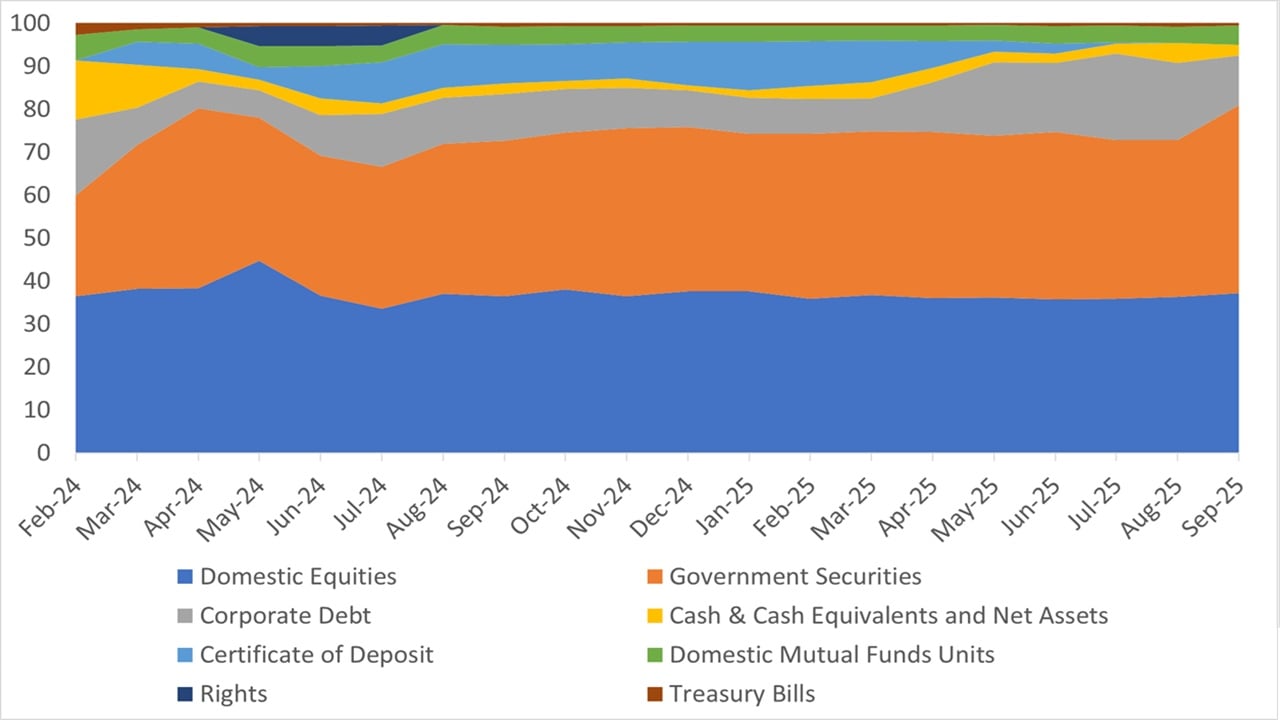
The average portfolio maturity of the bond holdings has ranged from about 4-5 years for the fund. This is well-suited for a long-term goal (> 10 Y). However, since its inception, the fund has held about 55% debt and about 37% equity on average. That is quite a lot of equity! This means if the markets crash, you can expect a significant dip in the fund’s return. Are you ready to handle this in your “debt” component?
Update: Readers have corrected me that out of the total equity, only 10-15% is unhedged, and the rest is arbitrage. The scheme will keep unhedged equity below 20%. So this is relatively safer. But will still be more volatile than a conventional debt fund.
This is how the fund’s quarterly returns have varied so far. Such variations will also be seen in its annual returns (not enough history at the time of writing).
| Quarter Ending | Absolute Return |
| Jun-2024 | 4.4257 |
| Sep-2024 | 3.8646 |
| Dec-2024 | 0.1683 |
| Mar-2025 | 1.5281 |
| Jun-2025 | 2.7089 |
| Sep-2025 | 0.4359 |
In summary, PPDAAF can be used as a debt fund for a long-term goal, but investors must understand that it is not a conventional debt fund and includes some equity and arbitrage for a favourable tax status. Do not expect it to give steady returns like a traditional fixed-income product. The fund returns will be affected by both equity and bond market volatility. We thank our readers for pointing out our erroneous understanding of the fund’s equity strategy.