Last Updated on October 8, 2023 at 1:48 pm
You would be surprised as to how many people ask, Why not invest in multiple mutual funds to “average” out returns? and how often such an advice is provided in the media and in real life too! This post is in response to a question from S.B.Raajesh Kannan as it gives me a chance to cough up some portfolio consolidation numbers.
The answers to such questions may seem obvious to experienced investors, but trust me that it bothers many people.
Raajesh writes: Dear sir, First of all, thanks for your free services and very much impressed your article. Here, my question is ” Why we cannot invest in 15 or 20 mutual fund schemes to make returns average? rather than invest in 5 MF. Since you said more times that the returns are not standard and it varies year to year. ie., I have selected 5 mutual funds ( without analyzing sectors, only looked returns for past 3 to 5 years ) before 2 years back and doing SIP 2000 Rs. each fund, when I reviewed now, 2 funds gave nearly 25% and 3 funds gave 15%, when I added all 5 funds current value, then I got 19 % average, If I would have selected only one fund of low returns, then I will be stuck with 15 % , now I got 19% ( I know, you will tell why you have not selected the proper fund), So, now I am following the above , whenever I decided to increase my SIP amount ( selecting 5 funds and distribute on all ) Please advice it is correct or wrong.
My only problem with this question is the statement, ” If I would have selected only one fund of low returns, then I will be stuck with 15 %, now I got 19% ( I know, you will tell why you have not selected the proper fund)”
🔥Secure your future with our Robo-advisory tool trusted by over 3,500 investors and advisors. From effortless retirement planning to funding your children’s biggest dreams, turn your financial goals into reality. 🔥
Subscribe for money management solutions via email! (Link takes you to our email sign-up form) Join 32,000+ readers in our community.
👉 New Tool Alert! NaviPlan: A Privacy-Focused Multi-asset Tracker and Goal Planner 👈
No, Raajesh I will not ask you “why you have not selected the proper fund” because no can know how any fund will perform in the future. Similarly, when starting your SIP, you will not know what kind of returns that would fund would offer -low or high.
As for the strategy of choosing multiple mutual funds to “average” returns, there is nothing terribly wrong, apart from it being expensive for sure, likely inefficient and almost certainly an overkill.
The analogy with shooting is obvious. Using a single bullet vs a shotgun shell which has got tiny metal pellets that spray around the target (image below).

The expression scattergun or shotgun approach refers to aiming in the general direction of the target, with the hope of some pellets hitting the target.
The expression scattergun or shotgun approach refers to aiming in the general direction of the target, with the hope of some pellets hitting the target.
As mutual fund investors, we must first recognise that investing in a single mutual fund is a scattergun approach.
So the obvious question to ask is, why should I then fire multiple scatterguns instead of just one/two? That is what is the real benefit of adding more schemes when 1/2 funds can get the job done?
The answer is obvious. There is no real benefit of having multiple funds when the portfolio is small. When I have one crore, I may not feel safe putting in all in one fund or a couple of funds. Then 3/4 funds is not a terrible idea.
Even finding 2/3 funds with no common stocks in them is pretty hard! Even if they have little portfolio overlap (you can check with this tool) today, it may change as early as next month.
The point is, choosing 5 or 10 funds essentially means your money is being used to buy the same stock again and again. Each time you add a fund, you are paying more on expenses. That is, your portfolio will quickly become overdiversifed. The benefit of adding one more fund will quickly become zero.
Why do people want to buy more mutual funds?
Now, two cases have to be distinguished. Some investors want to have multiple funds in their folio from day one, while most investors gradually clutter up their portfolios. Let us consider only the former case. I belong to the latter case and have cleaned up my act considerably.
Firstly, most people are scared about their choices. So they are not actually averaging out returns but are trying to lower the risk of making a wrong choice. If I choose 5/6 funds, then at least 1/2 of them would be “good ones”.
Secondly, investors do not know how to review mutual fund performance. They teat them as insurance policies where the premium has to be paid until the policy ends. Therefore this averaging approach could make up for the lack of objective reviews.
I can empathise with this. Although it has a huge price to pay, a scattergun approach could get the job done.
However, there are some limitations that we should be aware of. Suppose I choose to say, 5 funds or even 10 funds to “average out” selection risk, then.
(a) Most of them could perform well
(b) most of them could badly or more likely
(c) we could see a close to 50:50 split.
If I do not wish to pay for financial advice and have no confidence in my fund picking ability, then a scattergun portfolio should work reasonably well for me.
Perhaps old freefincal readers may ridicule this approach and me for not opposing it strongly enough. I cannot if I open my mind to the common problems investors face.
Even if new investors start with such an approach, hopefully after a while, they will feel comfortable and confident enough to reduce clutter in their mutual fund portfolios
Let me end with some consolidated portfolio returns data. These were obtained with the freefincal automated mutual fund and financial goal tracker.
There are three sets shown below with the portfolio return (XIRR). For all the funds, a SIP was started 10Y ago (Sep2007).
Set 1: mix of great + good + poor returns
Set 2: mix of good returns
Set 3: mix of great + poor returns

Now there are two arguments. I leave the choice to you.
I can claim that the scattergun portfolio approach is expensive, but has a decent chance to “work”
OR
I can claim that: instead of choosing so many funds, I can maintain a simple portfolio of just a few funds (say 2, like Ashal does), learn how to review their performance, maintain low expectations, understand my requirements and manage the portfolio as and when required.
Personally, I never thought about a scattergun approach, but did have a cluttered portfolio. In time I have realised it is not so hard to keep it simple.
It is easy to be dismissive and not so easy to remember the following LOTR lines
Do not be too eager to deal out death in judgement. For even the very wise cannot see all ends.’ ― J.R.R. Tolkien
Use this form to ask Questions or reg. the robo template ONLY (For comments/opinions, use the form at the bottom)
And I will respond to them in the next few days. I welcome tough questions. Please do not ask for investment advice. Before asking, please search the site if the issue has already been discussed. Thank you. PLEASE DO NOT POST COMMENTS WITH THIS FORM it is for questions only.
[contact-form][contact-field label=”Name” type=”name” required=”1″][contact-field label=”Email” type=”email” required=”1″][contact-field label=”Ask your question (Got an opinion or comment, use comment box at the bottom of the page. DO NOT post them here)” type=”textarea” required=”1″][/contact-form]
GameChanger– Forget Startups, Join Corporate & Live The Rich Life You want
My second book, Gamechanger: Forget Start-ups, Join Corporate and Still Live the Rich Life you want, co-authored with Pranav Surya is now available at Amazon as paperback (₹ 199) and Kindle (free in unlimited or ₹ 99 – you could read with their free app on PC/tablet/mobile, no Kindle necessary).
It is a book that tells you how to travel anywhere on a budget (eg. to Europe at 50% lower costs) and specific investment advice for young earners.
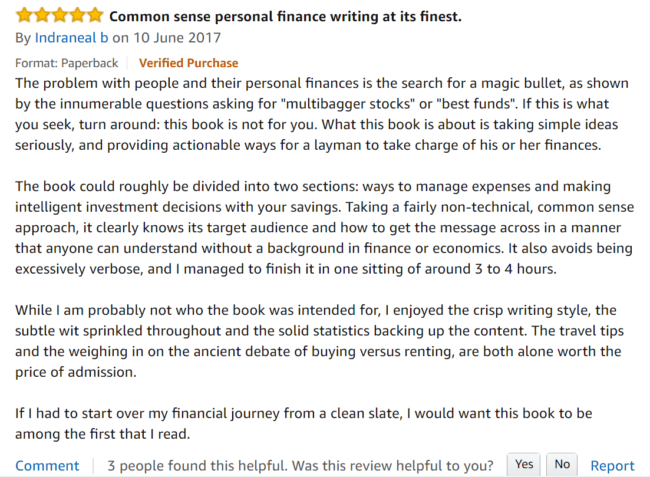

The ultimate guide to travel by Pranav Surya is a deep dive analysis into vacation planning, finding cheap flights, budget accommodation, what to do when travelling, how travelling slowly is better financially and psychologically with links to the web pages and hand-holding at every step. Get the pdf for ₹199 (you will be emailed the pdf after payment)
You Can Be Rich Too with Goal-Based Investing
My first book with PV Subramanyam helps you ask the risk questions about money, seek simple solutions and find your own personalised answers with nine online calculator modules.

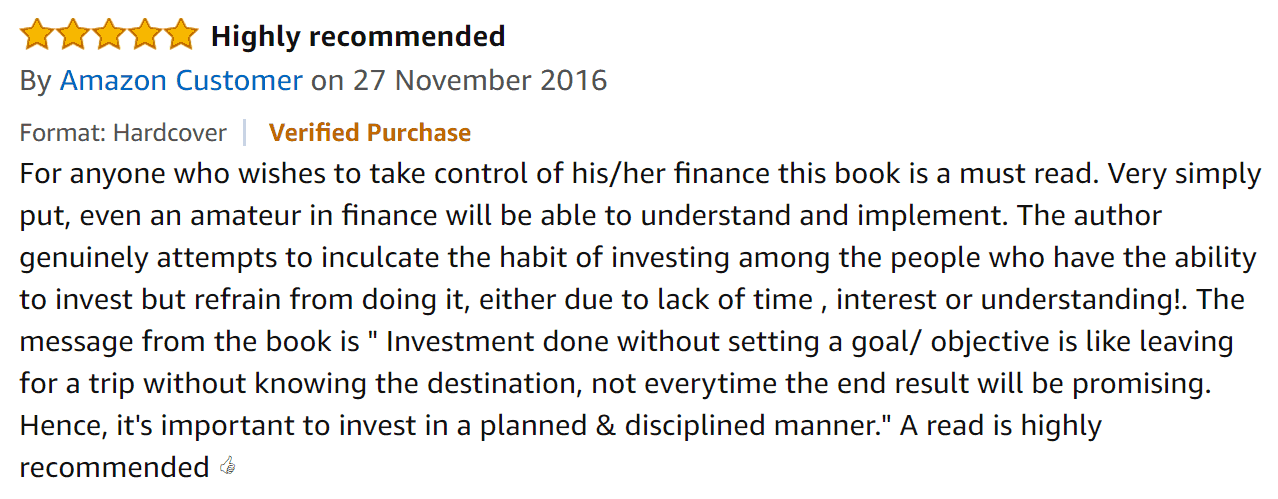
The book is available at:
Amazon Hardcover Rs. 271. 32% OFF
Infibeam Now just Rs. 270 32% OFF. If you use a mobikwik wallet, and purchase via infibeam, you can get up to 100% cashback!!
Flipkart Rs. 279. 30% off
Kindle at Amazon.in (Rs.271) Read with free app
Google PlayRs. 271 Read on your PC/Tablet/Mobile
Now in Hindi!

Order the Hindi version via this link