Last Updated on September 7, 2026 at 11:51 pm
Use this simple spreadsheet to review and audit your goal-based investment portfolios. Over the years, we recognised the need for a tool beyond financial planning and portfolio value/return tracking.
A financial planning calculator tells you the target corpus for a goal and the investment amount required. A portfolio tracker only tells you the current corpus value and return of various portfolio products.
However, how will you know after you start investing that you are on the right track? How will you know that your portfolio is growing along expected lines? What if you cannot invest the necessary investment amount? What if your current asset allocation differs from the suggested one?
There should be a tool to track the growth of a goal-based portfolio by comparing it to the expected growth of the target corpus. If necessary, the tool should be used to chart a custom course for the investment journey with the target corpus obtained from the financial planning tool as a guide.
🔥Secure your future with our Robo-advisory tool trusted by over 3,500 investors and advisors. From effortless retirement planning to funding your children’s biggest dreams, turn your financial goals into reality. 🔥
Subscribe for money management solutions via email! (Link takes you to our email sign-up form) Join 32,000+ readers in our community.
👉 New Tool Alert! NaviPlan: A Privacy-Focused Multi-asset Tracker and Goal Planner 👈
The freefincal Goal-based Portfolio Review/Audit Tool is designed to answer these questions. It originated in our goal-based portfolio management course. This is a screenshot from the course showing the expected vs. actual portfolio growth for a specific scenario.
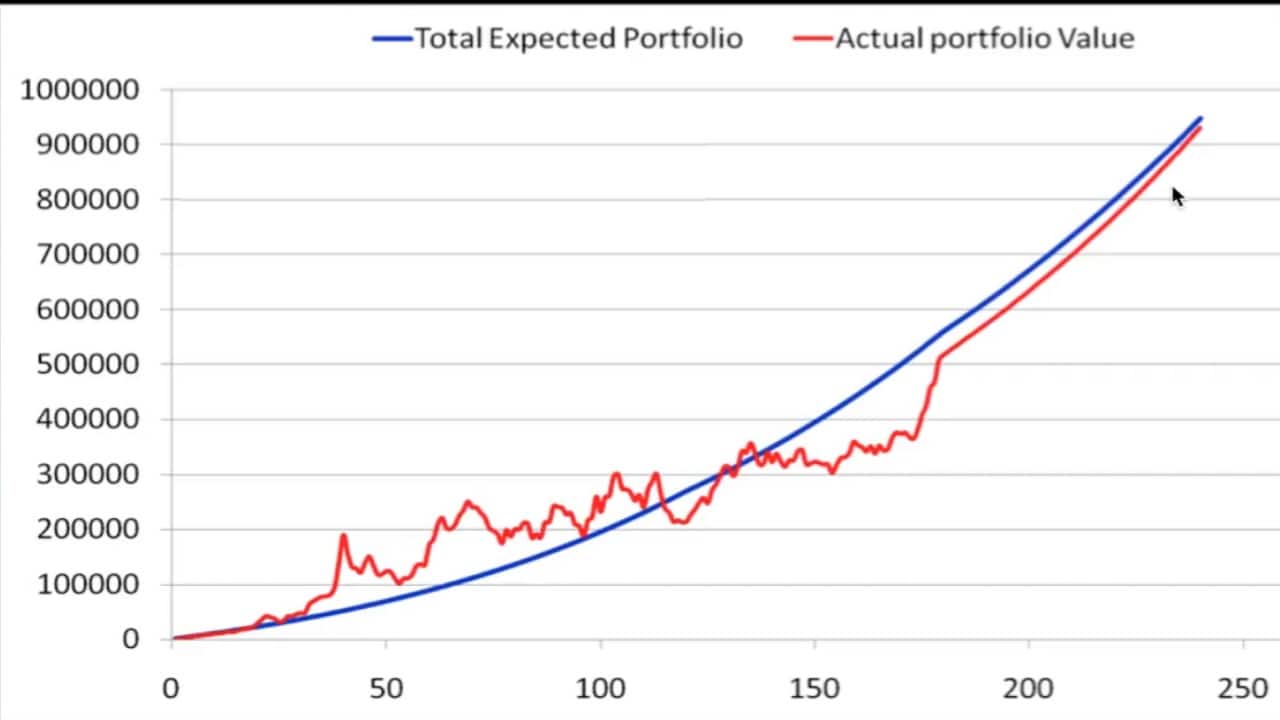
The course discusses ways to systematically reduce portfolio risk to ensure we get close to our target corpus (or do better) regardless of market conditions. The freefincal robo-advisory tool automates this risk reduction process and provides a suitable financial plan.
The idea is to create a spreadsheet where the user can simulate the expected portfolio growth (blue line above). The user enters the current portfolio value each year to build the red line point by point across the investment journey.
This will give the user confidence that they are on the right track. The user can also adjust the asset allocation schedule in the planner from year to year to create a custom de-risking schedule that reflects their current asset allocation and risk appetite.
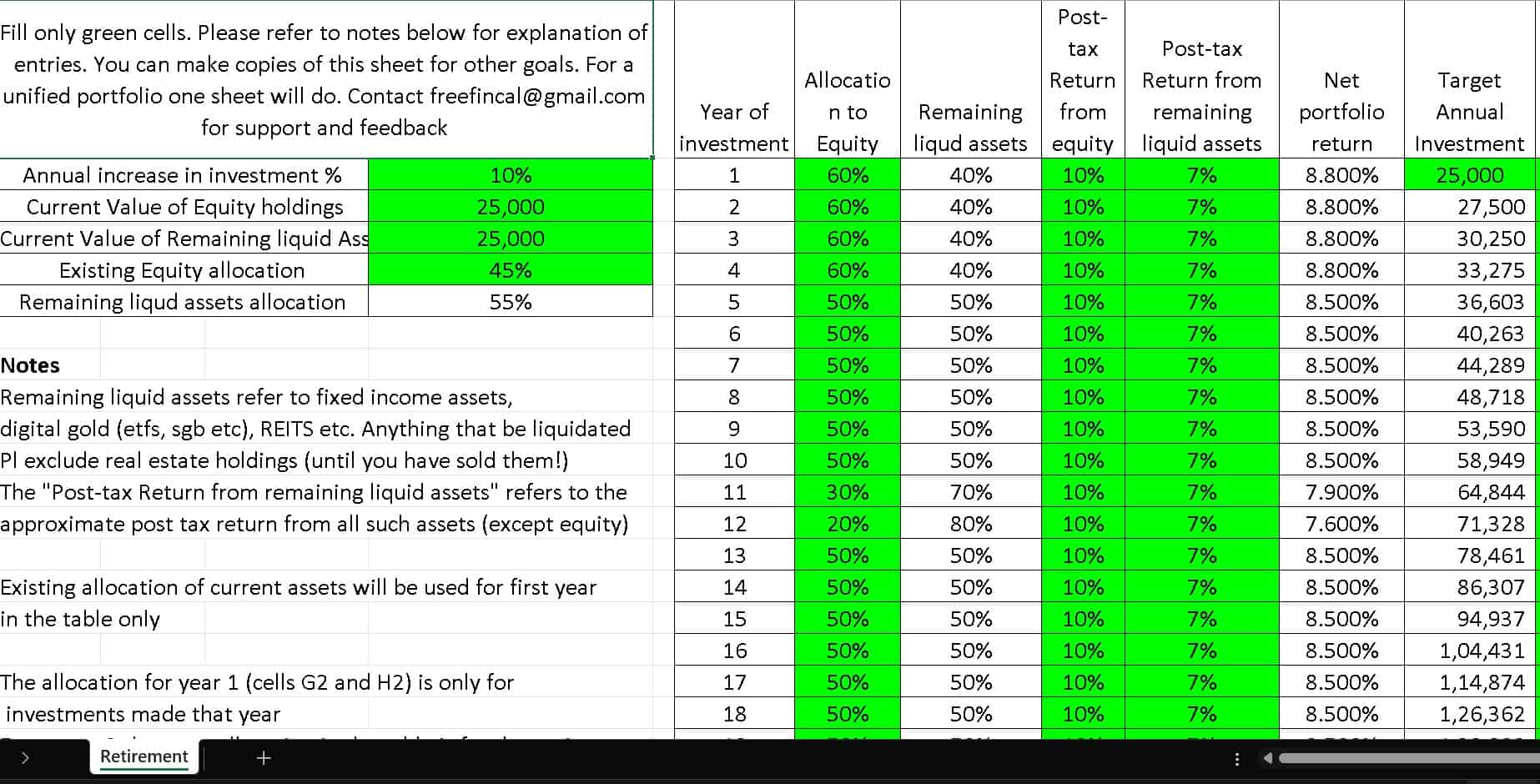
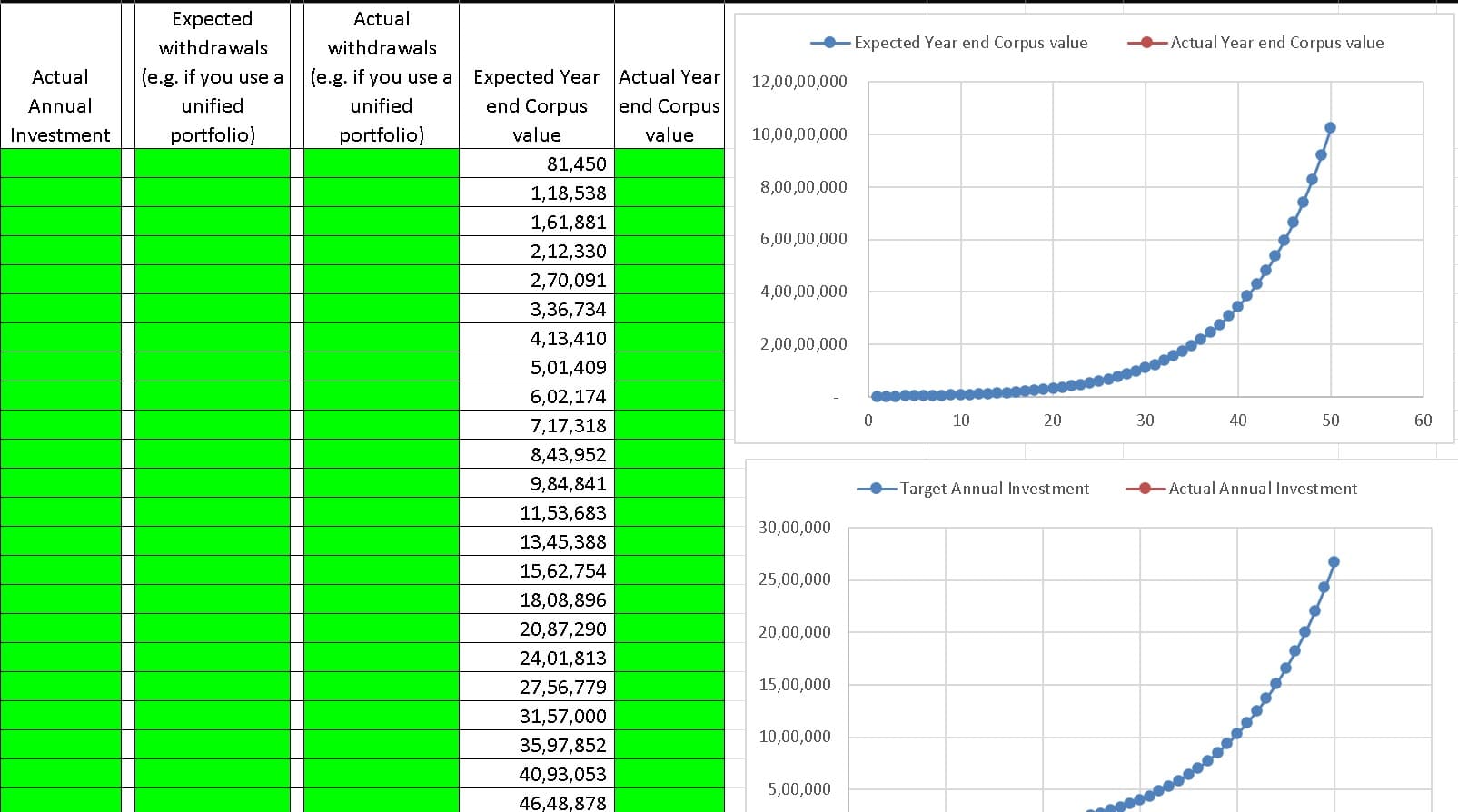
Here are a couple of screenshots.
Introductory video
Q & A about the freefincal Goal-based Portfolio Review/Audit Tool
- Is it a financial planner?
- No. It is a financial plan progress review tool. You can use the Freefincal Robo Advisory Tool to create a financial plan.
- Is it a portfolio tracker?
- No. It is meant for tracking the progress of a portfolio corpus with the expected growth of a target corpus. We have a separate Google Sheets-based solution to track the current value and returns of your mutual funds and stocks.
- Can I use the portfolio review/audit tool independent of a financial planning calculator or a portfolio tracker?
- In principle, yes, but you will likely need all three tools. The review/audit tool needs inputs from both a financial planning calculator and a portfolio tracker.
- A financial planning calculator shows how much to accumulate for a goal and how much to invest. This can be modified in the review/audit tool to customise your own asset allocation schedule.
- A portfolio tracker is needed to obtain the current portfolio value for a goal.
- What are the inputs for the portfolio review/audit tool?
- Current value of equity and other liquid holdings and their asset allocation
- Planned asset allocation of equity and other holdings. This can be modified each year for the forthcoming years.
- Expected returns for these asset classes.
- Annual investment in the first year and increase each year.
- Actual annual investment made – to be updated once a year.
- Actual corpus value – to be updated once a year.
- What are the outputs?
- The expected investment schedule, the expected corpus growth.
- The two graphs above will gradually populate point by point after each annual review.
How should I use the audit tool?
As the actual corpus value data points accrue, you will know where you stand compared to anticipated corpus growth. Things are fine if you are too far away and nothing needs to be done. You may need to change asset allocation and/or increase investments if the deviation is significant.
If you choose a step-wise asset allocation schedule as explained here – How to reduce risk in an investment portfolio – the chances of significant or frequent changes are reasonably low, as determined by hours of backtesting and explained in our portfolio management course.
What are the benefits?
- You can adjust the future asset allocation schedule according to your current holding. This is especially useful if you have too much fixed income in your portfolio and wish to increase equity holdings in future.
- You get a picture of “where you are” in your investment journey, which helps prevent unnecessary changes in funds or asset allocation.
- It shifts the focus away from chasing returns and emphasises the importance of portfolio value and growth.
Presentation: It is available as an Excel sheet. Since it has no macros, it can run on any spreadsheet app like Open Office, Mac Excel, Mac Numbers, Google Sheets or Excel Cloud.
Price: One-time fee of Rs. 1000 500 only (50% launch discount)– includes all future bug fixes and feature updates.