Are you worried about whether you can afford that new phone or bike or car? Feeling guilty and tempted at the same time? Here is a simple way to find out affordability & organise finances so that you can responsibly buy stuff you love!
Every time I go to a corporate money management session, I hear stories of young earners buying stuff they can barely afford and are neck deep in debt. With a little planning, it is more than possible to enjoy a good chunk of our income for our wants.
Of course, not everyone can get everything in life! The biggest problem I see today is, many people (not just young ones) trying to live a life that they cannot afford: Have We Forgot That Aspirations Must Match Our Income?! So since is limited, so should what we desire too! If we want more, then the only way out is a second income: Why a second income is important! Why you have to start now!.
With that caveat, let us begin. For the following, I am assuming that the reader is just about to start earning or has just started recently. It is so much easier to start on a clean slate. For older readers, the same logic discussed below would apply, but they will have to factor in their other responsibilities.
Defining the take-home pay
To ensure we are all on the same page, let us define take-home pay as
🔥Secure your future with our Robo-advisory tool trusted by over 3,500 investors and advisors. From effortless retirement planning to funding your children’s biggest dreams, turn your financial goals into reality. 🔥
Subscribe for money management solutions via email! (Link takes you to our email sign-up form) Join 32,000+ readers in our community.
👉 New Tool Alert! NaviPlan: A Privacy-Focused Multi-asset Tracker and Goal Planner 👈
Take-home pay = Monthly Salary (gross) – taxes – provident fund contribution – miscellaneous deductions
Please do this first for the first six months after you start earning
If you have not, do it now!! Take 30% of your take-home pay and put it in another bank account or a liquid fund. This will be your emergency fund in case your bike or TV breaks down. Enjoy the rest if you are living with your parents! If you live alone and/or have an education loan, you will obviously have to enjoy less! Just don’t touch that 30%, though.
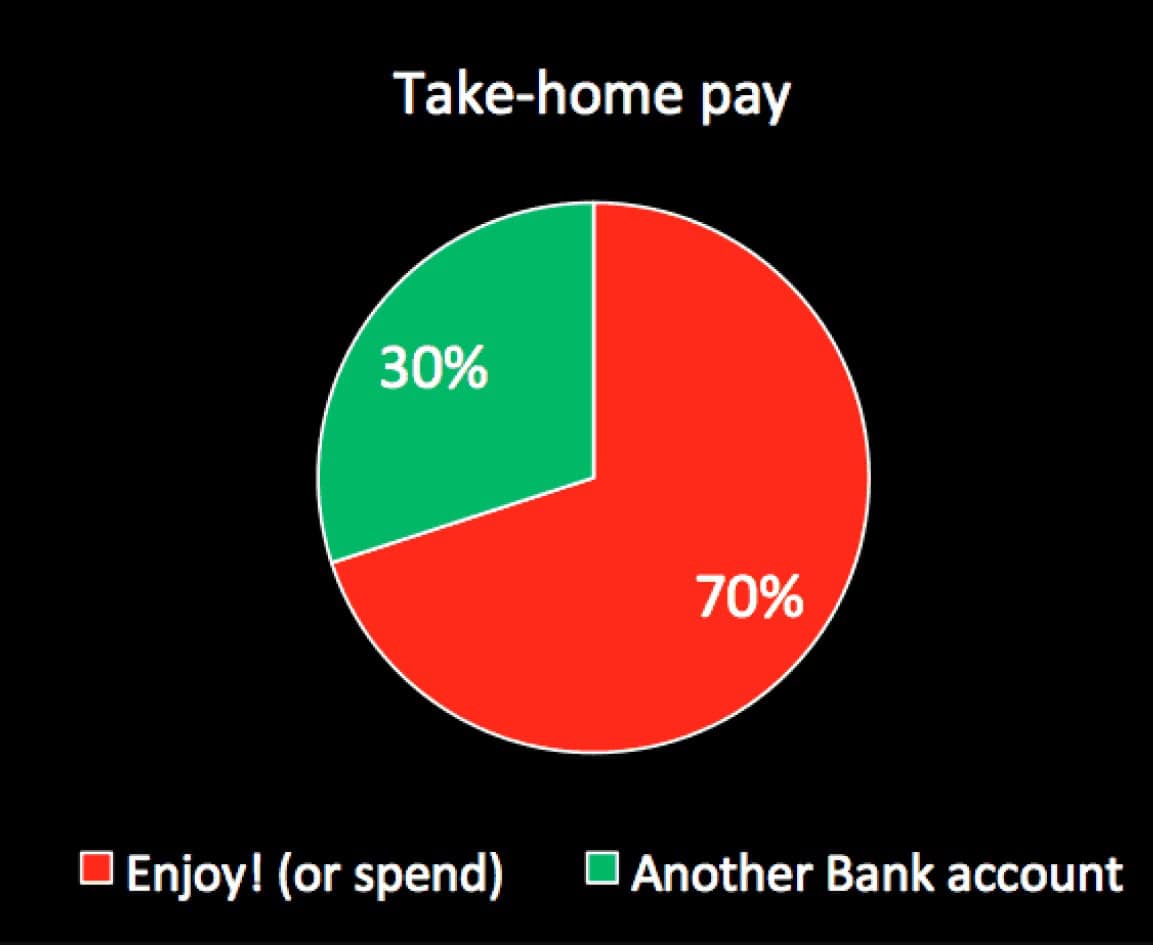
Six months later
- Reduce the 30% emergency fund contribution to 10% (in case you use the fund, it needs to replenished)
- Suppose X is the total pension fund contribution (employer + employee EPF contribution). Then invest 2X in equity (via mutual funds or stocks). See: what should be my first mutual fund? and Select your first stock without breaking your head! Here is how. I have shown this to be 20% for say a one lakh take-home pay (please change as per your real number)
- If you have any short-term need, say a holiday in Bali or an expensive watch or smartphone or camera, save, say, about 30% for it. Put it in a liquid fund or a recurring deposit
- The remaining 40% is for you to spend/enjoy.
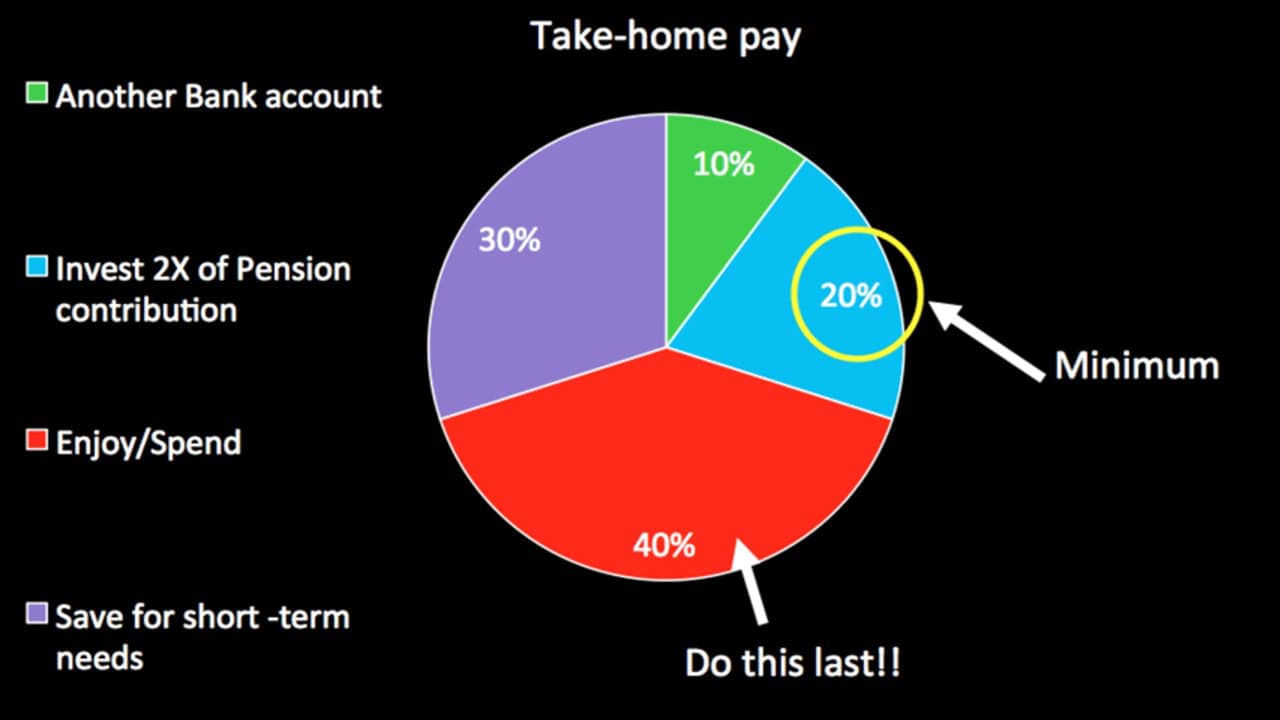
Remember: Invest that 20% first, spend/save later
Can I afford that new phone/bike/car? How do I know?
Let us not complicate this.
- Can you buy the item by saving from salary for a few months without disturbing the 20% investment? Then buy without EMI (loan). Else go to the next step.
- Can you buy the item with a loan without disturbing the 20% investment? Then, buy with a loan. Otherwise, wait until you can manage the EMI + 20% investment and other expenses.
That is it! Money is to be spent! Remember that 20% investment is for you to spend it later! So it all about a healthy balance without feeling deprived.
Do not spend money like there is no tomorrow! Then there will be none!