Equity savings funds are recommended as a tax-efficient alternative to debt mutual funds. This is more so with the debt fund units purchased on or after 1st April 2023 taxed as per slab regardless of the holding period. See, for example, the new debt fund tax rule: How do I change my investment strategy?
What are equity savings funds? These are hybrid funds mandated to hold 65% of Indian equity at all times. The rest will usually be in bonds. The equity allocation has hedged equity (arbitrage holding) and unhedged equity (normal stock holdings or long positions). SEBI has mandated that AMCs disclose the hedged and unhedged holdings in the scheme documents.
Are they alternatives for debt funds? Certainly not! They can hold a significant amount of unhedged equity in the portfolio. Due to this, the fall during a market crash can be significant compared to a debt fund. This is the performance of ICICI Equity Savings Fund and ICICI Gilt Fund from January 2015 to December 2023.
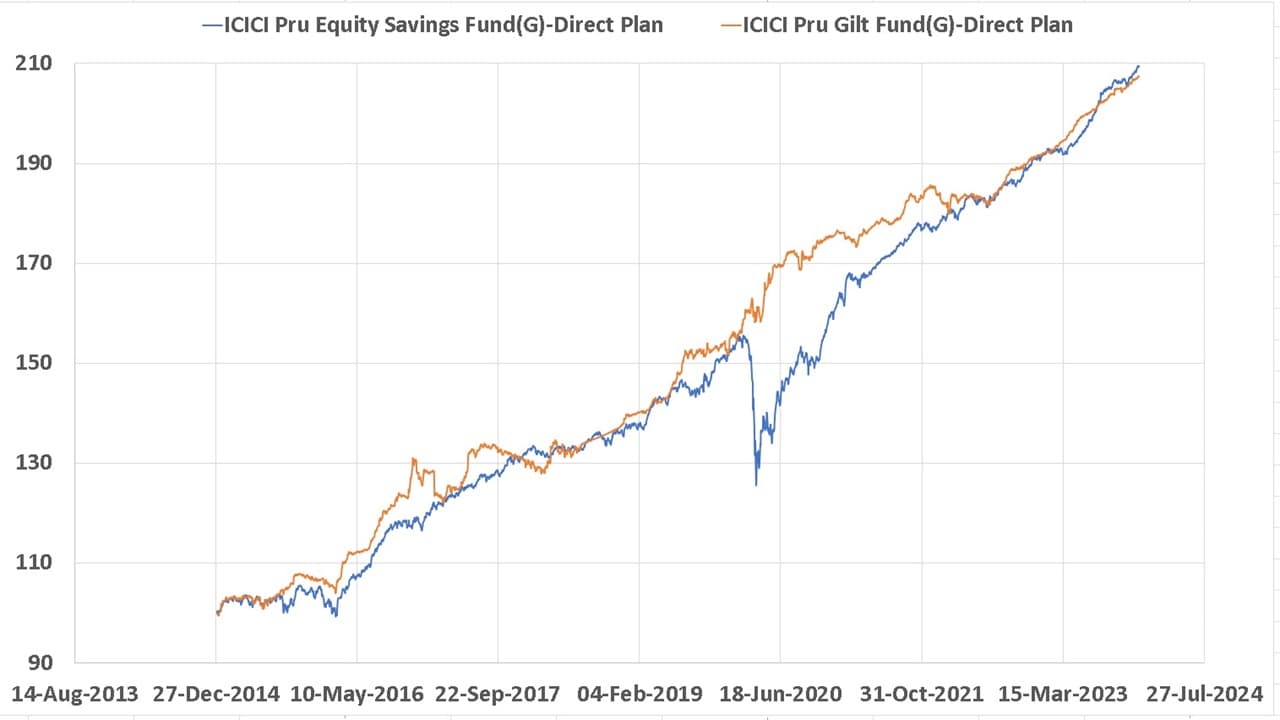
Notice that, at normal times, the volatility of both funds is comparable. This may give the false impression that equity savings funds can be used as an alternative. However, the impact of the stocks held is acutely felt during a crash.
Do not make the mistake of investing in equity savings funds instead of debt funds only to save tax. Changes in tax rules should not govern our investment products. Only our investment strategy should.
🔥Secure your future with our Robo-advisory tool trusted by over 3,500 investors and advisors. From effortless retirement planning to funding your children’s biggest dreams, turn your financial goals into reality. 🔥
Subscribe for money management solutions via email! (Link takes you to our email sign-up form) Join 32,000+ readers in our community.
👉 New Tool Alert! NaviPlan: A Privacy-Focused Multi-asset Tracker and Goal Planner 👈
How much equity do they hold? It depends on the fund. These are some equity savings funds’ typical lower and upper limits.
- ICICI 15-50%
- HDFC 15-40%
- SBI 20-50%
- Kotak 10-50%
- Axis 20-45%
- Mirae 20-45%
- UTI 20-50%
- Edelweiss 15-50%
- DSP 20-55%
- ABSL 20-45%
How can funds that can hold 40-50% equity call themselves equity “savings” funds?! These funds can be viewed as dynamic asset allocation funds that change direct equity allocation per market conditions. And they can also buy corporate bonds. So, they come with interest rate risk and credit risk as well.
Can I invest in equity savings funds instead of debt funds?
- If you are new to mutual funds, you should not consider equity savings funds.
- If you consider yourself a retail investor finding it hard to invest enough for your goals, then you should not consider equity savings funds. This would only increase overall portfolio risk.
- If you are an accomplished or a high-net-worth investor, appreciative of risks, then and only then are equity savings funds a reasonable alternative to debt funds. However, do not buy them for the short term.