For a long term goal, invest about 60% in equity and the rest in fixed income. Three years before the goal deadline, start reducing equity allocation. This is the usual advice peddled around by “experts”.
How successful is this idea against a rigorous backtest? As you might guess, this is just arbitrary gyan, and if you check this against actual market return sequences, it often fails. We need a more robust alternative; for that, we need to appreciate the sequence of returns risk. Also see: Using UTI Momentum Fund to understand the sequence of returns risk.
What is a sequence of returns risk? We plan with an annualized return on a spreadsheet. This implies that the annual return year after year is the same in the calculation. There is no other way around it. The yearly returns in equity (or gold or bonds) are different. Sometimes, you get + 25% and sometimes -40%. When these annual returns combine, they produce high, low or mediocre returns.
This is why they say past performance does not guarantee future performance. No matter how rosy past returns have been, our experience can be anything from abysmal to spectacular.
If we keep investing systematically in a 60% equity, 40% fixed-income portfolio with regular rebalancing and pull out from equity only three years from the goal deadline, we would essentially be subjecting our money to luck. There are no guarantees that we could get close to the corpus necessary for our goal. We need to respect our money better.
🔥Secure your future with our Robo-advisory tool trusted by over 3,500 investors and advisors. From effortless retirement planning to funding your children’s biggest dreams, turn your financial goals into reality. 🔥
Subscribe for money management solutions via email! (Link takes you to our email sign-up form) Join 32,000+ readers in our community.
👉 New Tool Alert! NaviPlan: A Privacy-Focused Multi-asset Tracker and Goal Planner 👈
What is the alternative? Is there a better choice? Yes, we need to decrease equity allocation gradually before the goal deadline. This decrease can be step-wise or continuous. We have extensively backtested the efficacy of this approach for the US (120-year history) and Indian markets. The result: it works regardless of market conditions. This makes the risks associated with equity exceedingly manageable.
Some preliminary results are available here: How to reduce risk in an investment portfolio. The full results before and after retirement are available here: online course on goal-based portfolio management!
This strategy is critical to the automated variable asset allocation recommendations of the freefincal robo advisory tool. This is an example generated by the tool.
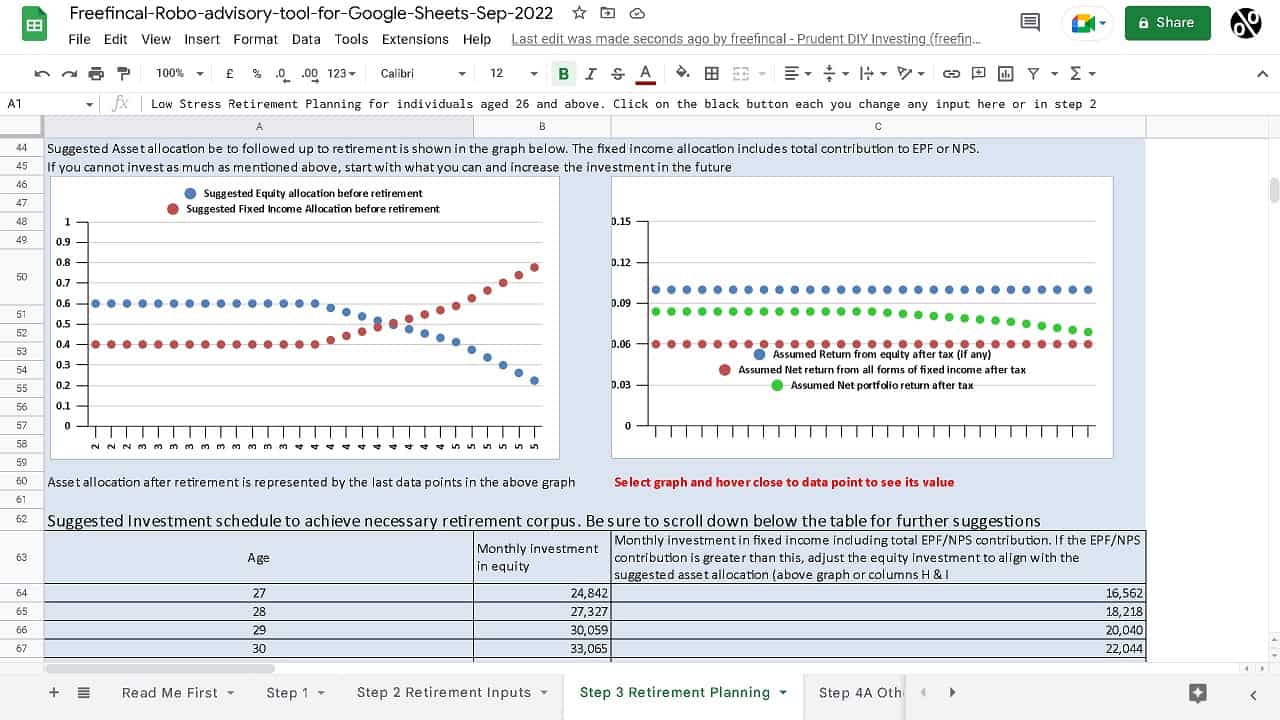
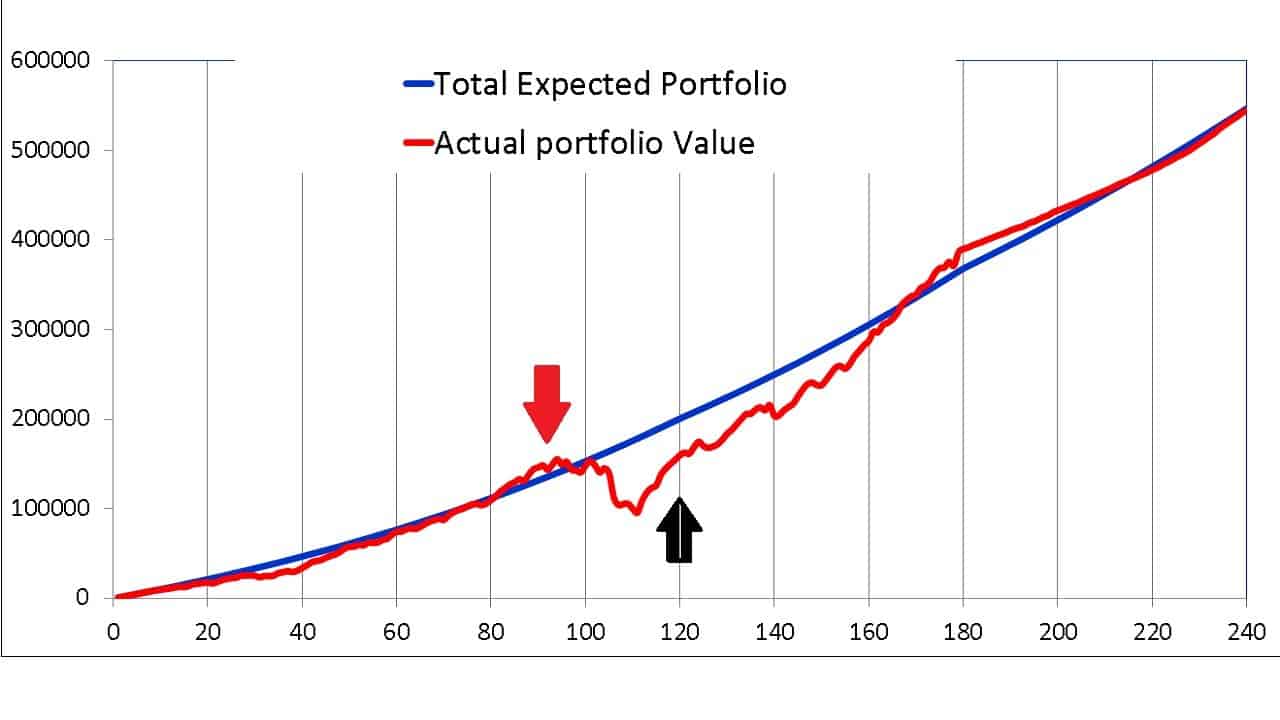
The blue dots on the left graph represent the equity allocation and the suggested reduction plan. Such a plan ensures the actual corpus growth stays close to the expected corpus growth for most of the investment journey, providing a peaceful sleep to the investor. This is one such backtested sequence.
One can efficiently create an equity risk-reduction plan by combining the freefincal robo-advisory planning tool, freefincal portfolio tracker and our freefincal portfolio audit tools.