From time to time, investors want to buy gold for “returns” and “diversification” (or is it diworsification?). In our experience, many, if not most, buy gold without understanding the risks and with wrong notions about its returns. Here are six facts about gold you need to know before investing.
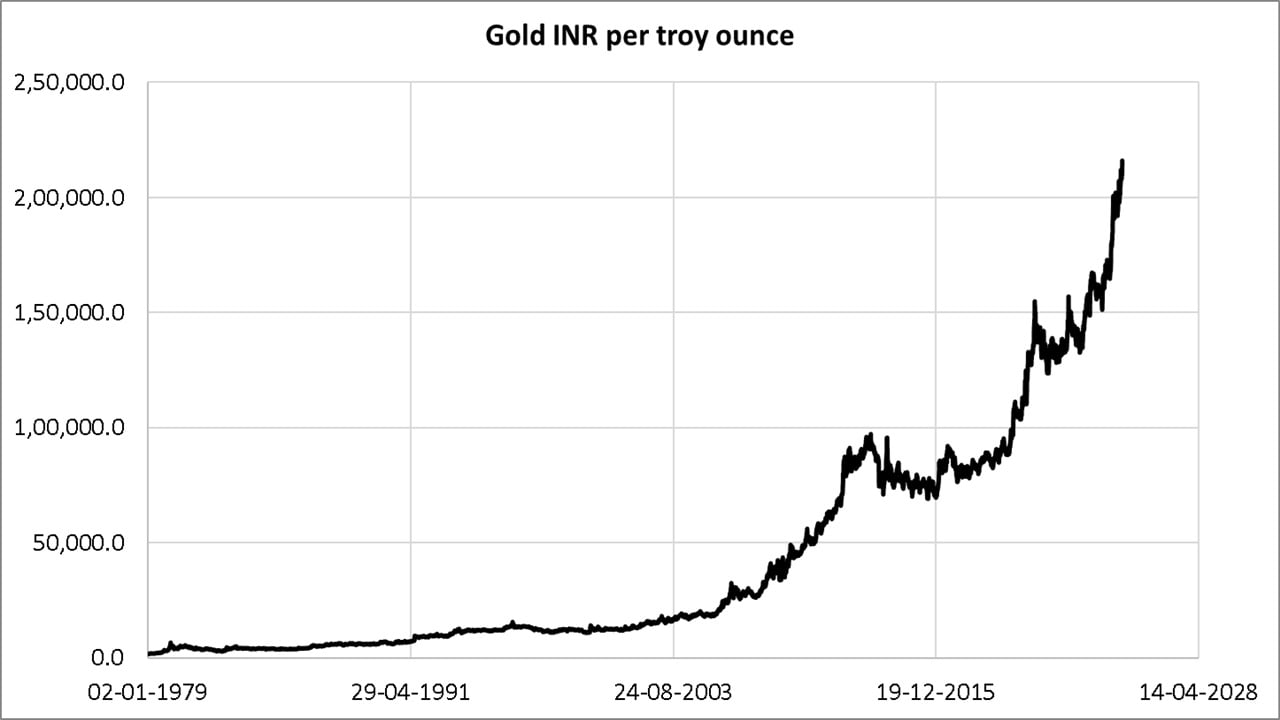
1. Gold prices do not always increase! Sometimes they do, and sometimes they don’t. Don’t take anecdotes like gold was Rs. X in 1979 and not it is Rs. XXXX seriously. Even a casual glance at the price movement will tell you that the prices do not always increase.
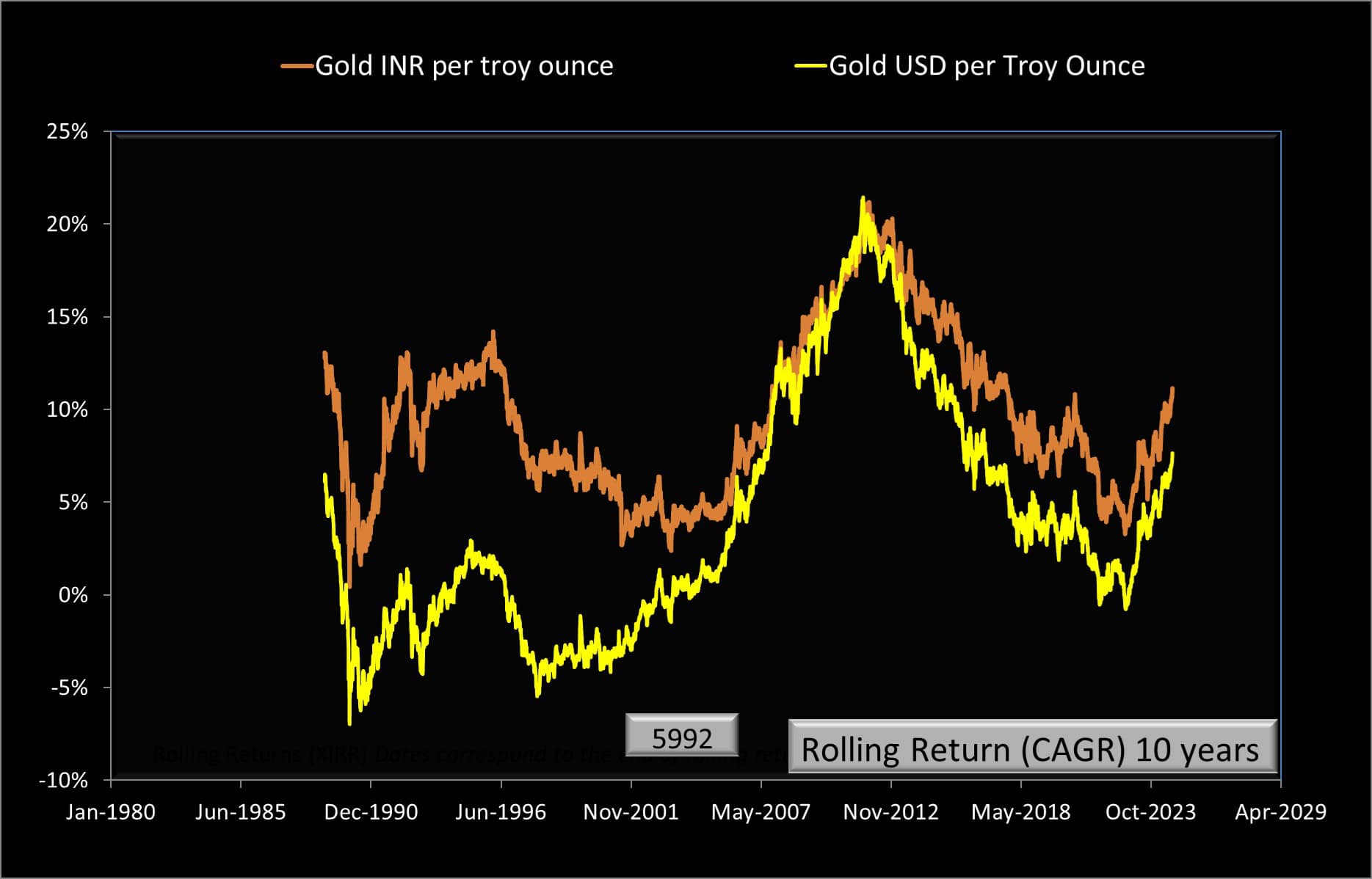
Rolling returns charts provide better insight.
For more, see: How INR to USD exchange rate affects gold prices
2. Gold is as risky as equity! This should be apparent from the above rolling return graph. How much return will I get from gold if I invest for the “long term”? Honest answer: we don’t know, and we can’t know. See: Gold is as risky as equity and not a debt instrument!
🔥Secure your future with our Robo-advisory tool trusted by over 3,500 investors and advisors. From effortless retirement planning to funding your children’s biggest dreams, turn your financial goals into reality. 🔥
Subscribe for money management solutions via email! (Link takes you to our email sign-up form) Join 32,000+ readers in our community.
👉 New Tool Alert! NaviPlan: A Privacy-Focused Multi-asset Tracker and Goal Planner 👈
3. Gold is not a hedge against inflation! Something as volatile as gold will not beat or keep pace with inflation. Sometimes it will, and sometimes it will not! When people claim gold is a hedge, the implication is that it is a reliable hedge against inflation. It is hardly reliable. See: Is gold a hedge against inflation?
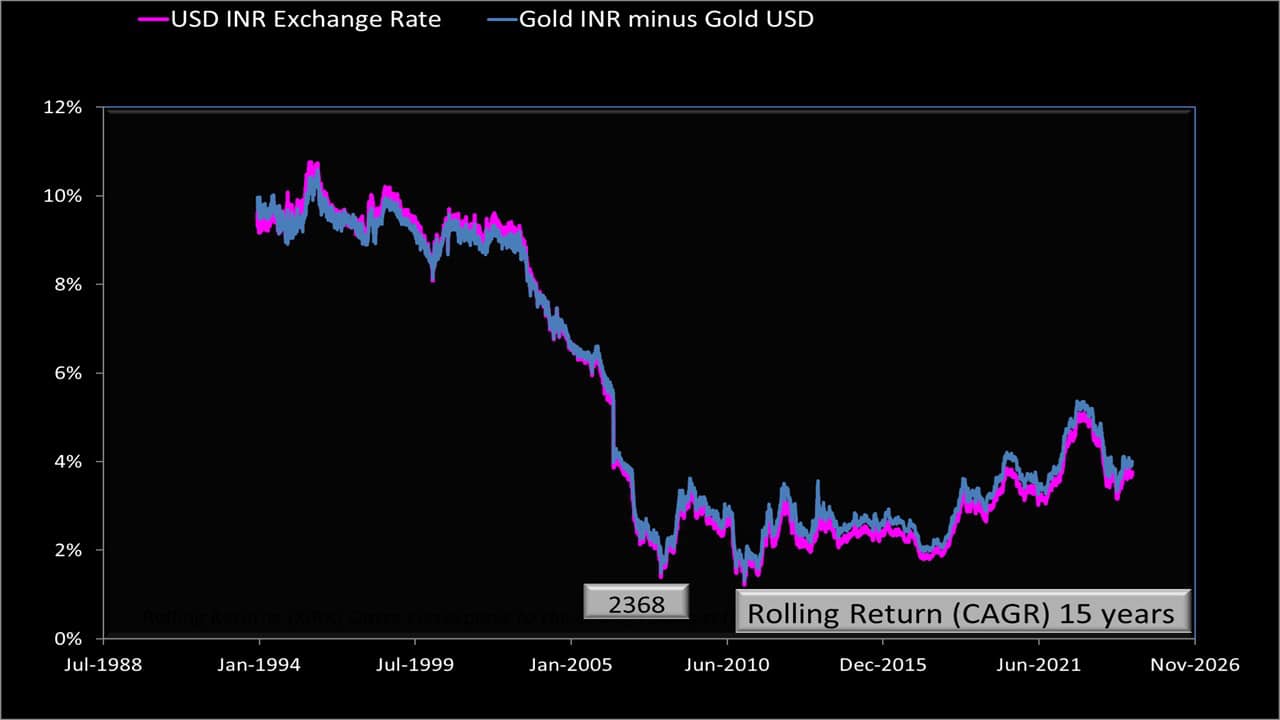
4. Gold INR depends on INR-USD exchange rate: The past long term returns from gold that we speak of today have been heavily influenced by the INR-USD exchange rate. This dependence has decreased significantly in the last 14-15 years, thanks to stable currency.
Aside from occasional blips, if we expect our country to become an economic superpower, INR will become stronger and stronger in the next few decades. Therefore, gold returns in INR may not be as high as in the past. The graph below dramatically illustrates this.
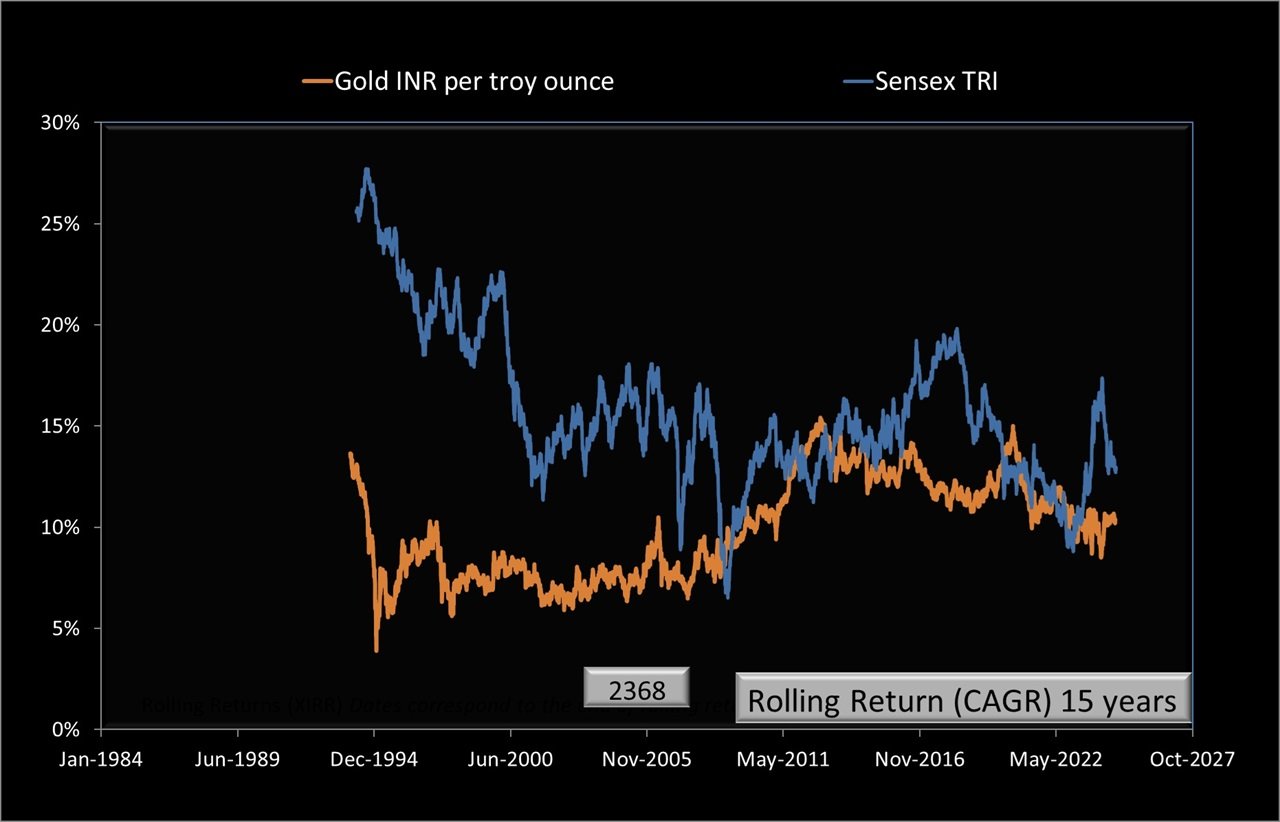
5 Over the long term, which would fetch more returns? Equity or gold?
Honest answer: we don’t know. Sometimes, equity will win. Sometimes, gold will win. See a 15-year rolling returns comparison below.
Our recommendation about gold exposure in a portfolio: It is not necessary. Adding gold only increases confusion and labour in managing a portfolio while rebalancing. Use an equity-oriented multi-asset fund if you “must” have some gold exposure. You don’t need any other product to track the price of gold.
As for physical gold, you can consume it (wear it, let it gather dust on your shelves) as much as you like. Don’t assume you will get a fair price when you try selling it. You won’t.