Here are some simple steps to plan and achieve your dreams and financial goals. One should consider investment products only after the goal is defined and planned for (the process). Sadly, most investors have a product-first, plan-later approach.
Some assume they do not have a financial goal and only want to create wealth. They need to find a way to handle expenses if they can no longer work or do not want to. Financial independence and retirement planning are the default goals for everyone unless they are Richie Rich.
A goal provides direction and a sense of purpose. Only when we know the destination can we plan how to get there. Harvey Mackay said, “A dream is just a dream. A goal is a dream with a plan and a deadline.”
So what is the goal here? Let us assume it is to buy an electric car. We will not get into the petrol vs diesel vs electric vs hybrid here. We will assume the bottom line here is, “If I buy a car, it will be electric”. There will be pros and cons associated with this choice, but this is not the place to debate them.
“I want to buy an electric car (without a loan)” is just a dream, as Mackay says. It is just an arbitrary thought which serves no purpose.
🔥Secure your future with our Robo-advisory tool trusted by over 3,500 investors and advisors. From effortless retirement planning to funding your children’s biggest dreams, turn your financial goals into reality. 🔥
Subscribe for money management solutions via email! (Link takes you to our email sign-up form) Join 32,000+ readers in our community.
👉 New Tool Alert! NaviPlan: A Privacy-Focused Multi-asset Tracker and Goal Planner 👈
‘If I had enough cash, what kind of electric car would I buy?’ This is the first step. What kind of electric car is suitable for my needs? Which manufacturers sell this car in India? Among the models available, which are suitable for me?
This process is not easy and would require hours of research and perhaps consultation. There are many such discussions in the personal finance Facebook group Asan Ideas for Wealth, where the admin, Ashal Jauhari himself, is a car enthusiast, and other members like Ragesh can provide sound assistance. This, for instance, is an article by Ragesh: Used Car vs New Car: Which is a better buy?
We shall assume the model we want is a Volvo XC40 Recharge (the link may have changed or point to a different model when you read this!) This is an arbitrary choice for this article and is not important.
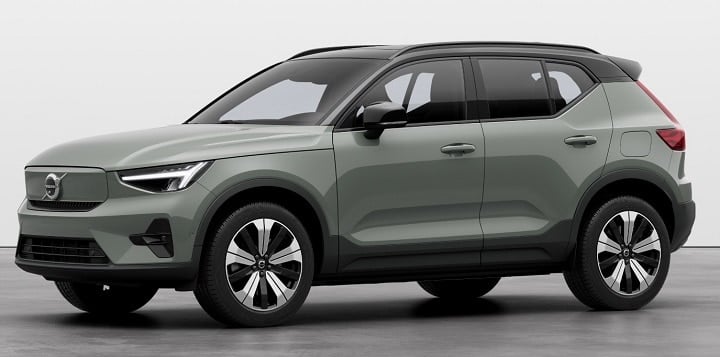
“I want a Volvo XC40 Recharge” is still a dream, but it is a specific dream.
Next, I need to ask, What is the “cash” necessary to buy the XC60 today? Let’s say this is about 70-75 Lakhs. This is probably an overestimate, but it is better to err on the side of caution.
“How much do I have now?” For this kind of goal, if 75 Lakh is the target price today, I better have at least 50-60% available with me right now. There are far-off goals like retirement and a child’s education, where ‘no cash available now’ should not be much of a problem. So, this is quite contextual.
” I want an XC40 costing about 75 Lakh today, but have only 40 Lakh to spare.” It is still a dream but with information about why it is impossible to realise today. “Spare” means all my essential goals, like retirement and my child’s education, are in place, and I can truly spare this money.
“I want an XC40 in 5 years” is a dream with a deadline, and we now have a financial goal. However, it neither has a target nor a plan attached.
“What would be the estimated cost of the XC40 in 5 years?” To calculate this, we need an estimate of inflation. Let us say it is about 10%.
So 75L x (1+10%)x (1+10%)x (1+10%)x (1+10%)x (1+10%) = 121 Lakhs
“121 Lakh is necessary to buy an XC40 in 5 years” is a financial goal with a clear target but no plan attached.
The next questions to ask are, in addition to the 40L, how much should I invest each month, and where should I invest all this money?
At this point, asset allocation and return expectations from each asset class (equity, fixed income) are necessary. This can be automated with the freefincal robo advisory tool.
Even with a 90% fixed-income allocation (6% post-tax return), the necessary investment is about Rs. 91,000 monthly. Since this is a “want” and not a “need”, one can aim for a higher return by investing in an equity or equity-oriented hybrid fund and perhaps invest a lower amount.
If we aim for a 9% return, each month’s investment is Rs. 76,000. We will assume that the existing Rs. 40 lakhs will also be invested with a similar return expectation. This is only one of many ways to plan.
“121 Lakh is necessary to buy an XC40 in 5 years. To achieve this, Rs. 40 Lakhs lump sum and Rs. 76,000 monthly will be invested with an expected 9% post-tax return.”
Now, we have a financial goal with a clear target and plan to finance our dreams. We start investing, reviewing progress once a year, making necessary course corrections, and hoping for the best.