An ideal retirement portfolio should (1) generate an income that will keep pace with inflation and (2) have some buffer in the corpus to handle unexpected expenses (recurring or one-time). Here are the elements of an ideal retirement portfolio.
1. Pension: This is a prominent and important component. Also known as income flooring. This will remain the same until the surviving spouse’s death (this means the following: say you are now 40 of age and your spouse 35. Assuming the younger spouse dies later, retirement planning should provide an income until the death of the younger partner).
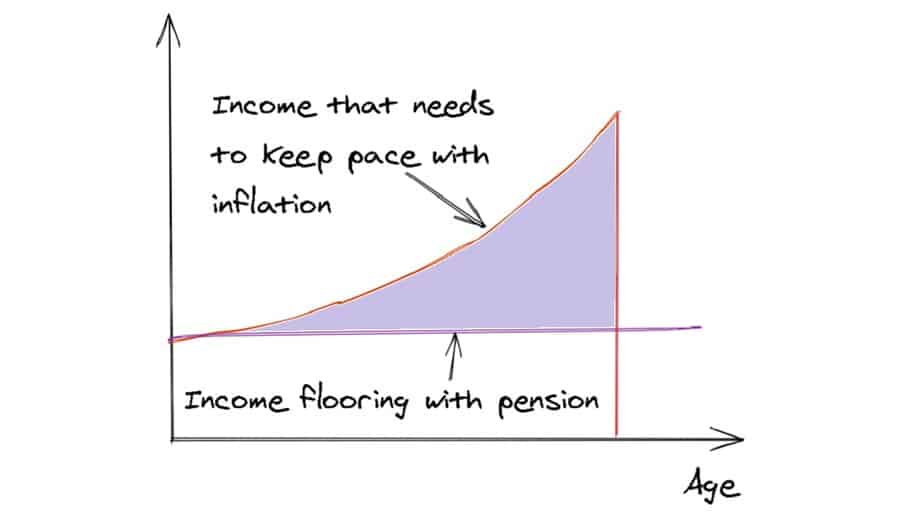
2. Inflation-protected income: This increases gradually and drops to zero, ideally only after the surviving spouse’s death.
As discussed earlier, creating the ideal retirement plan with income flooring – if the pension = initial monthly expenses at the start of retirement, the burden of creating inflation-protected income is considerably reduced. In this article, we will focus on the components of inflation-protected income.
- Investment in retirement buckets can be classified as safe, low-risk, and medium-risk. These can be fixed deposits, liquid funds, hybrid funds, etc. A mix that requires management to ensure it does not drop in value too much. See for example, The Retirement Bucket Strategy Simulator
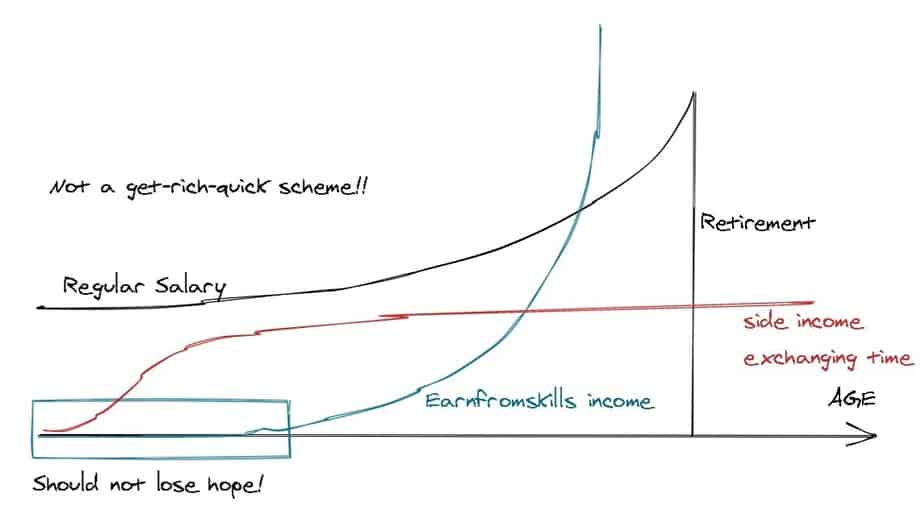
- Active income sources: Retirement need not mean zero active income. One gradually turns skills acquired over a lifetime of employment into freelance consulting. See: How to build a second income source that will last a lifetime.
- Passive income from skills: One can, and I would argue must, turn those skills into passive income. This can make a big difference to our lifestyle in retirement. See: Passive income is a crucial part of your retirement plan: How to get started.
- Passive income from stocks: A direct equity portfolio built during the accumulation stage can make a non-trivial contribution to your retirement portfolio via dividends.
- Rental income can make a huge difference in a retirement plan. You can use the robo-advisor tool to factor in multiple sources of pension and rent to see how the retirement corpus reduces.
The reason for listing out the elements of an ideal retirement portfolio is to plan which ones we will include. For example, if you already have sources of rental income or are likely to inherit some real estate before retirement, you can plan for this with the robo tool.
🔥Secure your future with our Robo-advisory tool trusted by over 3,500 investors and advisors. From effortless retirement planning to funding your children’s biggest dreams, turn your financial goals into reality. 🔥
Subscribe for money management solutions via email! (Link takes you to our email sign-up form) Join 32,000+ readers in our community.
👉 New Tool Alert! NaviPlan: A Privacy-Focused Multi-asset Tracker and Goal Planner 👈
One can sow the seeds of active and passive income right away, years before retirement, so that it builds to something significant. This is the main theme of our new course: How to get people to pay for your skills (see syllabus and FAQ here) – 700+ members have signed up so far.
3. Relationships are essential: How we treat our children, daughters-in-laws, and son-in-laws today will determine how they will treat us in old age. See:Why we must invest in relationships for successful retirement planning
Thus, there is more to retirement planning than just pension, beating inflation and income sources. What we do with our time after retirement will determine our mental and physical health and how our close family treats us. Will we let our children take our time for granted after retirement, expecting us to care for our grandchildren? Or will we keep ourselves busy with our passion with or without active + passive income? The time to think and prepare for this is now, and we are not close to retirement!