One quesion many readers ask is, if I already have a pension, how should I plan for retirement? A user of our robo advisory tool writes, “I am studying and trying to understand the robo advisory tool. In the income flooring sheet, annuity laddering and DIY Bucket, I found that annuity is needed to be purchased”.
“After my Voluntary Retirement from Central Autonomous Body, I will get monthly pension (old pension scheme) plus D.A. (once in 6 months). Do I still need to purchase Annuity?”
“I have calculated our monthly expenses, and I think the monthly pension and rental income will be enough to cover the same. My current age is 49 years, and I wish to retire in July, 2023 after 28 years of service. So, if annuity is not required, can the same amount from the corpus be invested in Safe or Equity exposure instruments? Kindly advise to have more insight on the subject”.
First let us consider the user’s question and then discuss retirement planning with a pension. If the monthly pension and rental income (after tax!) is greater than your current monthly expenses, then an annuity purchase is not necessary for the time being.
You can deploy the rest of your coprus according to the suggestions of the robo template in a mix of fixed income (major constituent) and equity. This is an illustration : Retirement plan review: Am I on track to retire by 50? After about 10-15 years, you can consider an annuity purchase to supplement your pension income at a much better interest rate than at your current age.
🔥Secure your future with our Robo-advisory tool trusted by over 3,500 investors and advisors. From effortless retirement planning to funding your children’s biggest dreams, turn your financial goals into reality. 🔥
Subscribe for money management solutions via email! (Link takes you to our email sign-up form) Join 32,000+ readers in our community.
👉 New Tool Alert! NaviPlan: A Privacy-Focused Multi-asset Tracker and Goal Planner 👈
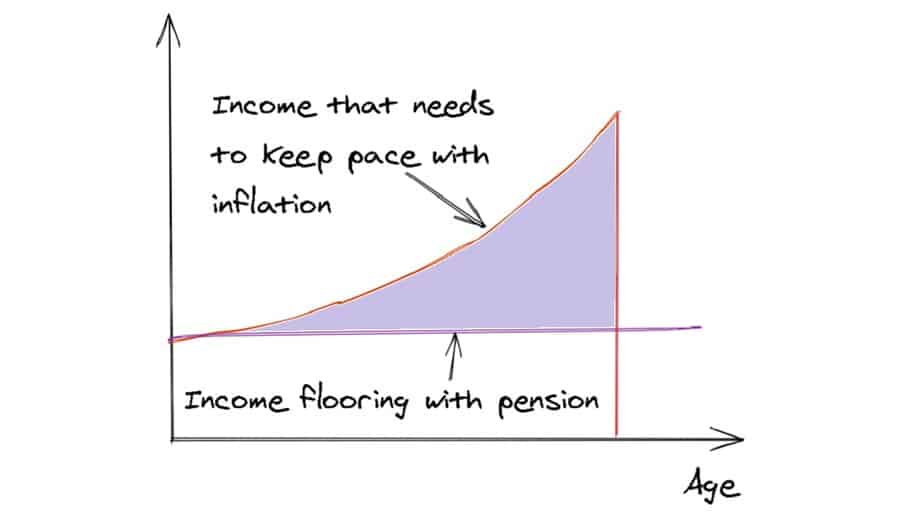
This is a schematic of retirement planning with a single pension equal to the first year’s expenses. The remainder of the corpus can fund the increase in expenses due to inflation and changes in lifestyle.
The same idea can also be implemented with more than one annuity. This is a screenshot of the annuity ladder calculator module from the freefincal robo advisory template. The expenses are increasing at a defined rate of inflation. Each step shows an annuity purchased every ten years.
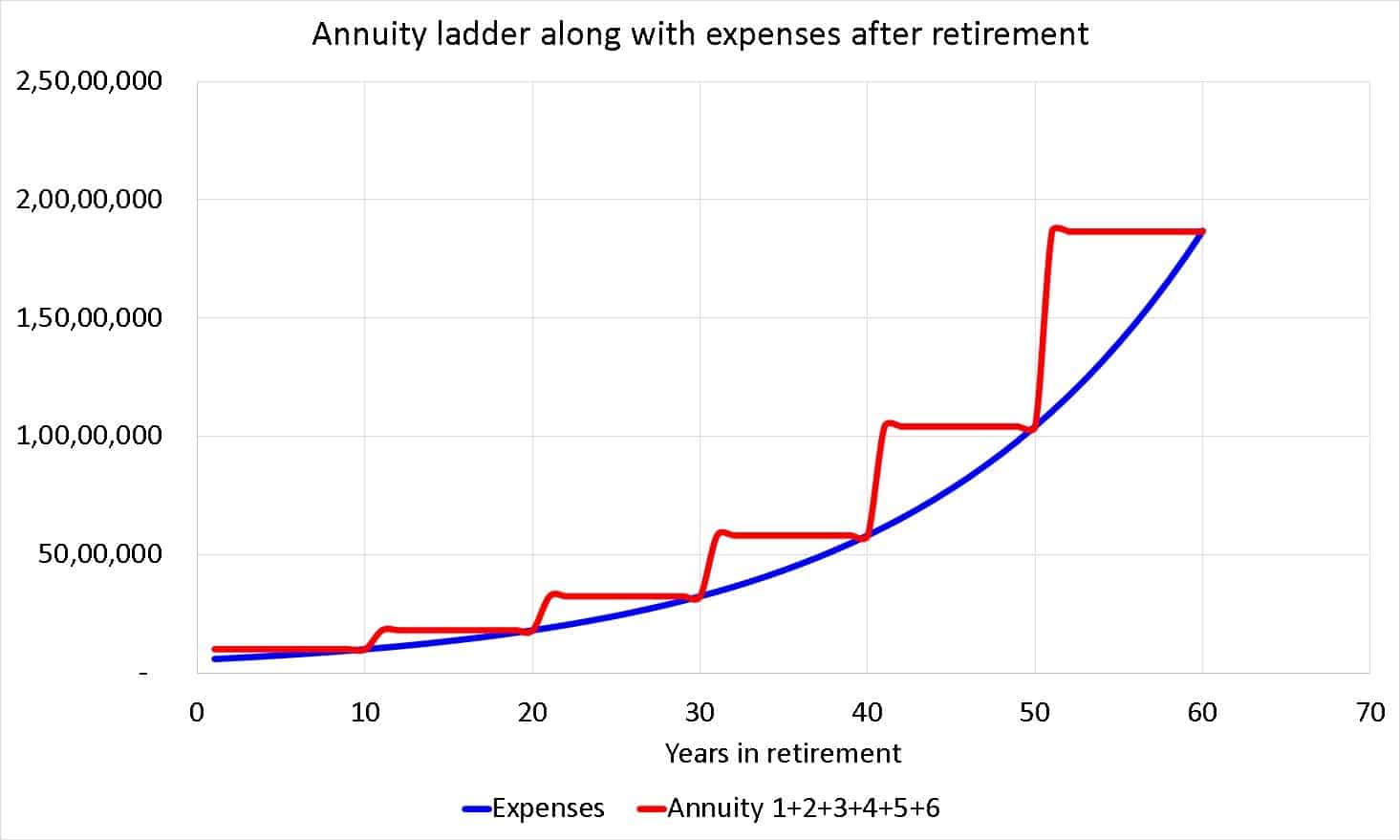
When we defer annuity purchases, we get a better interest rate from the insurer, sometimes better than buying an RBI bond. See, for example: I need a pension: Should I buy an annuity or a govt bond?
How to plan for retirement if I have a pension?
Retirees often get a pension and rental income. This must be considered to reduce the retirement coprus to be accumulated and therefore the investment currently necessary.
There is no simple formula to account for such income, and it must be done for each year in retirement, taking inflation into account. The freefincal robo tool can accommodate three post-retirement sources of income (including their rate of appreciation) to calculate the retirement corpus necessary.
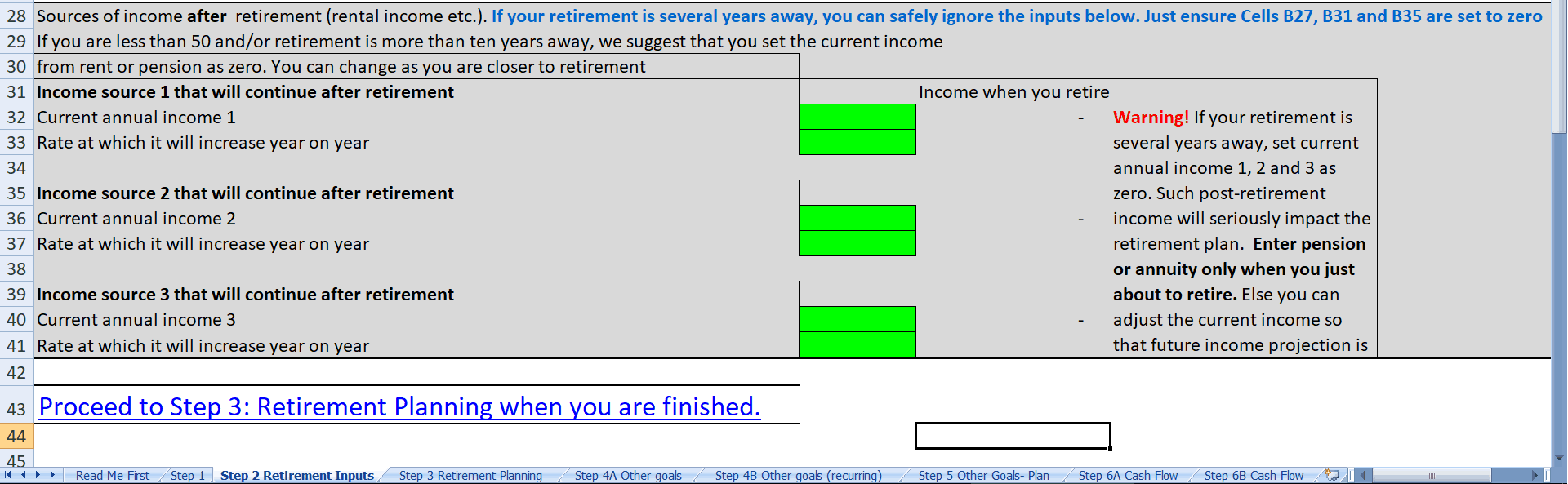
After entering all sources of income, the remaining corpus to be accumulated is computed. If the total post-tax income after retirement is well above the post-retirement expenses for the first few years, then an immediate annuity purchase is unnecessary.
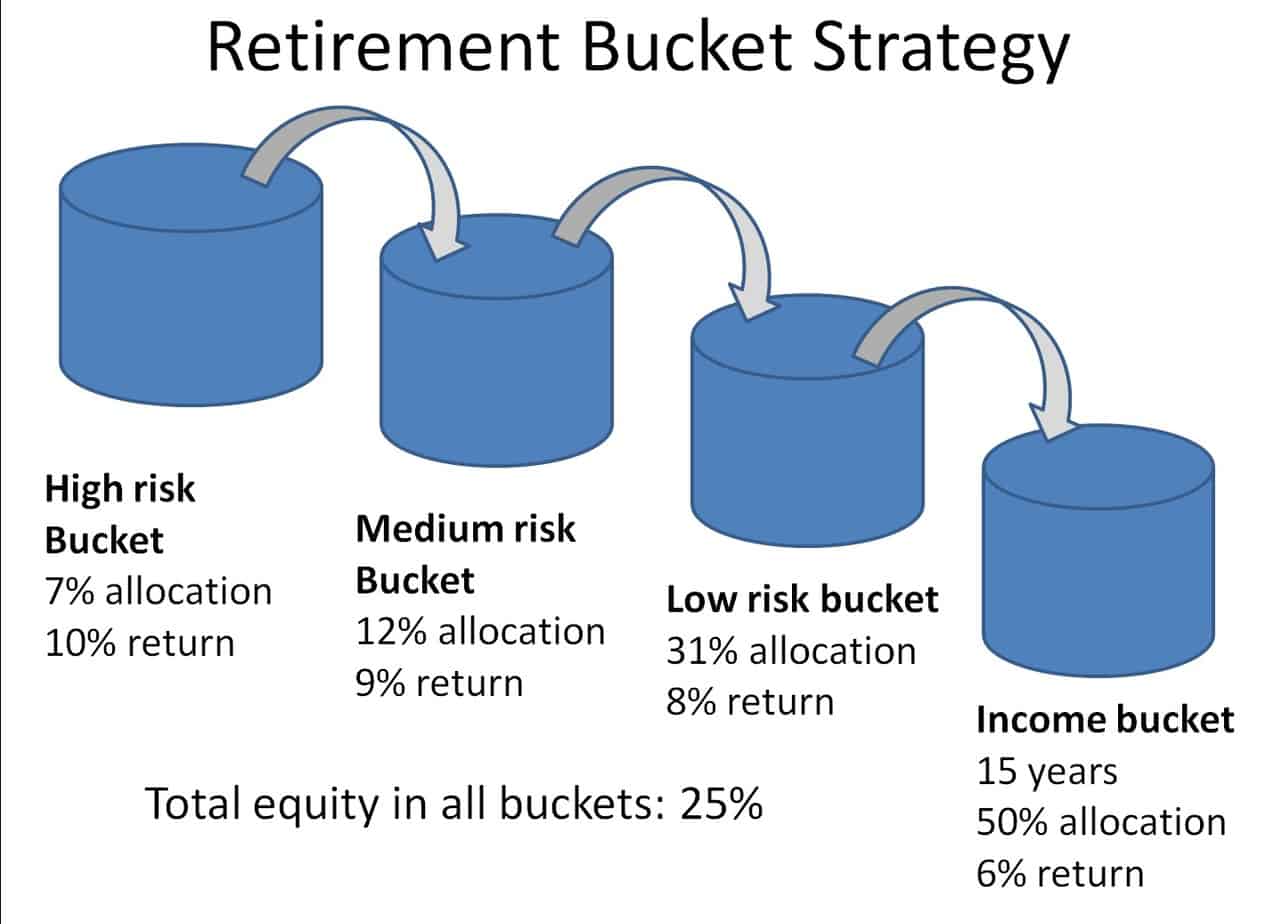
The remaining money can be deployed into buckets as computed by the robo tool.
This is a schematic from a previously published illustration: Creating a retirement income plan for 27-year old Amar. Please note that bucket allocations will change per the user’s age profile, which will be auto-determined by the robo template.
What if the retiree does not have a pension or other sources of income?
There are different possibilities.
- If the corpus is small, then annuity purchase is mandatory. See, for example: My withdrawal rate is 5%; what are my post-retirement investment options?
- If the corpus is large enough, it maybe managed without an annuity purchase.
- If the retiree wishes to buy at least one annuity, then the user can include this option under the “income flooring” entry in the robo tool, and the corpus will be suitably adjusted.
- If the user wishes to buy multiple annuities, as mentioned above, there is a separate annuity ladder sheet to compute the necessary corpus. This also includes the bucket strategy required to managed the rest of the corpus. See, for example: