Last Updated on April 28, 2022 at 9:40 pm
A reader writes, “Sir, I started my first job a couple of months ago. I want to start investing in equity via mutual funds but I am worried about the market. The bull run from April 2020 to Oct 2021 was too early for me and now when I have money the market has started to fall. What should I do? Start now or wait for it to fall more? Or should I wait for a change in momentum?
Even if we buy into the (incorrect*) belief that “over the long term the stock market will move up always”, equity investing is like climbing an unknown, uneven staircase. We do not know how wide each step is and we do not know when we will see the next step (ignoring the potholes within each step). * See: Stock market always moves up in the long term but returns move up and down!
This can be illustrated with a log graph of the Sensex. See, Sensex at 50,000 – lessons from the 42-year journey, and Are you ready to climb the Sensex Staircase?!

So the stock market is like a mercurial batsman (eg. Sehwag). It can explode to provide magical life-changing returns (eg. from 2003 to 2008; 2020-2022) or can go through a slump for years (the Sensex was flat for 10 years after the Harshad Mehta scam**)
🔥Secure your future with our Robo-advisory tool trusted by over 3,500 investors and advisors. From effortless retirement planning to funding your children’s biggest dreams, turn your financial goals into reality. 🔥
Subscribe for money management solutions via email! (Link takes you to our email sign-up form) Join 32,000+ readers in our community.
👉 New Tool Alert! NaviPlan: A Privacy-Focused Multi-asset Tracker and Goal Planner 👈
** Many people believe such a thing will never happen again in India as it is now economically stronger. A majority govt is also a key driver of stock market gains. So if there is a hung assembly, the return over the next few years can be quite poor. In other words, there are no guarantees and the future is unknown.
So the simple secret behind successful stock market investing is, to start early and keep investing. When the bumper returns arrive your life could change. That is, accumulate as much market-linked capital as possible to benefit from an upswing.
So everyone is waiting for such a return in one way or another and everyone is timing the market! See: Why “time in the market: is not different from “timing the market”!
At the onset of the pandemic, markets initially crashed but recovered in the hope of a future economic recovery. Then the implications of the lockdown and govt bailouts have started to manifest over the past few months (eg. higher inflation). So currently, there is no good news to drive the market up and there is no seriously bad news to drive it down.
If we call this (from Nov 2021 onwards with the benefit of hindsight) a sideways market, then this one is the best time to invest in equity. To accumulate stock and mutual fund units as much as possible but within a planned asset allocation. Sooner or later, the market will move up and it will change your life. Yes, that is me being hopeful!. Hope is the fuel on which the best-laid plans run.
We are all victims of our good and bad experiences and so am I. Again with the benefit of hindsight, I consider myself lucky to have started my journey with equity mutual funds when the markets were crashing in 2008 and this gave me no returns for the next five years. No, I did not buy the dip! I started with a SIP of Rs. 1500.
During these years, I was investing like crazy (quite unaware of anything happening around me). Around the time Na Mo was announced as the PM candidate the market started moving (coincidence) and I had to rub my eyes in disbelief to see my gains. My daily profit was equal to my monthly investment amount. See the chart below.
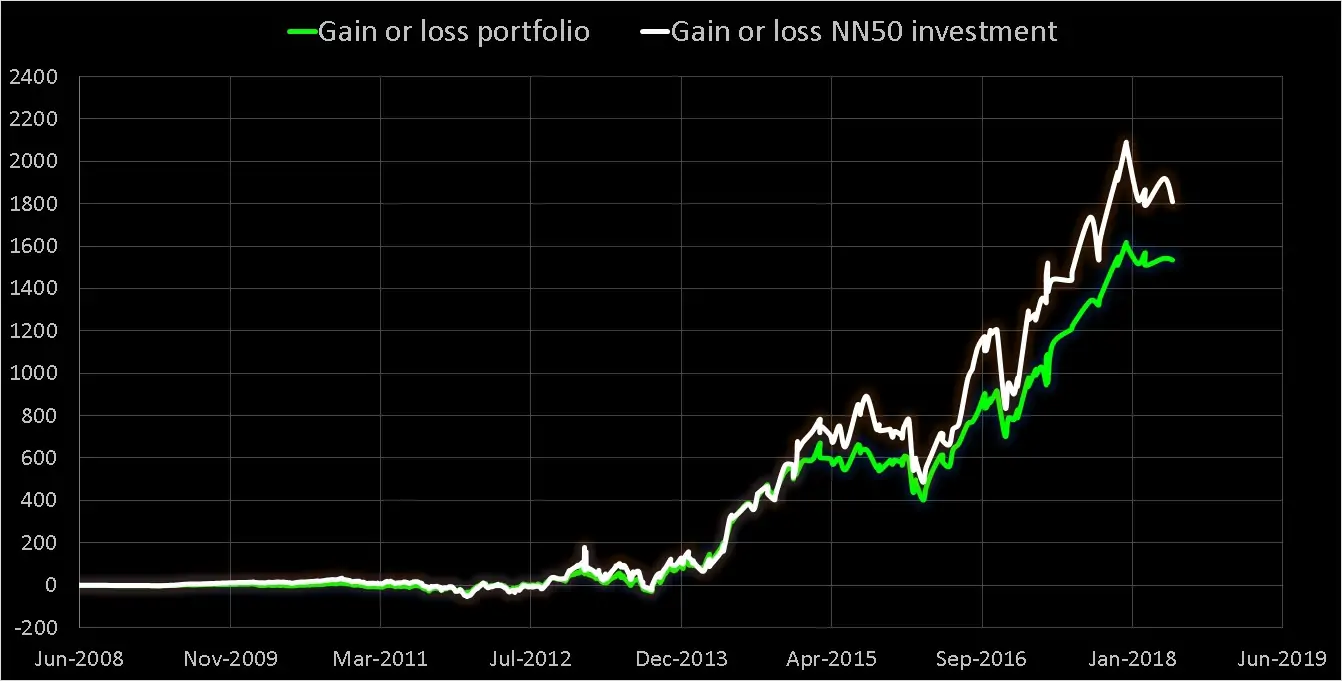
This is the year on year increase in my investment. Notice that by sheer luck, the huge increase in investment coincided with the sideways movement in the portfolio.
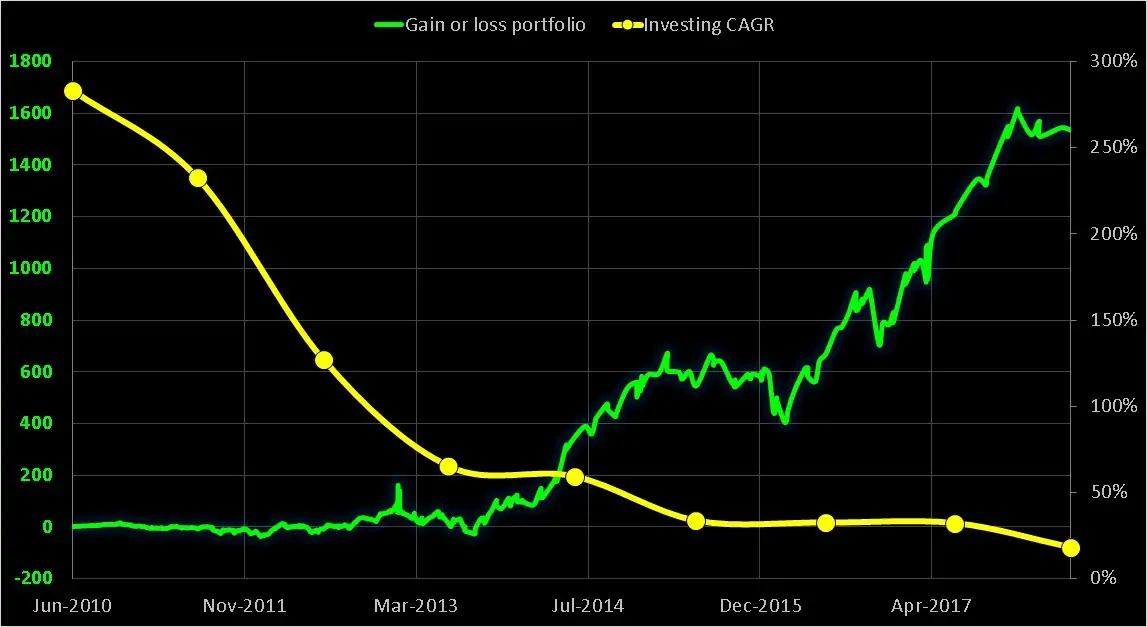
Note: The amount I invest each month has continuously increased. The above chart is to represent the increase in investment wrt to the initial investment.
You can read more about what the chart means and about Ten Years of Mutual Fund Investing: My Journey and lessons learned. An updated portfolio growth chart is here: Portfolio Audit 2021: How my goal-based investments fared this year.
Two events changed my social station. The late-2013 bull run took me to the threshold of financial independence. We shall define this as 30X or 30 times current annual expenses. This means a corpus will last for 30 years if the rate of inflation is the same as the rate of return.
The 2020-2022 bull run strengthened the financial independence (FI) status. During this time, my annual expenses increased by about 50%. The FI status is not yet cemented because 60% of the capital is (equity) market-linked and any crash and/or poor sequence of returns can change it. Currently, the debt corpus is worth about 18X.
That aside, the key point is, that the only reason the corpus grew was due to systematic investing regardless of market levels and an aggressive increase in investments year on year. In fact, the rate at which my investments grew is higher than the market-linked return. See, Why increasing investments each year is crucial for financial freedom.
Many people naively believe that wealth is built with returns. Nothing could be farther than the truth. Wealth is built with money. You need money to make money, So young earners should focus on skills that will increase their income.
So please do not worry about missed opportunities (the equity market will offer plenty of good and bad experiences from time to time). Do not worry about where the market is currently heading.
- Be clear about your goal
- Choose a suitable asset allocation.
- Invest as per that asset allocation like a machine.
- Increase investments as much as possible.
- Learn how to manage risk in your portfolio in a goal-based manner.
- Rebalance your portfolio at least when the deviation in asset allocation is 5% or more.
- Systematically reduced equity exposure well before you need the money.
- Once you start, portfolio maintenance should take no more than 30 minutes a year (yes, a year!).
If you want some help in getting started, you can refer to this video: Basics of portfolio construction: A guide for beginners.