Everyone needs to build a corpus to handle medical expenses either in the near future or after retirement. I discuss simple ways to build a corpus for medical expenses in this article.
Remember that a corpus for medical expenses is not just for those who cannot buy health insurance due to ill health. Even those with a robust health cover need one. This is because, cashless claims cannot be taken for granted. The insurer might say, “pay for the bills and claim later”.
Also, as pointed out before, having one crore Super Top Up insurance is of little use if one does not have one crore of liquid assets. This is because many super top claims (especially if the base policy is from a different insurer) are settled in reimbursement mode, not cashless mode.
There are also other aspects:
- Health insurance for even a few lakhs is expensive, will increase with age, can increase if the insurer faces huge losses. See, for example: Claim rejection data for standalone health insurers for FY 2021-2022
- Health insurance will cover only medical expenses. Many non-medical expenses amount to 15-20% of a hospital bill.
- Health insurance will not cover lifestyle disease management – e.g. daily expenses for diabetes or heart health. You can use this cost of a chronic illness calculator to understand how dangerous this is.
- Critical and non-critical health costs can run several lakhs within days or months. A critical illness cover is also expensive and has a narrow coverage mandate.
- Premiums shoot up if the insurers report a loss, and this means the ability to increase our medical cover is limited with that insurer.
🔥Secure your future with our Robo-advisory tool trusted by over 3,500 investors and advisors. From effortless retirement planning to funding your children’s biggest dreams, turn your financial goals into reality. 🔥
Subscribe for money management solutions via email! (Link takes you to our email sign-up form) Join 32,000+ readers in our community.
👉 New Tool Alert! NaviPlan: A Privacy-Focused Multi-asset Tracker and Goal Planner 👈
How to build a corpus for medical expenses?
Well, this is pretty much common sense.
- Invest more in your current long-term goals. For e.g. try and add at least Rs. 1000 to Rs. 5000 a month to your investments. I know it is hard, but not everyone can afford everything in life! So do what you can. Invest, say, 40% of that extra amount in fixed income and 60% in equity. Or pretty much in the same asset allocation of your long-term goals.
- Rs. 5000 monthly for 15 years at 10% return results in a nearly 20 lakh corpus.
- Increase the investment by Rs. 1000 more to get 4 lakhs extra.
- Invest as soon as possible. Time is essential to building wealth. The sooner you start and the more you invest, the bigger your corpus.
- Increase your investments at least 5% a year, preferably 10%. Not easy, but try; we must.
- Build a strong emergency fund: This will handle the bulk of your medical expenses soon. Read more: ₹e-Assemble Step 2: Lay the Foundations to Get Rich.
- Buy as much health insurance cover as early as possible and never stop it. This is essential to leat your medical expense corpus grow in peace without redemptions.
- Remember that it takes time! Wealth needs time to grow. So plan to touch your corpus only 15 years or so later. In the meantime, manage health issues with your health insurance and emergency fund. If you can’t buy insurance, then I am afraid it will haver to be only from the emergency fund.
- Do not forget about Things to do AFTER you buy a health insurance policy.
Planning for the medical expenses corpus
We shall use the freefincal robo advisory tool for this. This is a screenshot of the inputs page.
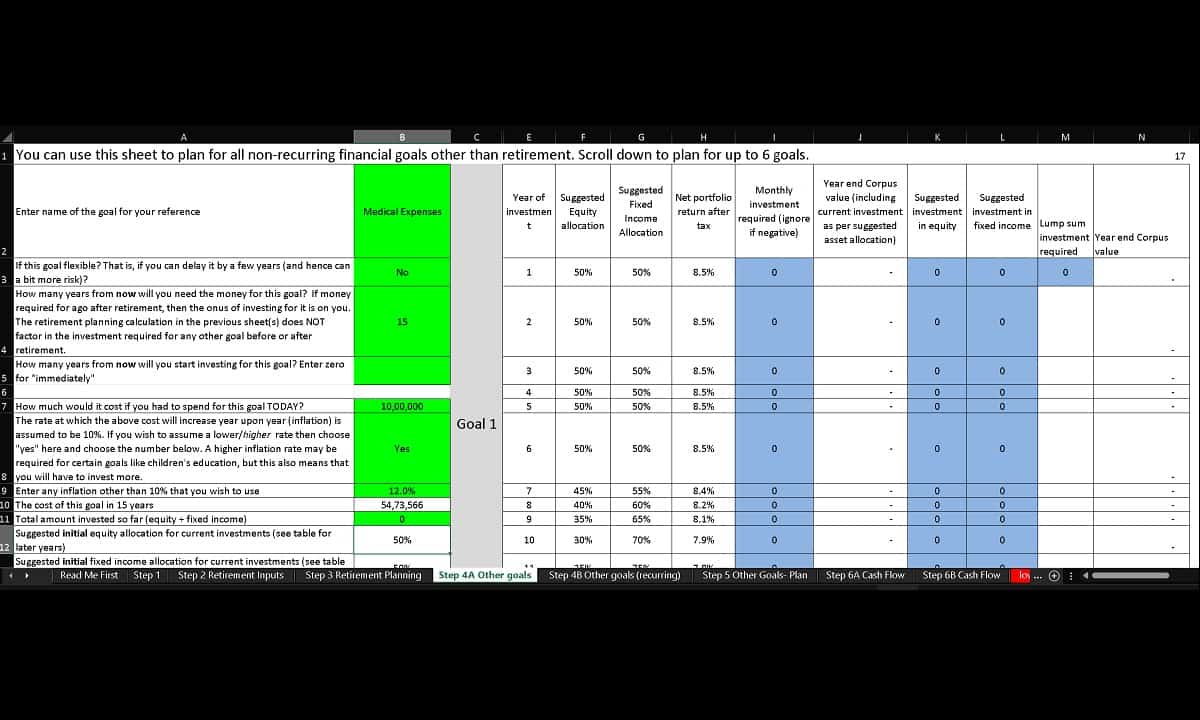
- After accounting for short-term and long-term goals, this assumes one has extra money to invest. Or it may be a mandatory goal for those who cannot be insured.
- Treat this as a non-recurring goal, like our child’s future goal.
- Assume that the money is required at the time of retirement.
- Use an inflation of at least 10%, preferably 12%.
- The tool has other options if you wish to plan a bit later or increase investments each year by a certain percentage.
- The current cost is a bit tricky. You can set this at Rs. 3L or Rs. 5L or Rs. 10L or even higher, depending on the result – the amount to be invested.
- The tool will output the asset allocation schedule to be followed. This is a screenshot.
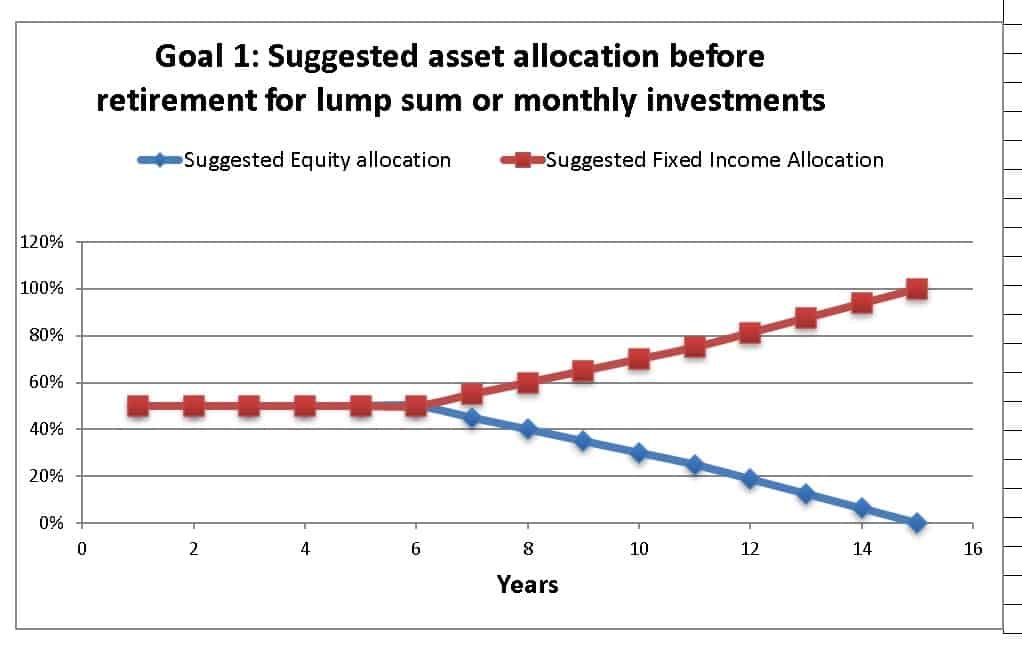
Suggested asset allocation schedule by the freefincal robo advisory tool for building a medical expenses corpusDon’t be worried if the results are scary. Start small. We invest what we can and take it from there – not much else can be done anyway!