Every week, a new financial freedom story shows up on YouTube. A new video.
A new podcast. A new educator who has “achieved financial freedom” and now wants to teach others how to do the same. Platforms like YouTube, podcasts, and finance apps are full of such stories, many with lakhs of views. And that tells us something important: People aren’t tired of financial freedom stories. They’re trying to understand what they can learn from them and how they might apply it to their own lives. I click on these stories too.
About the author: Sneha writes about personal finance and retirement planning from the perspective of a salaried professional navigating real-world trade-offs. She is studying investment advisory frameworks and has cleared the NISM Series XA examination. Her articles can be found at sneharege.com
More than half of these stories follow a familiar pattern. Someone quits the corporate race. Moves from a “polluted city” to the mountains or beaches. Talks about raising kids in fresh air (as if the rest of us don’t care about that). Shows a life of travel, slow mornings, and freedom.
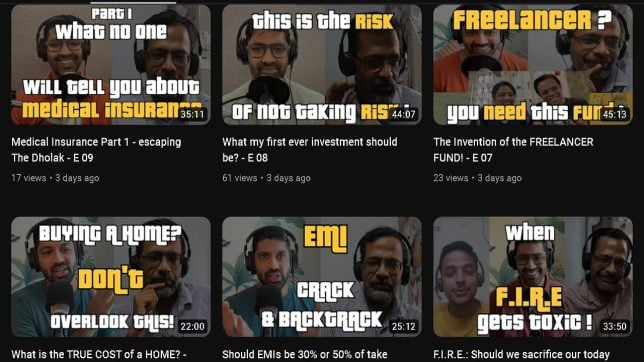
The thumbnails are irresistible.
“Retired at 40.”
“Left corporate forever.”
“Escaped the rat race.”
You click, hoping that this time you’ll finally find something practical.
Some insight you can apply.
But more often than not, what you get is another outlier story.
The Problem With Outliers (And No, This Is Not Jealousy)
Let me be clear: this is not about discrediting anyone’s success.
Join 32,000+ readers and get free money management solutions delivered to your inbox! Subscribe to get posts via email! (Link takes you to our email sign-up form)

🔥Want to create a complete financial plan? Learn goal-based investing? Exclusive access to our DIY tools? Increase your income with your skills? Use this link to enjoy massive discounts on our robo-advisory tool & courses! 🔥
People who achieved financial independence worked hard, took risks, and stayed disciplined. That deserves respect.
The issue arises when non-repeatable advantages are presented as a repeatable strategy.
Some common outliers behind popular stories include:
- Senior executive careers or long overseas stints
- Early exposure to equity investing through the family
- Career paths that are statistically uncommon
- Startup exits, ESOPs
- Income from inherited real estate (often conveniently left out of the “journey”)
These are not “wrong” stories.
They are just not typical.
The Silent Majority No One Talks About
So here’s the real question I struggle with:
What about the salaried individual earning ₹50,000 to ₹1 lakh a month, with no foreign stint, no inheritance, no startup lottery, working in an increasingly uncertain IT and corporate market where opportunities seem to shrink year after year?
Does that mean early retirement is not for them?
Does it mean anything below ₹8–10 crore is “not good enough”?
Does it mean financial freedom is only for a privileged few?
Unfortunately, the way these stories are presented often skews reality.
That’s where planning starts going wrong. People walk away believing:
- They must accumulate ₹8–10 crore
- They must invest ₹1 lakh via SIP every month
- They must leave cities, buy land, start cafés or homestays
- Or worse, quit jobs and sell expensive “financial freedom” courses after a US stint
None of this is mandatory. None of it is universal.
So What Does a Realistic Retirement Framework Look Like?
Once you strip away the noise, retirement planning is not a secret formula.
It is a structured thinking process, repeated honestly over time.
Let’s understand the framework.
Finding Your Why (Not the Instagram Version Sold to Us)
Early retirement planning starts at the wrong place for many people.
Not with why, but with how much.
We rush into numbers: 25X, 30X, 3% withdrawal, 4% withdrawal.
Early retirement is often sold as:
- No alarm clocks
- Endless travel
- Complete freedom
In reality, most people want early retirement because of one or more of these:
- Chronic burnout
- Loss of meaning at work
- Health concerns
- Desire for flexibility, not idleness
- Fear of being stuck in a job they can’t physically or mentally continue till 60
Example:
A 42-year-old IT professional doesn’t hate working but hates the constant pressure, late calls, and fear of layoffs. Their why is not “never work again”, but “regain control over time”.
This clarity changes everything. Instead of rushing to build a 35X corpus, they may first prioritise a safety net and plan for part-time or low-stress work later. Their corpus requirement drops significantly.
Without clarity on why, numbers calculated on Excel sheets become meaningless targets borrowed from someone else’s life.
The Only Math That Actually Matters Early On
Once your why is clear, the next question is how much, and this is where simplicity beats sophistication.
Instead of starting with formulas, start with expenses:
- Essential expenses: food, utilities, healthcare, insurance/ Costs that exist even after you exit corporate life
- Lifestyle expenses: travel, eating out, help at home. Comforts you value
- Discretionary expenses: upgrades, gadgets, luxury travel — expenses that can be trimmed if needed
This exercise often reveals something important.
Many people don’t need their current lifestyle to feel secure. They need their essential life covered.
- Want a large corpus? Continue working longer.
- Want mental health? Secure essentials first, not luxury upgrades.
- Want to explore purpose or passion? Build a survival safety net first, then take the leap.
Example:
A household spends ₹1 lakh a month today.
- Essentials: ₹50,000
- Lifestyle: ₹25,000
- Discretionary: ₹25,000
If their goal is freedom from stress and the corporate prison, not luxury, they may plan retirement around ₹50–75k per month, not ₹1 lakh.
That single decision can reduce the required corpus by crores.
Understanding FIRE Is a Spectrum, Not a Badge
Financial independence is not binary. You don’t either “have it” or “don’t”.
Lean FIRE, regular FIRE, Coast FIRE, these are not labels to chase. They are tools to think with, not identities to be blinded by.
Example:
A 45-year-old couple with ₹2.5 crore invested may:
- Cover essential expenses through their corpus
- Supplement lifestyle expenses through teaching, freelancing, or consulting
They are not “retired” by YouTube or Instagram standards, but they are free.
Finding When (The Most Ignored Question)
Most stories jump from ‘how much’ to ‘I quit’.
But ‘when’ matters just as much as how much you accumulate.
- When will kids’ education peak?
- When will healthcare costs rise?
- When does job risk increase?
- When does energy decline?
Example:
Someone plans to exit corporate at 48, not 38, because:
- Kids’ education costs reduce after 45
- Home loan ends by 46
- Peak earnings are between 40–48
That decision alone can make the plan far more robust and achievable.
Retirement Is Not “No Income Forever”
This is one of the most damaging myths.
Most people will:
- Earn something post-retirement
- Teach, consult, freelance, write, or advise
- Choose lower stress over zero work
Planning for some income:
- Reduces pressure on the corpus
- Increases longevity of savings
- Improves mental health
Example:
If a household needs ₹70,000 per month and earns even ₹25,000 post-retirement, the corpus only needs to support ₹45,000.
That’s a very different plan from “I need ₹10 crore”.
What Real Retirement Planning Actually Looks Like
In real life, planning looks like this:
- Revisiting expenses every year
- Adjusting expectations as life changes
- Accepting uncertainty instead of fighting it
- Building buffers instead of perfect forecasts
It is boring.
It is iterative.
It is deeply personal.
And that’s why it works.
There Is No One Number. But There Is a Framework.
Find your why. Find your how much. Find your when.
That’s it.
No clickbait.
No envy.
No borrowed dreams.
Just honest planning, rooted in your life.
If you feel overwhelmed by the numbers you see online, pause. The problem may not be your savings rate; it may be the stories you are comparing yourself to.
Final Thought
Financial freedom is not about escaping work. It is about escaping fear.
Fear of:
- Toxic job
- Uncertain health
- Financial helplessness
- Being stuck without options
You don’t need an outlier story to fix that.
You need clarity, honesty, and a framework that fits your life.
And that, quietly, is enough.

Use our Robo-advisory Tool to create a complete financial plan! ⇐More than 3,000 investors and advisors use this! Use the discount code: robo25 for a 20% discount. Plan your retirement (early, normal, before, and after), as well as non-recurring financial goals (such as child education) and recurring financial goals (like holidays and appliance purchases). The tool would help anyone aged 18 to 80 plan for their retirement, as well as six other non-recurring financial goals and four recurring financial goals, with a detailed cash flow summary.
🔥You can also avail massive discounts on our courses and the freefincal investor circle! 🔥& join our community of 8000+ users!
Track your mutual funds and stock investments with this Google Sheet!
We also publish monthly equity mutual funds, debt and hybrid mutual funds, index funds, and ETF screeners, as well as momentum and low-volatility stock screeners.
You can follow our articles on Google News

We have over 1,000 videos on YouTube!

Join our WhatsApp Channel
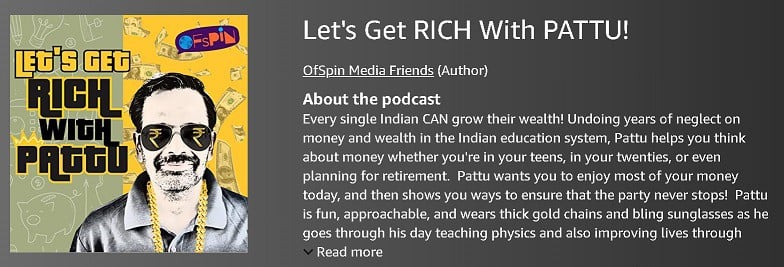
- Do you have a comment about the above article? Reach out to us on Twitter: @freefincal or @pattufreefincal
- Have a question? Subscribe to our newsletter using the form below.
- Hit 'reply' to any email from us! We do not offer personalised investment advice. We can write a detailed article without mentioning your name if you have a generic question.
Join 32,000+ readers and get free money management solutions delivered to your inbox! Subscribe to get posts via email! (Link takes you to our email sign-up form)
About The Author
 Dr M. Pattabiraman (PhD) is the founder, managing editor and primary author of freefincal. He is an associate professor at the Indian Institute of Technology, Madras. He has over 13 years of experience publishing news analysis, research and financial product development. Connect with him via Twitter(X), LinkedIn, or YouTube. Pattabiraman has co-authored three print books: (1) You can be rich too with goal-based investing (CNBC TV18) for DIY investors. (2) Gamechanger for young earners. (3) Chinchu Gets a Superpower! for kids. He has also written seven other free e-books on various money management topics. He is a patron and co-founder of “Fee-only India,” an organisation promoting unbiased, commission-free, AUM-independent investment advice.
Our flagship course! Learn to manage your portfolio like a pro to achieve your goals regardless of market conditions! ⇐ More than 3,500 investors and advisors are part of our exclusive community! Get clarity on how to plan for your goals and achieve the necessary corpus no matter the market condition!! Watch the first lecture for free! One-time payment! No recurring fees! Life-long access to videos! Reduce fear, uncertainty and doubt while investing! Learn how to plan for your goals before and after retirement with confidence.
Increase your income by getting people to pay for your skills! ⇐ More than 800 salaried employees, entrepreneurs and financial advisors are part of our exclusive community! Learn how to get people to pay for your skills! Whether you are a professional or small business owner seeking more clients through online visibility, or a salaried individual looking for a side income or passive income, we will show you how to achieve this by showcasing your skills and building a community that trusts and pays you. (watch 1st lecture for free). One-time payment! No recurring fees! Life-long access to videos!
Our book for kids: “Chinchu Gets a Superpower!” is now available!


Must-read book even for adults! This is something that every parent should teach their kids right from their young age. The importance of money management and decision making based on their wants and needs. Very nicely written in simple terms. - Arun.Buy the book: Chinchu gets a superpower for your child!
How to profit from content writing: Our new ebook is for those interested in getting a side income via content writing. It is available at a 50% discount for Rs. 500 only!
Do you want to check if the market is overvalued or undervalued? Use our market valuation tool (it will work with any index!), or get the Tactical Buy/Sell timing tool!
We publish monthly mutual fund screeners and momentum, low-volatility stock screeners.
About freefincal & its content policy. Freefincal is a News Media organisation dedicated to providing original analysis, reports, reviews and insights on mutual funds, stocks, investing, retirement and personal finance developments. We do so without conflict of interest and bias. Follow us on Google News. Freefincal serves more than three million readers a year (5 million page views) with articles based only on factual information and detailed analysis by its authors. All statements made will be verified with credible and knowledgeable sources before publication. Freefincal does not publish paid articles, promotions, PR, satire or opinions without data. All opinions will be inferences backed by verifiable, reproducible evidence/data. Contact Information: To get in touch, please use our contact form. (Sponsored posts or paid collaborations will not be entertained.)
Connect with us on social media
- Twitter @freefincal
- Subscribe to our YouTube Videos
- Posts feed via Feedburner.
Our publications
You Can Be Rich Too with Goal-Based Investing
 Published by CNBC TV18, this book is designed to help you ask the right questions and find the correct answers. Additionally, it comes with nine online calculators, allowing you to create custom solutions tailored to your lifestyle. Get it now.
Gamechanger: Forget Startups, Join Corporate & Still Live the Rich Life You Want
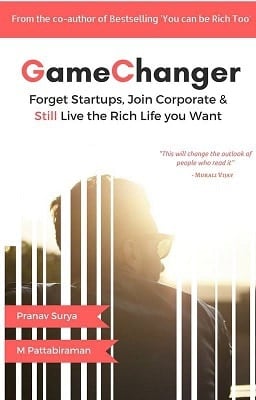 This book is designed for young earners to get their basics right from the start! It will also help you travel to exotic places at a low cost! Get it or gift it to a young earner.
Your Ultimate Guide to Travel
 This is an in-depth exploration of vacation planning, including finding affordable flights, budget accommodations, and practical travel tips. It also examines the benefits of travelling slowly, both financially and psychologically, with links to relevant web pages and guidance at every step. Get the PDF for Rs 300 (instant download)