Investors will be able to invest in Silver for the first time via ICICI Prudential Silver ETF (NFO period Jan 5 – 19 2022). Exciting as this may sound, investors need to appreciate several aspects of investing in silver and investing in it via ETF. A discussion.
Before we begin, it must be understood that ICICI Prudential Silver ETF is primarily meant to try and gain from silver price movements. Those who wish to make short-term gains/losses can consider this ETF but must understand how ETFs work and should be cautious when they place buy/sell orders or they may incur losses from price-nav deviations. See: How ETFs are different from Mutual Funds: A Beginner’s Guide. We recommend newbie traders to wait and watch thee daily volumes and price-NAV deviations before getting started.
So that leaves us with long term investors. Does it make sense for them to include ICICI Prudential Silver ETF as part of a long-term investment portfolio that they will presumably rebalance regularly to maintain asset allocation?
We shall compare silver with the more precious gold. Regular readers may be that we have already discussed that there is no need to include gold in a long-term portfolio. See:
Our position on silver is unlikely to be any different but for what it is worth, we shall try to answer the following questions:
🔥Secure your future with our Robo-advisory tool trusted by over 3,500 investors and advisors. From effortless retirement planning to funding your children’s biggest dreams, turn your financial goals into reality. 🔥
Subscribe for money management solutions via email! (Link takes you to our email sign-up form) Join 32,000+ readers in our community.
👉 New Tool Alert! NaviPlan: A Privacy-Focused Multi-asset Tracker and Goal Planner 👈
- Which offers better returns over 5, 10, 15 years, gold or silver?
- Which is more volatile gold or silver?
- Do we get anything “extra” by including silver in a long term investment portfolio?
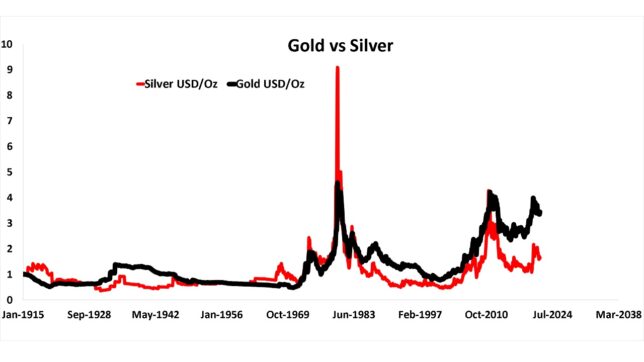
First, let us look at the price movement of silver and gold since 1915. This is in USD per ounce sourced from macrotrends.net (a paid resource).
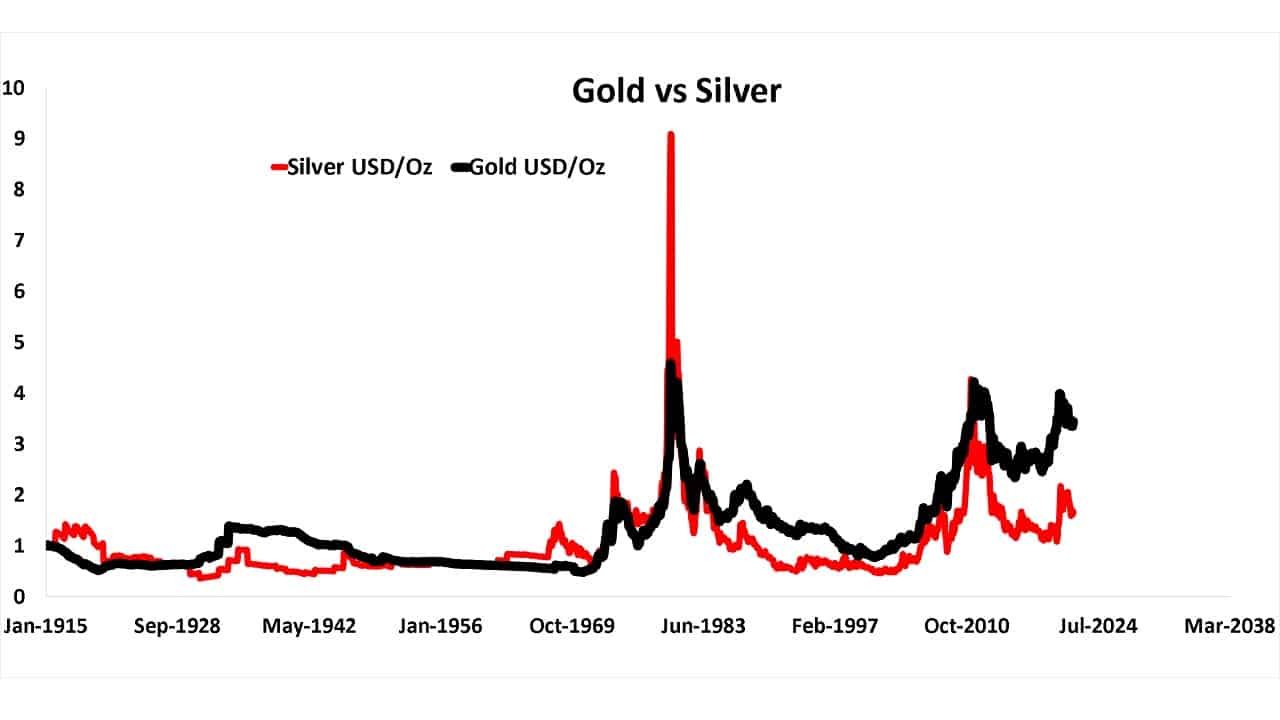
The correlation in monthly returns since 1915 is about 47%, but since the last two decades, it has improved to 63%. One can see this in the five-year rolling returns chart below.
Since 1915 the variation in monthly returns as measured by standard deviation is 1.9 times more for silver than it is for gold. Quite astonishingly the ratio remains the same when measured over the last two decades.
This means the returns from silver are significantly more volatile than those for gold. Inexperienced traders should appreciate this before plunging in.
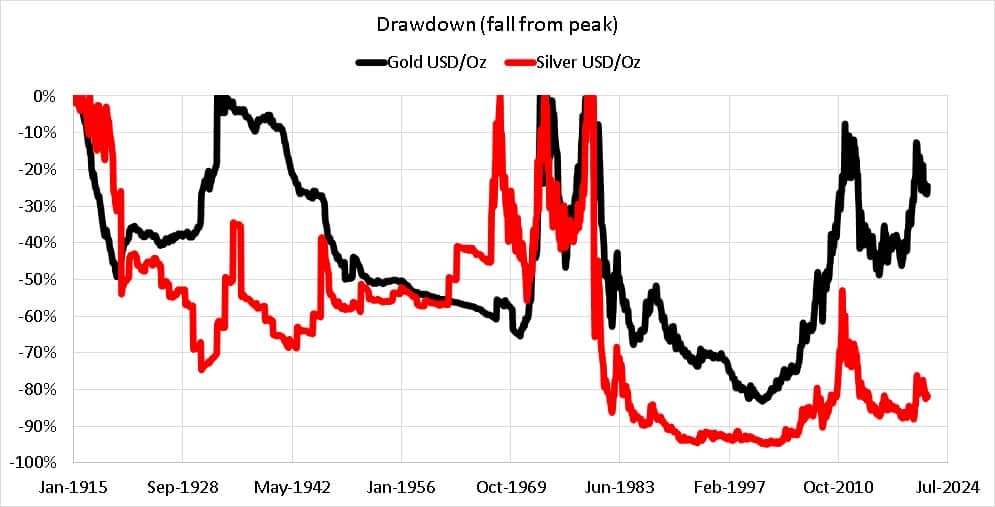
The drawdown or the time the prices were below a previous peak is shown below. Unlike gold which displays some crude cyclicity, silver has remained underwater for decades on either side of the spike in the 1970s. This means that it is highly unsuitable as an investment and should strictly be used for trading. This argument is also valid for gold as well!
The 5, 10 and 15-year rolling returns of silver and gold are shown below.
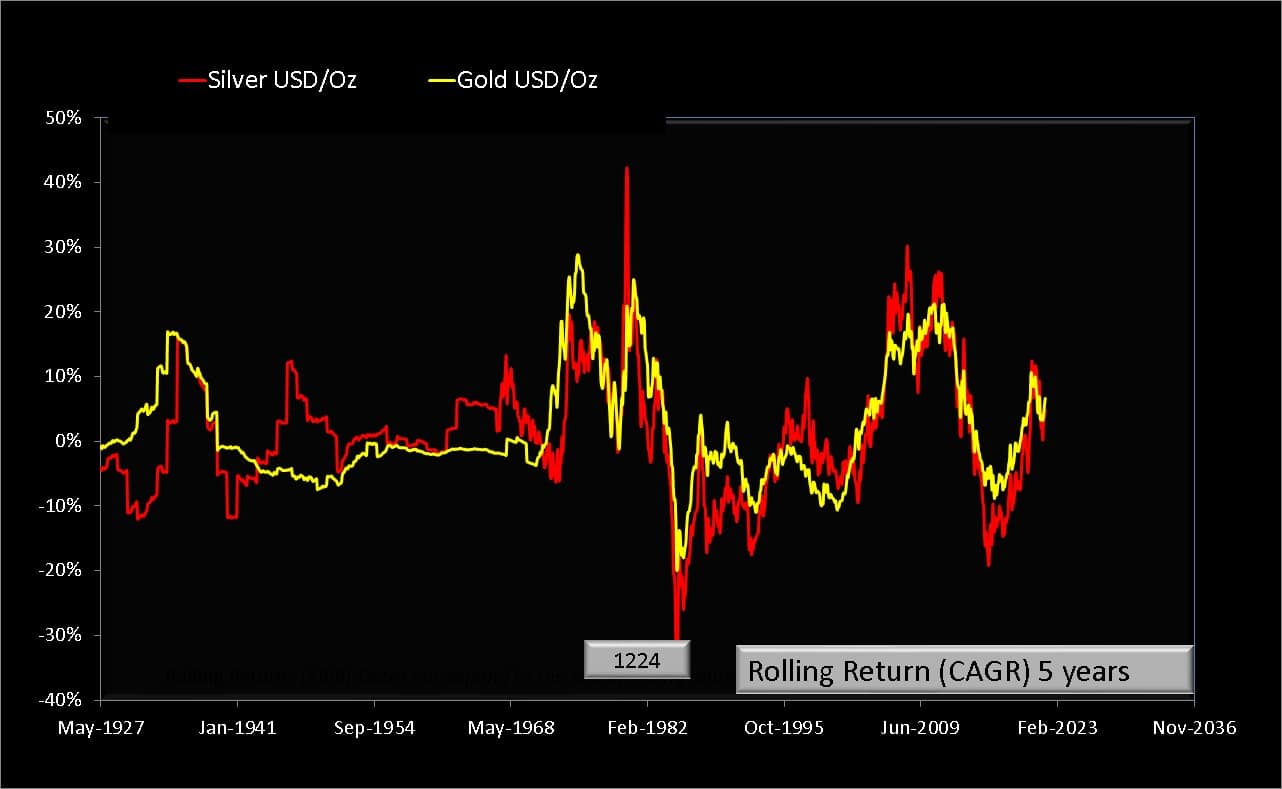
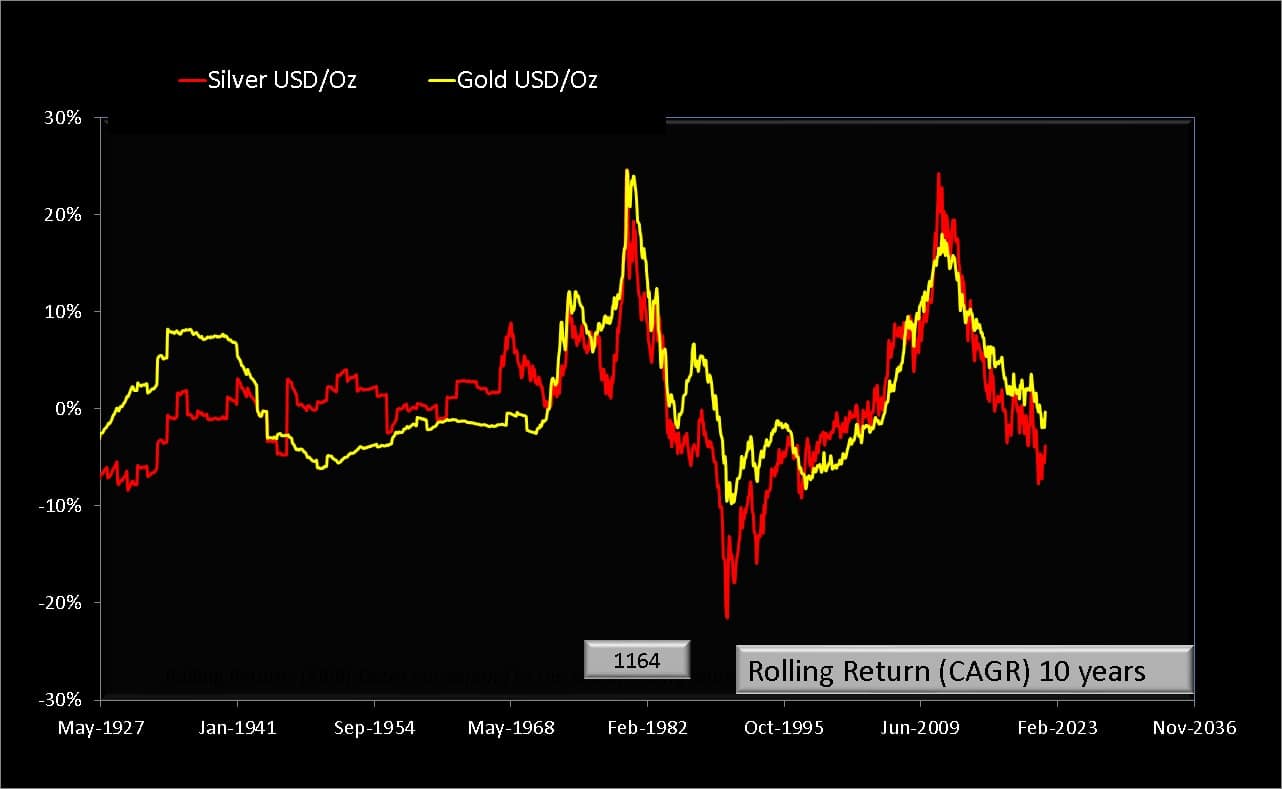
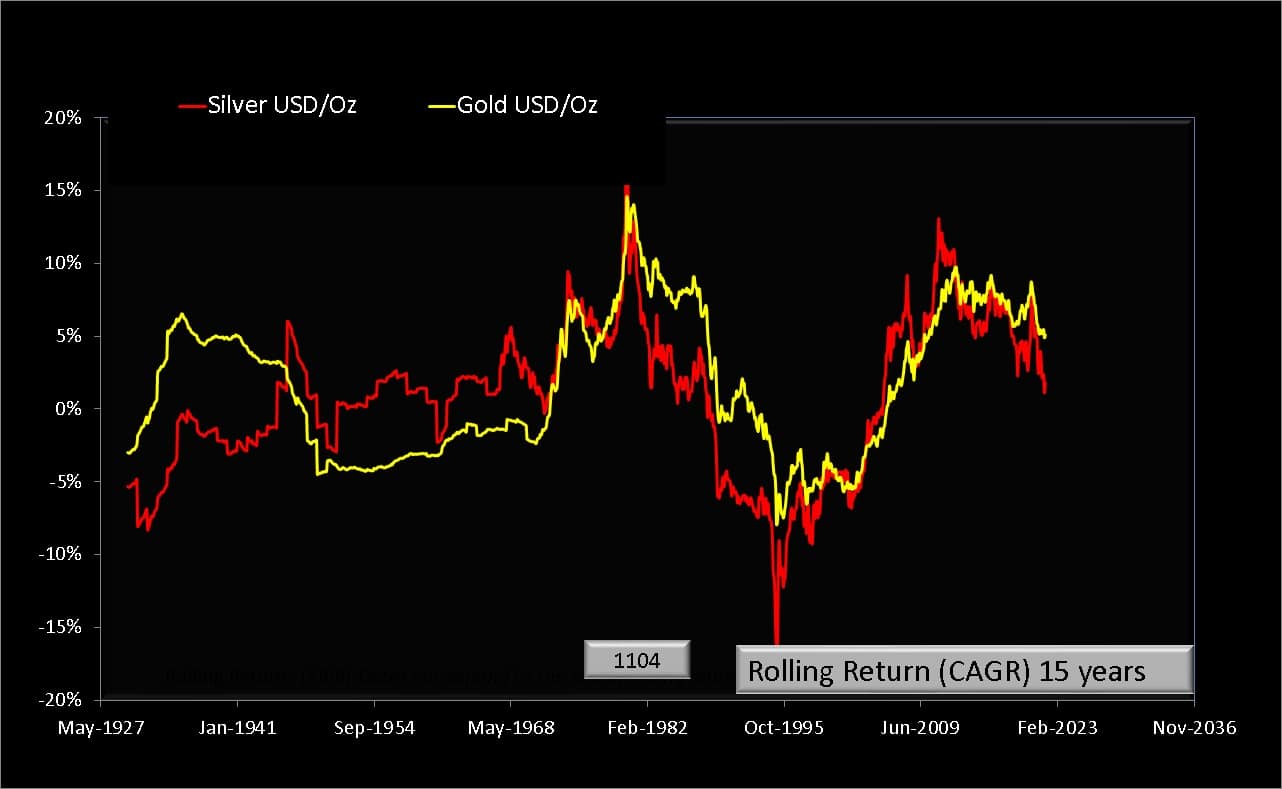
The highly volatile nature of both metals can be clearly seen. Adding silver to a long-term portfolio (with or without gold) is only going to increase maintenance and tax with reward entirely left in the hand of luck. It is an unnecessary addition.
Therefore, we recommend that long-term investors stay away from ICICI Prudential Silver ETF or a fund of fund variant that may be launched in the future. Short-term investors must appreciate that they are dealing with a metal twice as volatile as gold and must tread with caution. The trading rules that apply for gold may not apply to silver. As for this ETF from ICICI, it would be prudent to observe daily volumes and how efficiently the AMC is able to arbitrage out price-nav fluctuations before trading in it.