Last Updated on December 29, 2021 at 11:47 am
If you have a lump sum and would like to invest it in an equity mutual fund, what is the best way to go about it? Invest in one-shot or gradually over a few months? Is there any benefit in investing gradually other than psychological comfort? Let us find out with a backtest. Before we begin, let us be clear about a few things.
(1) If you wish to invest a lump sum gradually into an equity mutual fund because you are scared that the market will fall the next day, because you will sleep better, then, by all means, go ahead. This post is NOT for you! This post is only for those who ask “which is the best method to invest a lump sum?”, and those who claim gradual investing will result in lower risk and/or higher returns.
(2) Gradual investing can be of two types: (A) systematic – that is invest an amount each month regularly. You can do this manually or via a systematic transfer plan (STP). However, STP is meant for the benefit of the sales guy and the fund house so manual is enough. (B) Tactical – invest only when you “feel” the market is going to go up. We will compare one-shot investing vs systematic gradual investing in this post. Tactical investing will be considered in another post.
For those who wish to invest gradually for peace of mind, I have discussed a qualitative approach in terms of “sense of loss” before: How to invest a lump sum in an equity mutual fund? This post is a quantitative follow-up.
🔥Secure your future with our Robo-advisory tool trusted by over 3,500 investors and advisors. From effortless retirement planning to funding your children’s biggest dreams, turn your financial goals into reality. 🔥
Subscribe for money management solutions via email! (Link takes you to our email sign-up form) Join 32,000+ readers in our community.
👉 New Tool Alert! NaviPlan: A Privacy-Focused Multi-asset Tracker and Goal Planner 👈
How the one-shot vs gradual investing comparison was done
1: I asked members of FB group Asan Ideas for Wealth: If you prefer gradual investing, what time frame will you choose for a 10Y duration? That is the time frame to push the lump sum into the equity fund? The most popular choice was 12 months, followed by 6 months and 3 months. Some also said 15 months.
2 Then I asked in another poll, why do you want to invest gradually? The majority answered: to reduce investment risk (including better peace of mind). So let us find out if investment risk is actually reduced.
3 Take Sensex data from 1979 and calculate monthly returns. A total of 467 data points were obtained.
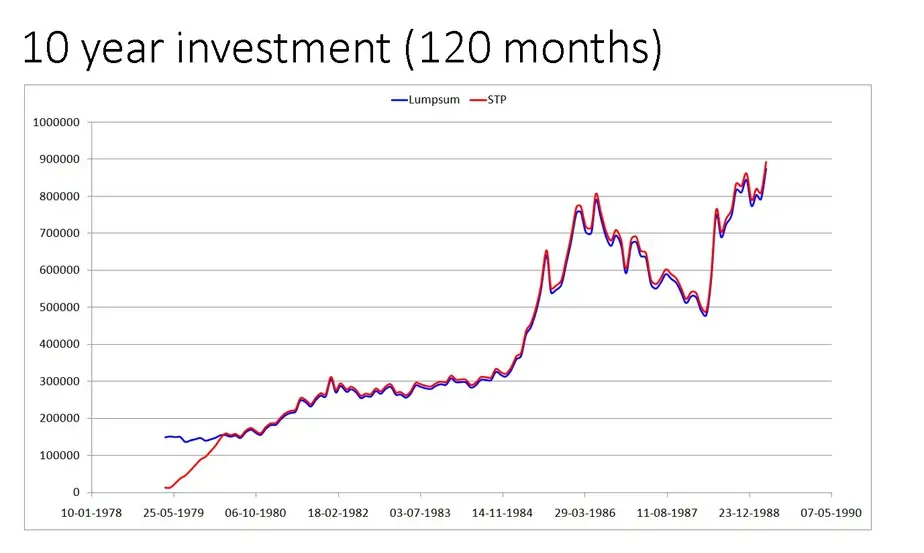
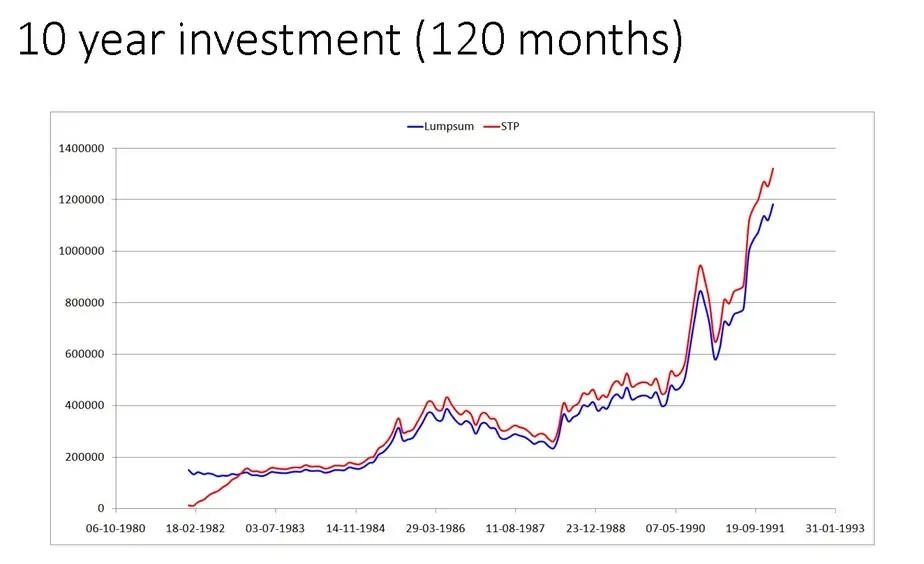
4 For a 10Y investment horizon comparison, the 467 data points were used on a rolling basis. The 1st to 120th monthly return was used for the 1st one-shot vs gradual test. Then the 2nd to 121st return was used for the 2nd test and so on. Until we have about 348 test runs.
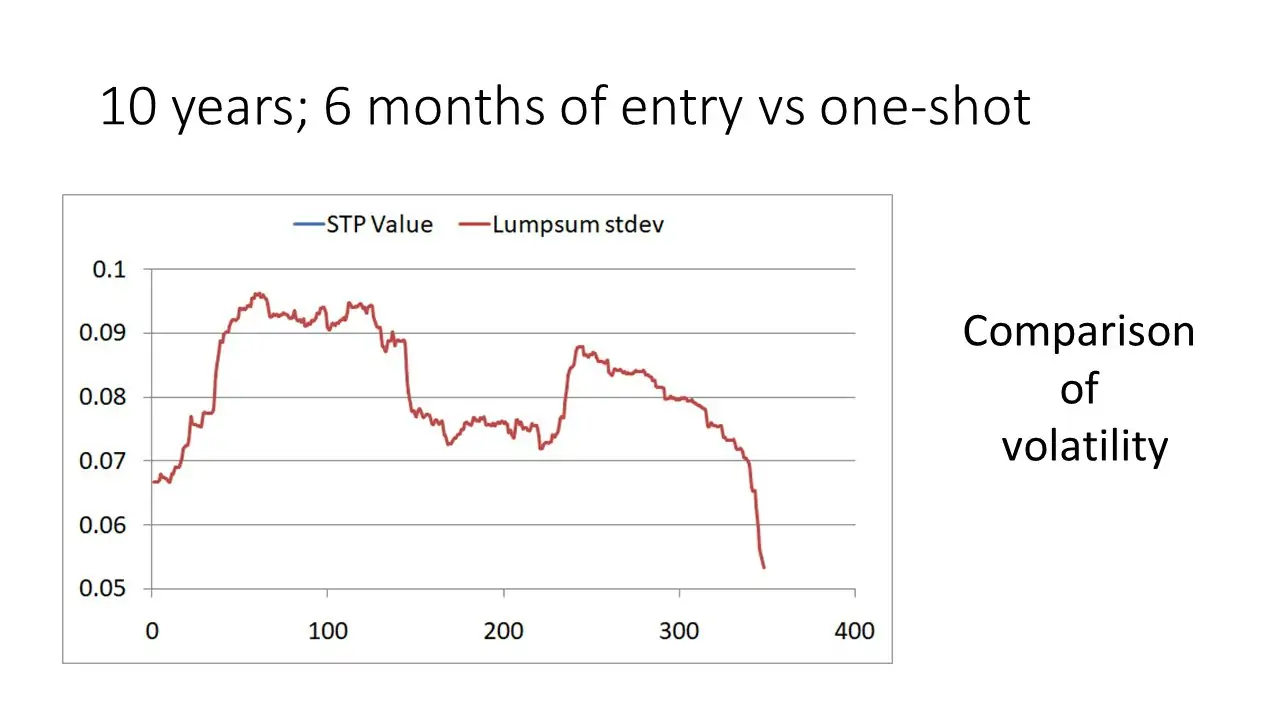
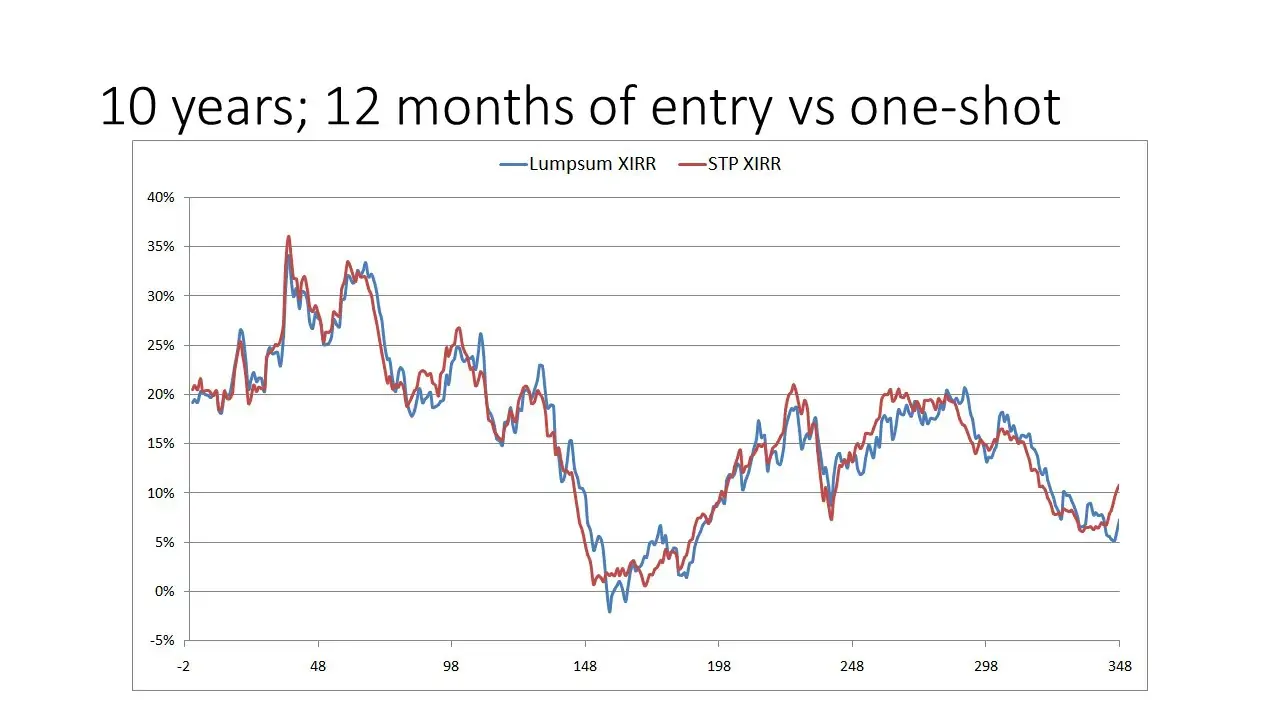
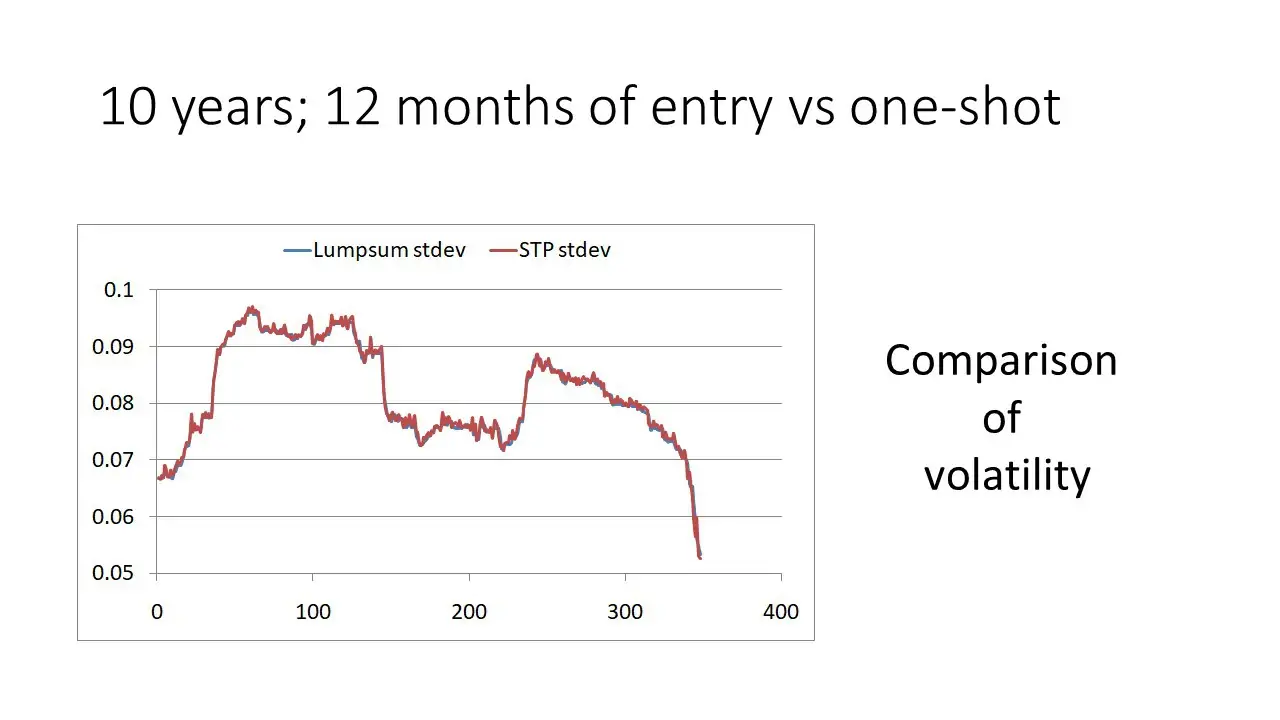
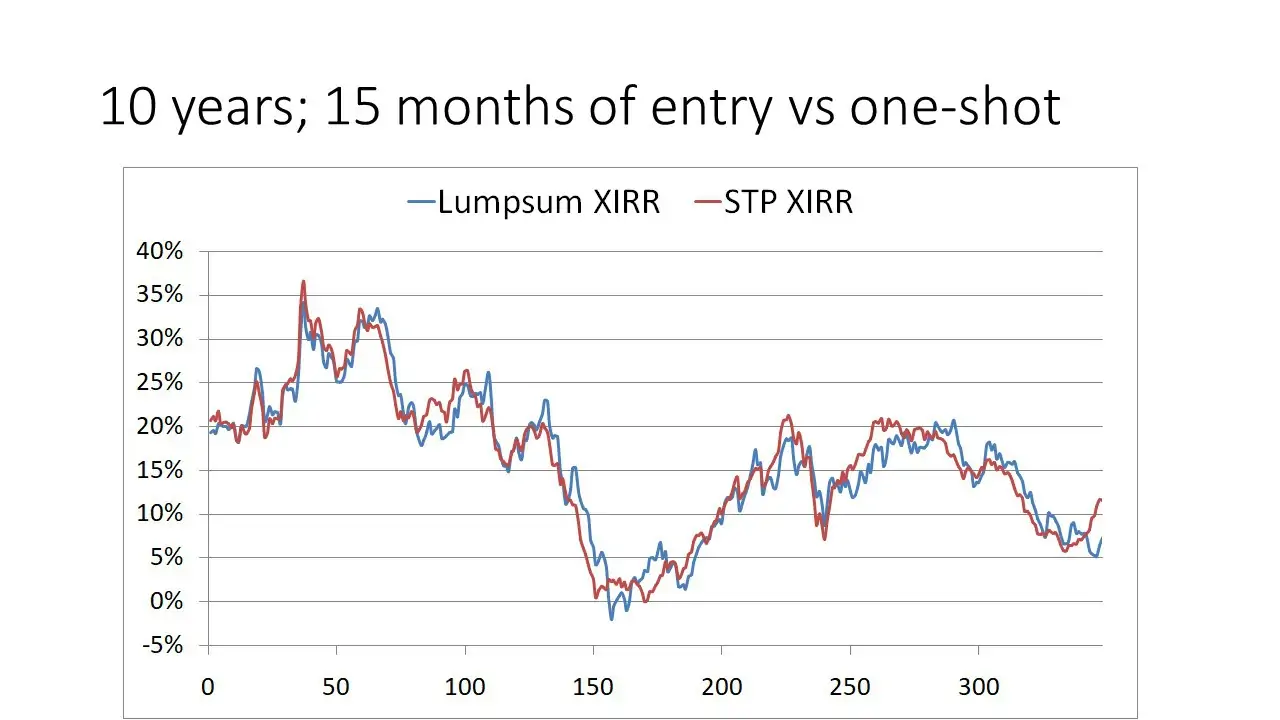
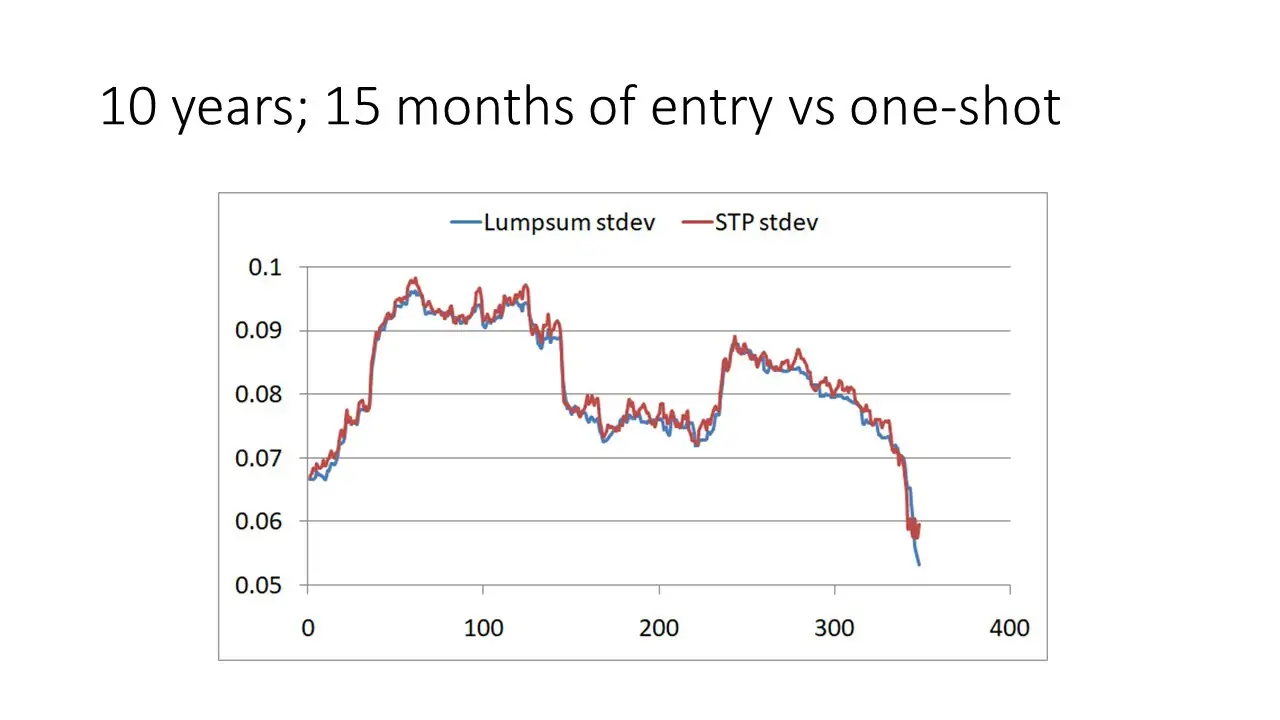
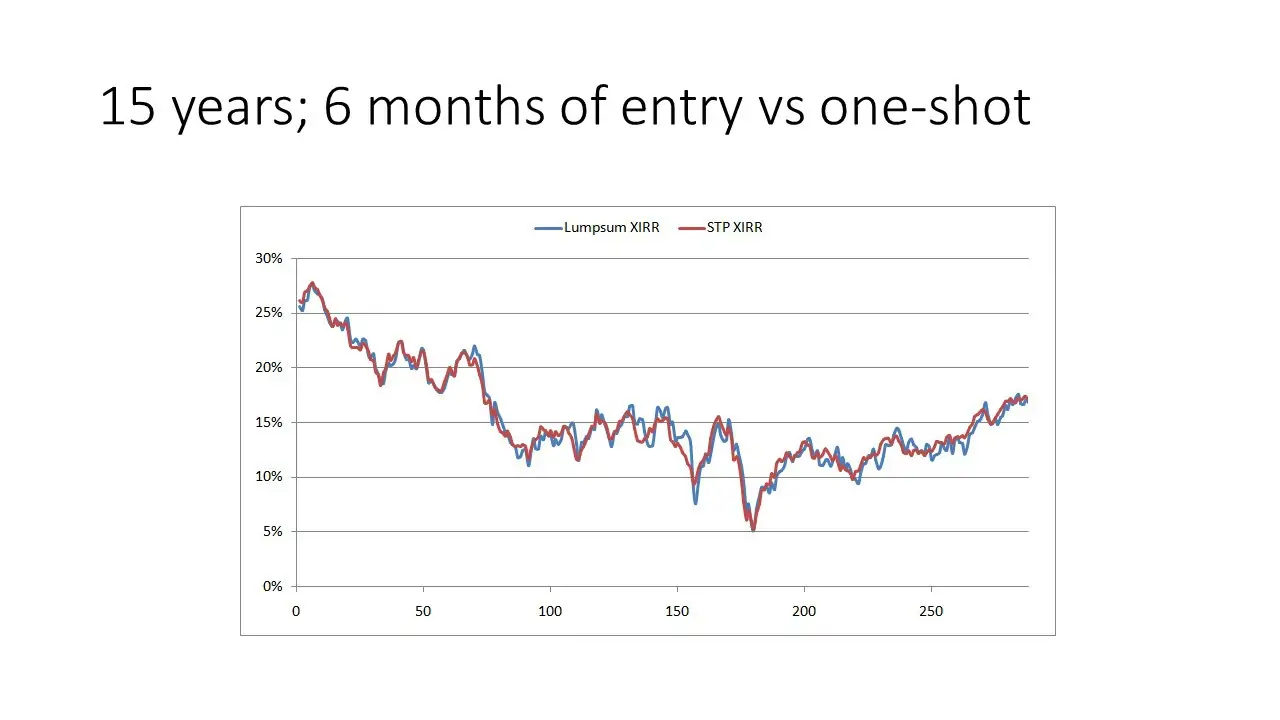
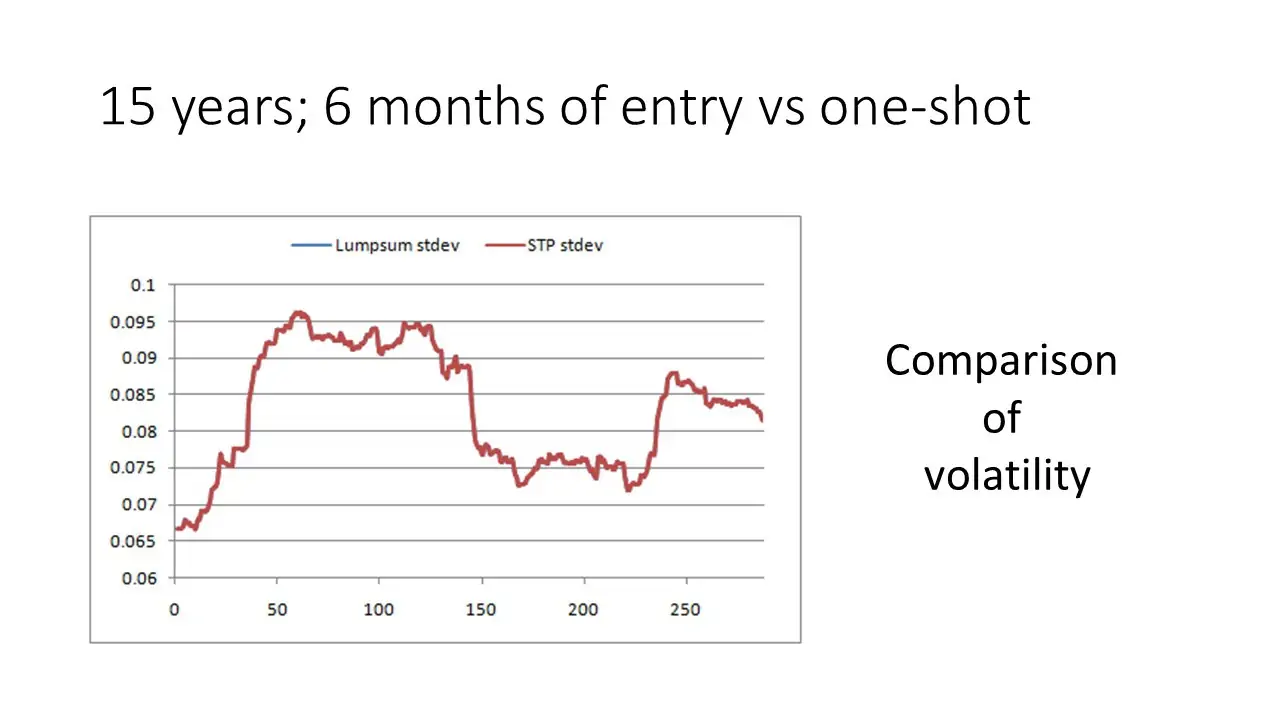
5 The gradual investment window was considered as 6 months, 12 months, 15 months 20 months (not shown here).
Sometimes there is no difference between the two:
Sometimes gradual investing is better:
Sometimes lump sum is better:
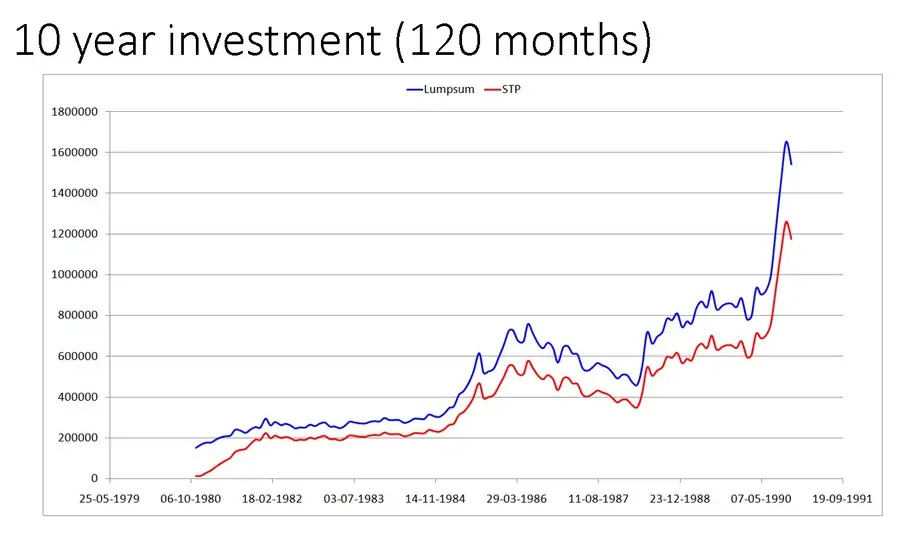
The essential point is there is no directionality. Sometimes one works, sometimes the other and sometimes no difference. It all depends on the future sequence of returns.
Results: Investing a lump sum in one-shot vs gradually (STP) in an equity mutual fund
Gallery: One-shot investing vs gradual investing
The XIRR is the annualized return. Std dev is the standard deviation or a measure of how monthly portfolio returns deviate from the average. It represents volatility. The horizontal axis represents the trial no (see video for explanation)
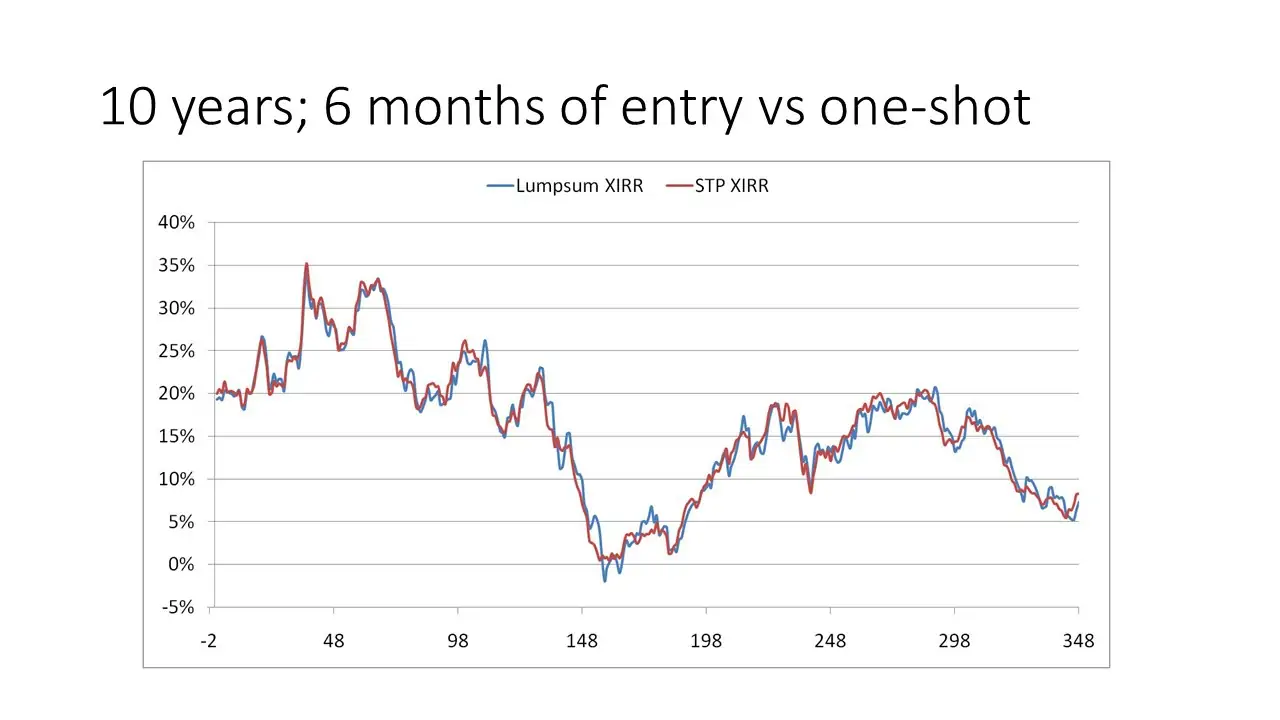
Summary
Invest gradually over any period that you are comfortable with, but do not claim that it will reduce risk and/enhance returns. That is nonsense. A reminder that we have only considered systematic gradual entry. Tactical gradual entry will be considered later.
An STP is meant to lock in your lump sum with the fund house. There is no need for them. Invest “directly” from your SB account to the mutual fund once a week, or once a month. It will only take 30-45 seconds to complete a transaction.
To define a lump sum and invest gradually, consult: How to invest a lump sum in an equity mutual fund?