A reader wants to know how a term insurance payout should be invested for the family’s welfare upon his demise. As is well known, a term insurance plan only pays out on the insured’s death (usually a breadwinner).
First, we (the insured) must ensure that the (bereaved) family typically does not need to dip into the sum insured immediately paid out or deploy it. That is, it can wait at least a month. This time is necessary to get used to the new circumstances and, more importantly, avoid mistakes in handling the corpus. To ensure this, we build a robust emergency fund or access to cash.
How the payout is used depends on several factors: Is the spouse working? If not, do they need to work? Can they work? If so, what would be the income expected? Will it be enough to support the daily needs of the family? If the deceased was salaried, what benefits would the family get? Does the family have any outstanding loans? How old are the children? Can we expect the eldest child to support the parent? If so, when? So and so forth.
The family needs professional help from a SEBI-registered fee-only investment advisor. We recommend that the contact details of such an advisor be attached to the policy document. Explicit and clear instructions to the spouse or any other family member to contact the advisor should also be attached.
This will ensure some good-natured, garrulous uncle does not mess up the corpus management. We have created an insurance calculator featured on the SEBI investor education website that provides instructions on using this corpus.
🔥Secure your future with our Robo-advisory tool trusted by over 3,500 investors and advisors. From effortless retirement planning to funding your children’s biggest dreams, turn your financial goals into reality. 🔥
Subscribe for money management solutions via email! (Link takes you to our email sign-up form) Join 32,000+ readers in our community.
👉 New Tool Alert! NaviPlan: A Privacy-Focused Multi-asset Tracker and Goal Planner 👈
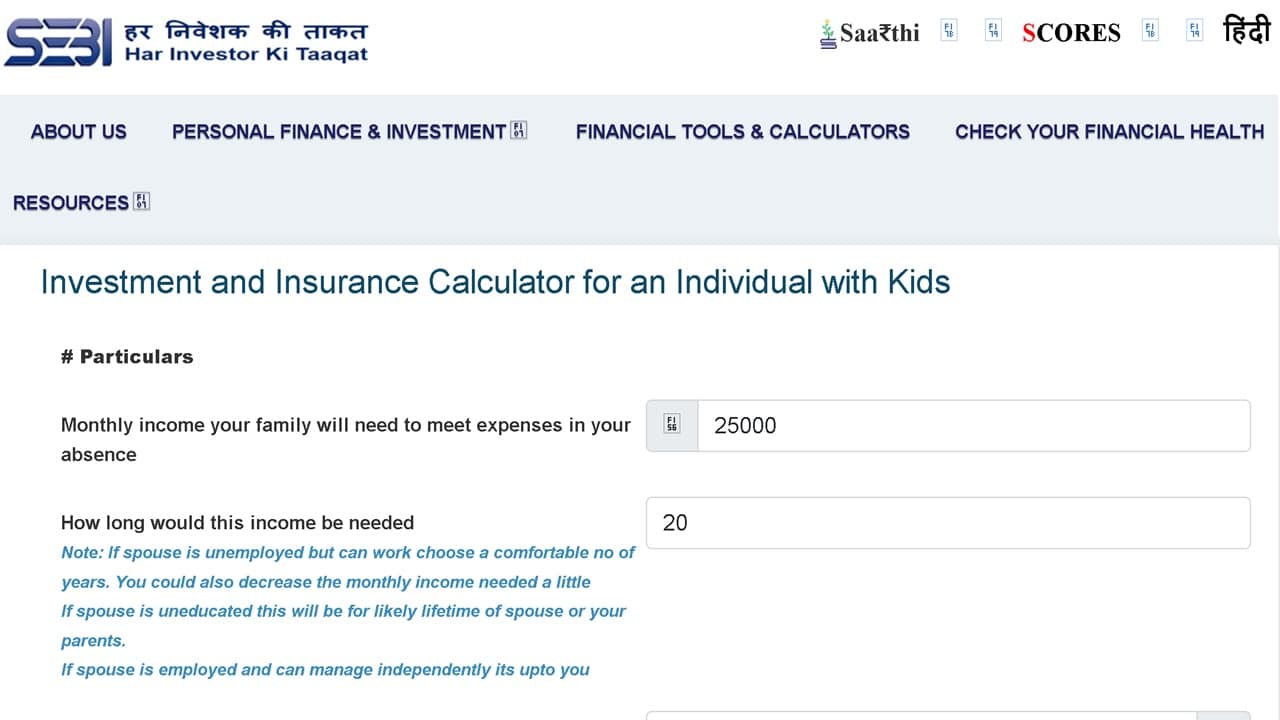
An Excel version is also available for members of the freefincal investor circle. We urge readers to use this tool before buying a term insurance plan for one crore! See: Are You Sure That A Term Life Insurance of One Crore is Sufficient?!
Example: How to invest a term insurance payout
This is a screenshot of instructions on investing the term insurance payout provided by the calculator. The numbers are for random inputs. Please use the tool for your specific circumstances. This example is only to illustrate the features available.
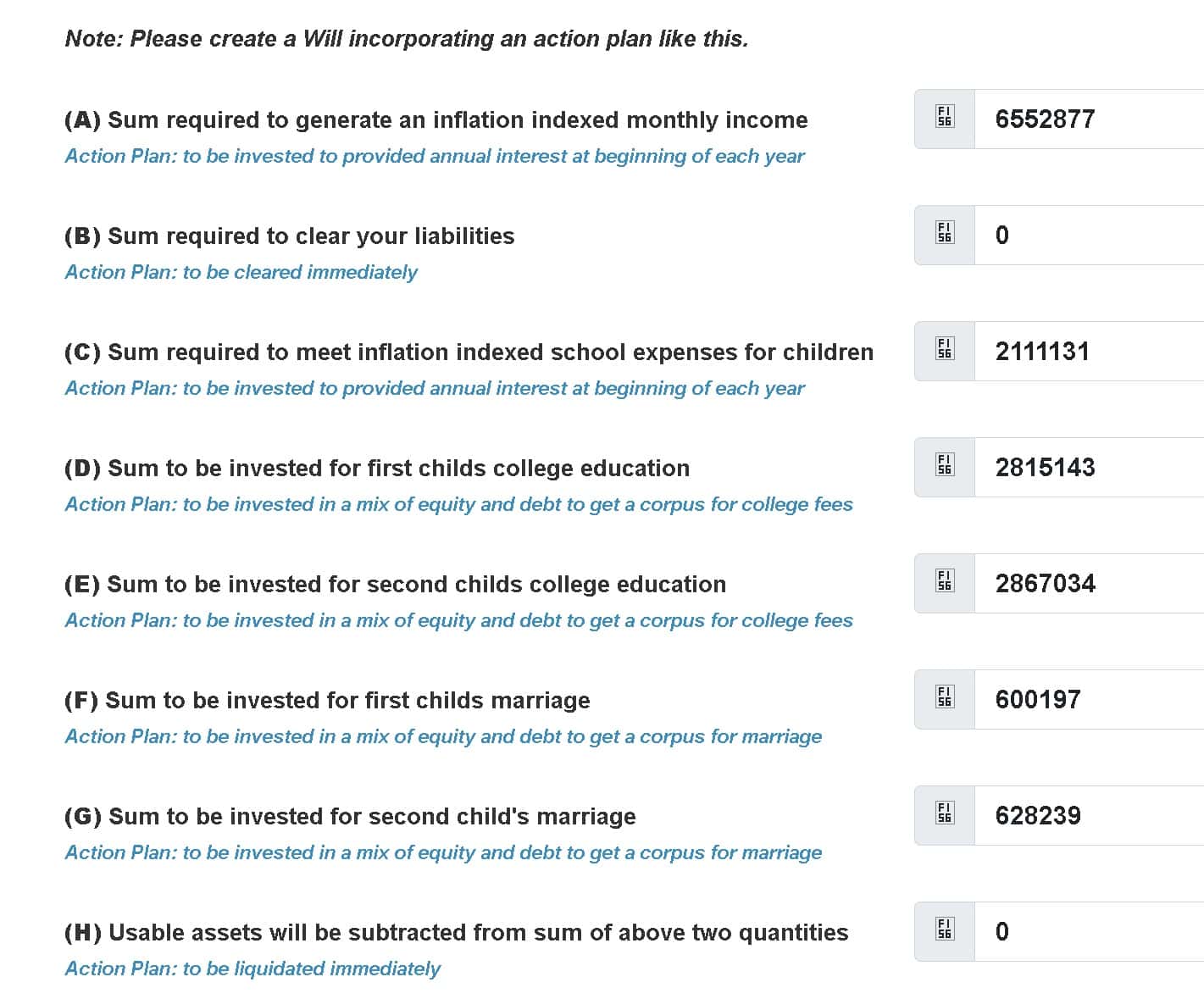
Out of the total insurance payout:
(A) Sum required to generate an inflation-indexed monthly income: Rs. 6552877
Action Plan: to be invested to provide annual interest at the beginning of each year
(B) Sum required to clear your liabilities: ________
Action Plan: to be cleared immediately
(C) Sum required to meet inflation-indexed school expenses for children: Rs. 2111131
Action Plan: to be invested to provide annual interest at the beginning of each year
(D) Sum to be invested for first child’s college education: Rs. 2815143
Action Plan: to be invested in a mix of equity and debt to get a corpus for college fees
(E) Sum to be invested for the second child’s college education: Rs. 2867034
Action Plan: to be invested in a mix of equity and debt to get a corpus for college fees
(F) Sum to be invested for first child marriage: ________
Action Plan: to be invested in a mix of equity and debt to get a corpus for marriage
(G) Sum to be invested for the second child’s marriage: ________
Action Plan: to be invested in a mix of equity and debt to get a corpus for marriage
Naturally, planning for specific future needs will increase the sum insured required. If your current insurance (or what the insurer would allow) is lower than this desired number, you must decide how much should be used for which purpose. This is where professional counsel from a fee-only advisor will go a long way.