Last Updated on December 29, 2021 at 11:58 am
The economic impact of world-wide lockdowns and restrictions are too scary to contemplate. The pay cuts and layoffs have already begun even for government employees. This is a list of money management steps to survive the impact of the lockdown.
The following steps are applicable only if your salary is already reduced or is likely to reduce. If you have already been laid off or likely to be. Even if this is not the case, a broad health check of your finance during a time like this will not hurt.
1. An emergency fund is not enough!
Imagine losing your salary and being out of work for even one month. The EMIs have to be paid. The school fee has to paid (this is that time of the year!). The mandatory monthly expenses have to be paid and very pretty much everything is mandatory.
🔥Secure your future with our Robo-advisory tool trusted by over 3,500 investors and advisors. From effortless retirement planning to funding your children’s biggest dreams, turn your financial goals into reality. 🔥
Subscribe for money management solutions via email! (Link takes you to our email sign-up form) Join 32,000+ readers in our community.
👉 New Tool Alert! NaviPlan: A Privacy-Focused Multi-asset Tracker and Goal Planner 👈
Typical emergency stashes will be about 3-6 times monthly expenses and do not include EMIs and the EMI moratorium is beneficial only to the banks. Time like now would require a lot more.
Depending on how your future income is going to be, an amount equal to at least six months expenses + at least 2-3 EMIs + school fee + a buffer for emergencies would be necessary.
This lockdown can impact jobs like never before and a corpus of at least 1-3 three years expenses would be ideal but near impossible for many.
If this means selling some stocks or mutual fund units or stopping SIPs or any other instrument go ahead and do it. If you have money in online FDs which can be liquidated instantly or funds in liquid or overnight funds it is fine too. For now, those get tagged under the emergency fund.
2. Get rid of short-term debt asap
Especially credit card due or any dues with double-digit interest rates. Again if this means selling some assets or even borrowing interest-free from friends or relatives it is any day better than struggling to repay with no income.
3. List and categorize investments
Liquidity is more important than returns. Our money should be accessible to us at all times. Every time there is a discussion about the NPS, someone would always say the lock-in would ensure discipline. That is not of much use if you cannot get money when needed.
The good old EPF is one of the most liquid fixed income instrument out there. One can withdraw from it after 2 months of a job loss but cannot touch your NPS unless you buy a pension with 80% of it! Going overboard on PPF accounts is also not smart. The full amount is not liquid.
Retirement plans can be recalculated and investment restarted later. This is a time for survival. Avoid ill-liquid products if your job is not secure.
List down all your investments. categorise them as “free to withdraw” and “locked-in”. Then prioritize items in the “free to withdraw” list. The tops ones would be the first to be redeemed.
If your “free to withdraw” list has an amount > or equal to at last one year’s expenses + 3 months EMI, you can breathe easy a bit.
Make a temporary adjustment to the asset allocation – reduce equity exposure and increase liquid fixed income exposure – old enough PPF account; EPF; FD; debt funds bonds etc. You can reset the allocation once the storm has passed.
4. List and categorize expenses
This the hard part – listing expenses that will have to stop if income is affected. Hard because family members will have to be understanding, especially the kids. This could be a good lesson in adjusting and adapting.
5. Life and health insurance
Ensure you have enough life insurance. Get yourself a private health cover. Paying for hospitalization with low or no income can be devastating. This free ebook on Health Insurance will help you choose a policy with ease!
6. Think of alternate income sources
The face of some businesses could be changed forever or at least years. It may be possible that your income may not return to past levels for a long time. While existing asset can service needs for a while, nothing comes close to another income source, however small it may be.
List your skills and which ones others would find useful and pay for. This video series and this article How to Make More Money In India: Forty real examples may be of some help.
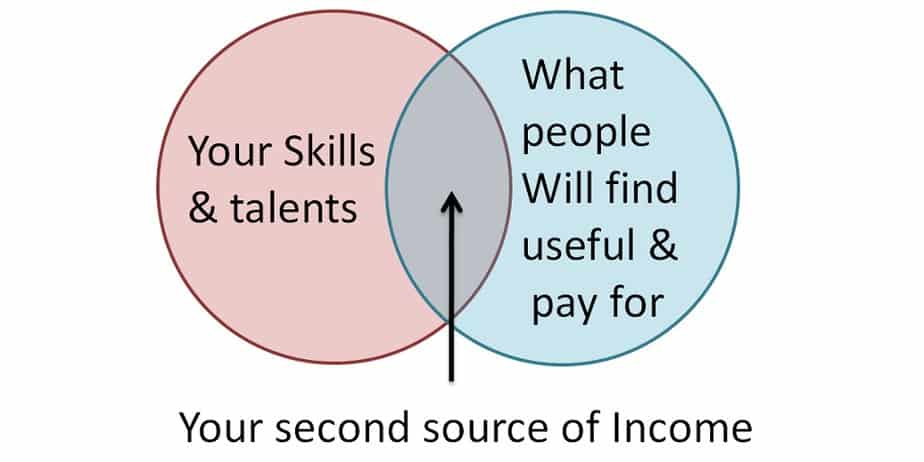
Getting online to make money could work well for most young earners today but they will have to set small targets, put in the work to stay relevant and give it time.
We will have to cross the rest of the bridge when we get to it. A young earner (< 30) may not be able to pull off all the steps mentioned above. If they can reduce their debt burden and hold as much as cash as possible, it should be okay.