Last Updated on February 12, 2022 at 6:20 pm
It was when my seven-year-old son declared that he wanted to be a fruit seller that I realised that the …. er … apple has not fallen far from the tree! Yes, I too had similar aspirations and I nurtured it for years until I heard the plight of a pharmacist. In this post, I discuss why we all need a plan to quit, as soon as we start working.
This was first published a few months ago when my second book was about to be published. I thought the titular topic is worth a revisit.
The pharmacist told me that his was a 7 x 12-hour job. He could not step out of the shop or even take a holiday because there was no one trustworthy to take care of the shop. My friends family had a grocery shop and after college, he took over the business – just as his father did and his grandpa did. My friend’s plight is not very different from that of the pharmacy owner or any small shop owner.
Aside from the presence of a regular salary and paid holidays (like weekends!), there is not much of a difference from such shop owner and salaried employees. Unless we have a plan to become financially free, we are trapped in our jobs.
🔥Secure your future with our Robo-advisory tool trusted by over 3,500 investors and advisors. From effortless retirement planning to funding your children’s biggest dreams, turn your financial goals into reality. 🔥
Subscribe for money management solutions via email! (Link takes you to our email sign-up form) Join 32,000+ readers in our community.
👉 New Tool Alert! NaviPlan: A Privacy-Focused Multi-asset Tracker and Goal Planner 👈
Many people confuse income with productivity. I can offer a service or even pursue a creative endeavour with worrying about putting food on the table (among other expenses). Initially yes, income depends on the work that we do.
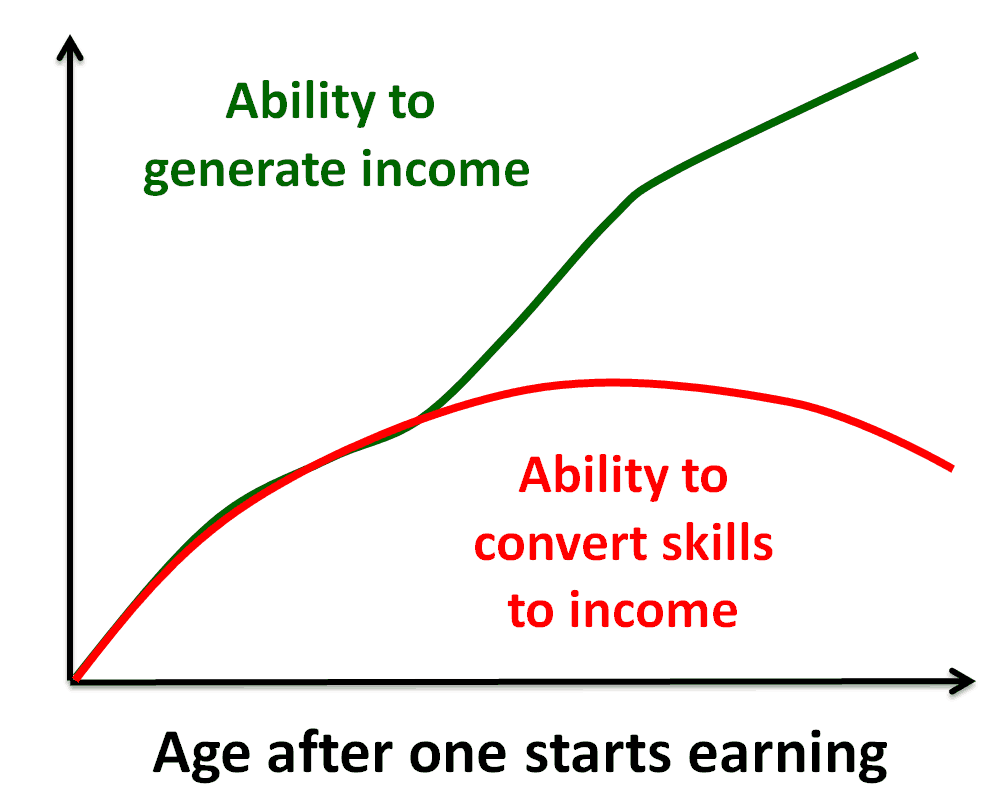
We need a plan to systematically free our income from our skill-set and the services that we are capable of.
Even if liabilities like home loans slow down this process it is more than possible. As mentioned in yesterday’s post, most 30-somethings suddenly recognise the need for an income that keeps pace with inflation after retirement (aka inflation-protected income). A 35-year-old with a home loan taking control of his/her finances can strive to become financially independent in 15 years. That is quite an achievement. There is no need to worry “I started investing Late, Can I Catch Up?” Of course, you can.
We made this slide show as part of the Gamechanger promo.
This week’s Q & A
Due to the release of the robo advisory template, the questions last week were mostly about it. So the few other questions are discussed below. If you have a generic question on finance, you can use the form below.
Sampath: Hello Sir, What is your opinion about ‘Focus’ mutual funds which invest in only limited stocks? Example: JM Core 11, DSPBR Focus 25
Pattu: I don’t see any need for such funds. Instead, I will try and ‘focus’ on building a diversified portfolio using funds that have a clear market cap mandate or a clear sectoral mandate: Building a Diversified Equity Portfolio with Sector Mutual Funds
Sridhar C: Dear Prof, Curious to know if the AMC representatives have any say/influence in the corporate decisions taken by the board? Whats their role in the AGMs. Does SEBI say anything in this regard. Thanks.
Pattu: A mutual fund house is created by a “sponsor” who appoints a board of trustees after SEBI approval. The Trustee are expected to protect unit holder interests. Corporate decisions are taken by the sponsors which are monitored by the trustees. I hope I have answered your question at least in part.
Venkateswara Rao Pothina: Dear Sir, I have recently come across this site and started reading various articles. I am 56 years old and wants to plan for my retirement with additional investment in equity based mutual funds. I already have investments in tax free bonds, PPF, and bank FDs, and looking for mutual funds that provide consistent decent returns on risk adjusted basis. My concern is: “Will investing in mutual funds now work negatively for me as there is a view that equity markets are in highs not commensurate with real state of Indian economy and thus are more prone for downside risk?” Best regards, P V Rao
Pattu: Equity market are always subject to downside risk. Only invest a small portion of your portfolio and that too a sum that you will not touch for several years. I would suggest that either seek professional help from my list of fee-only financial planners or use the Freefincal Robo Advisory Software Template to test th health of your finance before investing.
Karthik: These are the advantages of investing directly in stocks or through a PMS : a) Relatively good-quality stocks with small market capitalization or low free float can be invested in.Usually, mutual funds with their large corpus size don’t have access to such shares. b) These are individual portfolios. Hence, one’s portfolio return does not get impacted by cash flows from other investors. What do you think about these advantages vis a vis investing through mutual funds?
Pattu: If you can find a trust PMS fund manager then it can be used to your advantage. If ..