Last Updated on October 8, 2023 at 1:40 pm
In this post, I discuss why it is a terrible idea to shift your EPF corpus to the NPS (National Pension Scheme). In a circular dated 6th March 2017, the Pension Fund Regulatory and Development Authority (PDRDA) announced a road map for provident fund and superannuation plan subscribers to shift to the NPS.
The shift will be one-time, tax-free and will not be counted as income. Hence this cannot be used for tax deduction. Here is why I think you should stay away from this opportunity.
Two basic concepts in investing are necessary for appreciating my viewpoint (if you wish to!).
1: Asset Allocation: The fact that NPS has the possibility of higher equity exposure than EPF should be of no relevance in deciding whether to switch or not. A portfolio, and in this case, a retirement portfolio should have an appropriate mix of equity and fixed income. For those whose retirement is several years away, at least 50-70% can be in equity. This can be sourced from equity mutual fund separately. EPF is a solid source of fixed income and the rest of the folio can just have this.
🔥Secure your future with our Robo-advisory tool trusted by over 3,500 investors and advisors. From effortless retirement planning to funding your children’s biggest dreams, turn your financial goals into reality. 🔥
Subscribe for money management solutions via email! (Link takes you to our email sign-up form) Join 32,000+ readers in our community.
👉 New Tool Alert! NaviPlan: A Privacy-Focused Multi-asset Tracker and Goal Planner 👈
If you do not have an appropriate exposure to equity, you should consider it. If you already have this, then there is no need for NPS (with or without equity)!!
2: Liquidity: The ability to pull out money asap is more important than returns or tax. NPS sucks at this. Even if you wanted to retire early or quit early to start your own business, your money in NPS will be locked until 60.
In the case of EPF, complete withdrawal is possible two months after you stop working. This alone should be enough for you to not switch to NPS.

The other factors are reasonably obvious.
Annuity:
It is amusing that after years of investing in a government owned mutual fund, we will have to buy an annuity from an insurer for 40% of the corpus. And this annuity, as pointed out by S R Srinivasan at AIFW, is no different than any other annuity in the market. There is no unique NPS annuity. If I have money, I can buy the same product without joining NPS.
EPF, on the other hand, is free of annuity – the employee contributions, that is. The employer contribution (a part of it) will provide a pension via the EPS, which is practically peanuts. Most EPF investors I know, treat this as zero. This condition is not as stifling as NPS.
Taxation
Any EPF withdrawal made after 5 years of continuous service is tax-free. NPS, on the other hand, has a crazy taxation rule. Only forty percent of the corpus (after buying 40% annuity) is tax-free. The rest of the corpus is fully taxable as per slab.
Many people argue that retirees will pay lesser tax and the above withdrawal can be deferred. I don’t buy this. The pension from that 40% annuity is fully taxable as per slab. In addition, most people will have some form of such taxable income – FDs, rent etc. So it would be prudent to assume that the tax rate will not change after retirement.
Power of the Union
The year 2016 was a terrible year for the govt. First, it had to take back the EPF taxation proposed in the budget. Then it had to take back the more stringent withdrawals rules proposed before the budget. Why? Because the EPF is backed by labour unions and protests even turned violent.
Did you see anyone complain when the NPS did not have the 40% tax-free rebated from 2004 to 2016? Why? Nobody cares about the NPS. In fact, many government employees have voiced their protests about the NPS.
The government is unlikely to play around with the EPF for the rest of its term. Also, the interest rate should be a touch higher than other fixed income products. Even if this drops below 8% in the future, I think the EPF is a solid product.
VPF!
VPF qualifies for 80C tax deduction – much better option than opening an NPS account just to save that 50K tax. Yes, yes the IT sections are different (80C for VPF and 80CC1(b) for 50K), but the flexibility of the VPF and its tax-free returns make it a better choice. There is more to investing than saving tax.
The tier 2 of the NPS (an analogue to the VPF?) has no tax benefits and no one know what the taxation is for withdrawals. It has been in existence for 13-14 years!!
The only reason many investors opened an NPS account was to avail that extra 50K tax deduction (only 40% is actually tax-free). If you have done this, let this be. Do not switch your EPF corpus to NPS. It is a trap.
How about Superannuation Subscribers?
You will have to buy an annuity for 2/3 rd of the superannuation fund corpus. Rest 1/3 is tax-free. Thanks to Muthu (who played a key role in organising 6 Bangalore DIY meets) for correcting this. Superannuation plans were also supposed to be taxed like NPS (only 40% tax-free), but this has been taken back.
So in this case, 26.7% more has to be annuitised when compared to NPS and 6.7% lesser corpus will be tax-free in the Superannuation fund. But unlike NPS, there is no mandatory need to buy an annuity. Also one can close the plan before 60. So considering these factors, you may decide to switch to NPS. It is not a clear yes or no here.
A sensible government will not make NPS Tax-free
Please do not live in hope that “NPS will become tax-free in future”. If you spend some time reading about how our economy runs, how the government earns, how many pay taxes, how it spends etc. you will realise that no responsible/sensible government can afford to make NPS tax free. Remember that they want EPF to taxed.
NPS Annuity will not go away!
If it does, then it is just a plain old mutual fund. Why on Earth would the government do this?!!
Well, like Aadhar a EPF to NPS shift may be thrust upon you (I already hold mandatory NPS) gradaully. Why not cross that bridge when you get to it. Such a move is unlikely to accepted by the unions.
NPS has risks!
If you hold NPS or want to, please recognise that NPS has significant risks. My NPS account is filled with Gilts (only 15% equity- mandatory) and this is how volatile it can be:
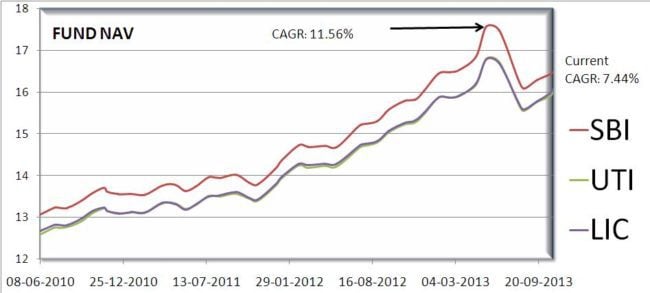
And the C or the corporate bond portion is subject to credit risks. Sure, my current returns (7Y+) is about 10%, but that comes at a price of liquidity and taxation. Please tread with caution.
Do Not Shift Your EPF Corpus to NPS: It is a Trap!
New Delhi DIY Investor Workshop April 23rd 2017
Register for the New Delhi DIY Investor Workshop April 23rd 2017
You Can Be Rich Too With Goal-Based Investing
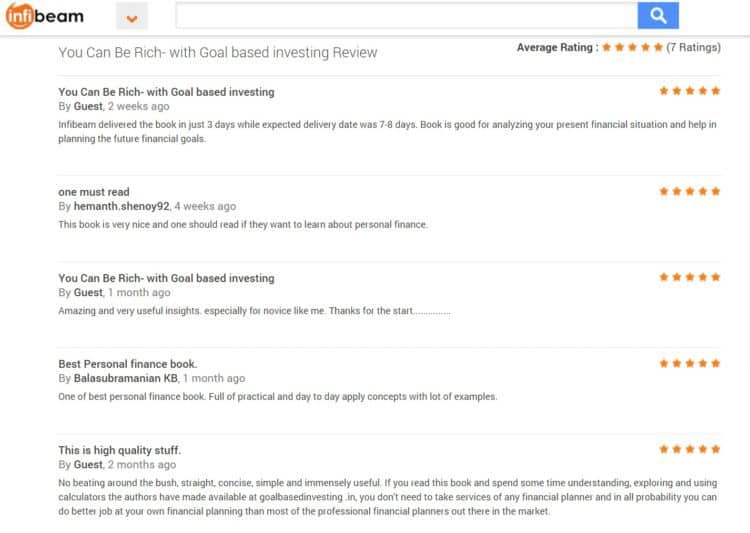
Happy to announce that my book with PV Subramanyam has been selected as part of Amazon Best Reads Mar 2017. Now 50% OFF! Thank you for your support and trust. If you have not yet got the book, check out the reviews below and use the links to buy.

Reader Quotes:
Gift it to your Friends and Relatives whom you care more. Already follower of Pattu and Subra’s forum. Ordered 4 more copies to give gift to my friends and eagerly waiting to read
The best book ever on Financial Freedom Planning. Go get it now!
Your first investment should be buying this book
The (nine online) calculators are really awesome and will give you all possible insights
Thank you, readers, for your generous support and patronage.

Amazon Hardcover Rs. 198. 50% OFF
Kindle at Amazon.in (Rs. 307)
Google Play Store (Rs. 307)
Infibeam Now just Rs. 307 24% OFF.
If you use a mobikwik wallet, and purchase via infibeam, you can get up to 100% cashback!!
Bookadda Rs. 344. Flipkart Rs. 359
Amazon.com ($ 3.70 or Rs. 267)
Google Play Store (Rs. 244.30)
- Ask the right questions about money
- get simple solutions
- Define your goals clearly with worksheets
- Calculate the correct asset allocation for each goal.
- Find out how much insurance cover you need, and how much you need to invest with nine online calculator modules
- Learn to choose mutual funds qualitatively and quantitatively.
More information is available here: A Beginner’s Guide To Make Your Money Dreams Come True!
What Readers Say