Last Updated on December 29, 2021 at 5:32 pm
Nippon India Nivesh Lakshya Fund is an open-ended long-duration debt scheme investing in instruments such that the Macaulay duration of the portfolio is
greater than 7 years. We discuss the nature of this funds portfolio, its investment strategy and who should invest in this fund.
“Nivesh Lakshya Fund” is not your typical sounding debt or equity fund name! It sounds more like a child-plan or retirement-plan, but it is not. This is an open-ended debt fund investing in very long-term bonds.
Investors should not make the mistake of assuming that “Macaulay duration of greater than 7 years” implies this fund can be used for goals seven years or more. According to April 2020 factsheet, as on March 31st 2020, the Average Portfolio Maturity 24.05 Years, the Modified Duration is 10.86 Years and the Yield to Maturity* 6.61%
🔥Secure your future with our Robo-advisory tool trusted by over 3,500 investors and advisors. From effortless retirement planning to funding your children’s biggest dreams, turn your financial goals into reality. 🔥
Subscribe for money management solutions via email! (Link takes you to our email sign-up form) Join 32,000+ readers in our community.
👉 New Tool Alert! NaviPlan: A Privacy-Focused Multi-asset Tracker and Goal Planner 👈
These terms are explained in detail here: Three Key Mutual Fund Terms All Retail Investors Should Know and also here: Why you need to worry about “duration” if your mutual funds invest in bonds
The Macaulay duration is a measure of how long it would take to recoup an investment but does not factor in bond prices changes due to market demand and supply. The modified duration does this better (see multiple examples in the duration article linked above).
Longer the tenure of the bonds, the more the prices (and therefore the fund NAV) fluctuates due to yield changes. A modified duration of 10 years implies the NAV will fall (or move up) by 10% if interest rates move up (or down) by 1%. Do not invest in debt funds without appreciating these basic ideas!!
Also, notice that the average maturity is more than two times the modified duration or the Macaulay duration. Debt fund classification should be done by average maturity only!
Nippon India Nivesh Lakshya Fund: Investment philosophy
As usual, there is a huge disparity between what is mentioned in the scheme document and the fund leaflet. The leaflet (which was prepared by Reliance MF) says the fund philosophy is:
Investments in long term fixed income securities predominantly
Government Securities at the current yields.Most of the securities would be bought and held till maturity.
Rebalancing the portfolio to ensure that similar securities mix is
maintained.Insulation from credit risk.
None of these statements is found in the scheme document (the only legally binding entity). In fact, the document says, “The fund management team will take an active view of the interest rate movement by keeping a close watch on various parameters of the Indian economy, as well as developments in global markets”
Basic Fund Facts
- Category: Debt long-duration. If we exclude Bharat ETF and its FOF from Edelweiss, there are only two funds in this category: this and ICICI Long Term Bond Fund
- Date of inception: July 2018
- AUM: 829 Crores (March 2020)
- Expenses: 0.53% regular and 0.21% direct
- Benchmark: CRISIL Long Term Debt Index (a hybrid index with gilts, AAA and AA bonds)
Asset Allocation History
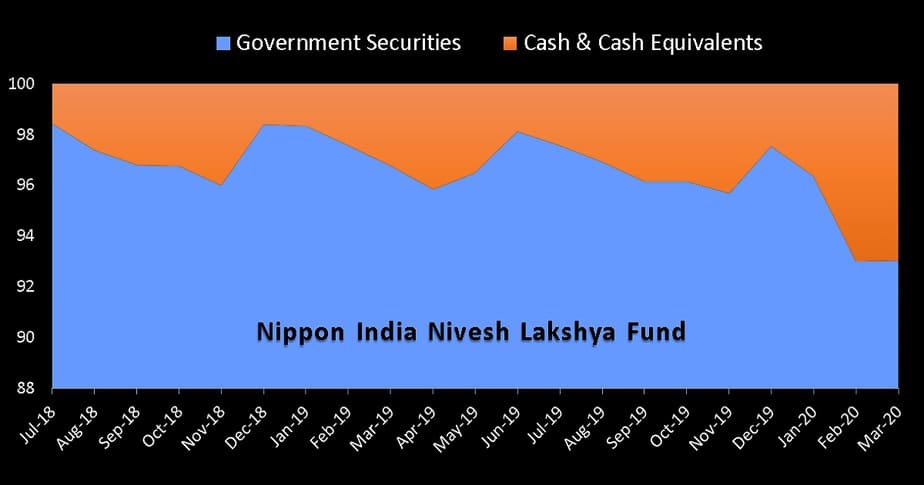
The fund has predominantly held (very)long-term govt bonds. Unfortunately, the scheme document does not say it will continue to do only that!
NAV Movement
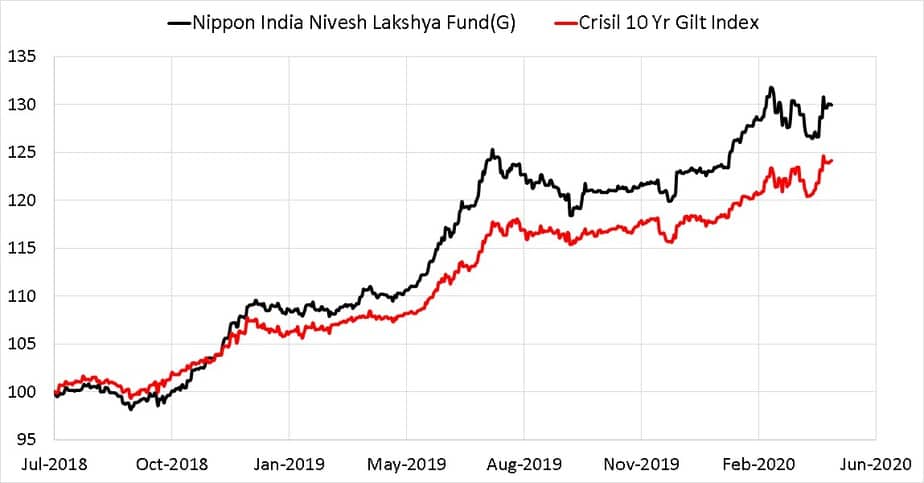
This is how volatile long-term gilts can be and this is the price of avoiding credit risk.
Should you invest?
Why run a long-term gilt fund in the long-duration category when there is an exclusive gilt category? Yet again we see the many problems with the SEBI categorization rules.
Even if we assume the fund would stick to govt bonds and AAA/A1+ bonds in future, the NAV would be quite volatile. So it can only be used for truly long-term 15Y+ goals with disciplined portfolio rebalancing. .Only those up to that task, only those who can stomach this volatility and exploit it should consider this fund.