Last Updated on December 29, 2021 at 6:12 pm
This is an update of my retirement portfolio. After almost 13 years of investing in equity, it took a crash and a disproportionate recovery to increase my equity allocation significantly for the first time. So I reset the equity allocation from 65% to 60%. The intention behind these articles is to emphasise the reality that goal-based portfolio management is more important than fund or stock selection.
While these articles may or may not be beneficial to the reader, it certainly holds me accountable to my choices and removes uncertainty. Documenting my portfolio audits each year has helped reduce portfolio clutter. Reducing equity exposure by 5% may not be a big deal to someone who started investing in equity from day one. Still, for some who has been chasing their target asset allocation for years, this is a significant landmark.
I started investing in NPS in Aug 2006 (technically, earning 8% a year with my employer and only deployed into NPS in March 2010). The NPS contribution was higher than the amount I could invest after expenses for several years. This naturally increased the debt allocation. To make things worse, I had two PPFs running (mine and my wife’s) but thankfully did not have enough to invest.
So when I started my equity investing journey with a SIP of Rs. 1500 on 19th June 2008, it was an uphill task to increase my equity allocation. By 2010-11 by retirement planning was in place with DIY Excel sheets, and I decided on a 60% equity allocation target.
🔥Secure your future with our Robo-advisory tool trusted by over 3,500 investors and advisors. From effortless retirement planning to funding your children’s biggest dreams, turn your financial goals into reality. 🔥
Subscribe for money management solutions via email! (Link takes you to our email sign-up form) Join 32,000+ readers in our community.
👉 New Tool Alert! NaviPlan: A Privacy-Focused Multi-asset Tracker and Goal Planner 👈
For the first five years, from mid-2008 to mid-2013, the gains from equity was zero (they do not tell these realities when they show those nice compounding graphs, do they? They want to give you hope). So forget about increasing the equity allocation much. The bull run in 2013-14 and a continuous increase in investments helped but, my equity allocation was 55% in 2015.
From then, it was an excruciatingly slow climb up. It seemed to be stuck at 58% forever, and the March 2020 crash made things worse. By May 2020, the allocation dropped to 53.5% and the XIRR after 12 years a grand 2.75% (again the power of “compounding” at work). For new readers who cannot make sense of the sarcasm, please refer to, “don’t get fooled: Mutual funds have no compounding benefit!”
Then came the recovery. From 53.5% in May 2020, the equity allocation shot up to 63% in Dec 2020 and 65% in April 2021 (additional investments into equity MFs and direct equity also played a role). I was in two minds about rebalancing in December, but it was time to act with the recovery losing momentum.
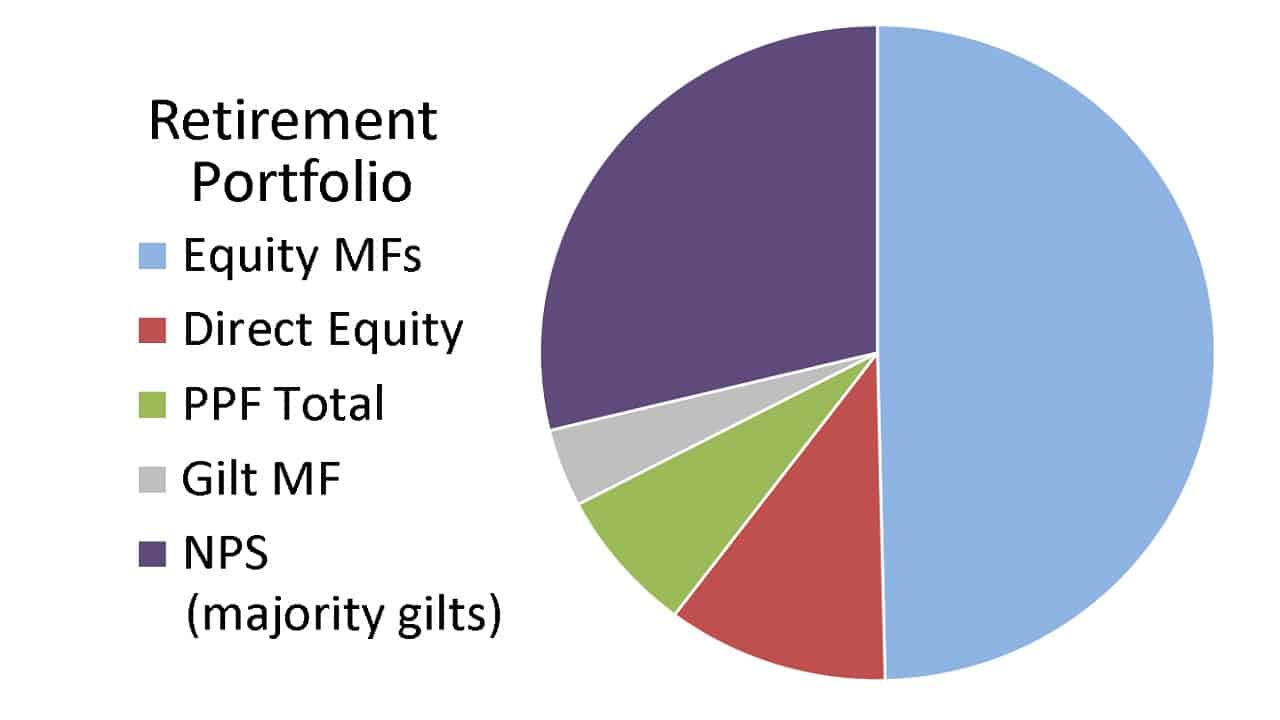
This is the current allocation:
Equity: 60.2%
- Equity MFs: 49.6%
- PPFAS LTE: 23.3%
- HDFC Hybrid Equity: 14.7%
- Quantum Long Term Equity: 11.6%
- Direct Equity: 10.6%
Debt: 39.8%
- NPS: 28.8%
- PPF*: 7.1%
- ICICI Gilt Fund: 3.8%
* The PPF allocation is approximate as I have not updated my account for ages (can’t do it online due to SBI id issues)
Returns:
- Equity: 15.68% (XIRR. notice the wild swing from 2.75%)
- NPS: 9.8% (XIRR)
- Direct Equity: 21.4% abs gain. CAGR computed from this is 22.4%. See: Retirement Stock Portfolio Update April 2021
- ICIC Gilt fund is just a few days old!
- PPF: 7.5% should be a reasonable guess? Both PPF accounts will mature in April 2022. Seriously debating if I should extend or take out the money and start afresh (since I have the time).
Rebalancing details
The 5% equity has gone into both our PPF accounts (maximised for the first time). I have done this for my son’s portfolio four times (including April 2021). Also, see: This useful feature of PPF deserves more attention!
Why ICICI Gilt fund?
- I wanted a debt fund for the long term.
- A category that has a chance of beating liquid or money market funds
- minimal credit risk
- Full liquidity. No lock-ins. Hate lock-ins.
- My investment tenue is open (I can use this even after retirement)
- I did not mind active duration calls instead of 10Y constant maturity funds. This will relatively lower volatility and possibly enhance reward from time to time.
- Since I was already investing in ICICI gilt for my son’s portfolio, the choice was easier. This investment is made in a separate folio for tracking.
- For a review of the ICICI Gilt fund, see: Why I partially switched from ICICI Multi-Asset Fund to ICICI Gilt Fund.
- Please note ICICI Gilt fund aggressively changes bond duration. This means the NAV will be volatile (like any other gilt fund). I have 11+ experience of volatile NPS NAVs (including a rare bond crash), and so it was not a difficult choice for me.
- Please do your own research before investing. If you expect gilt funds to beat PPF every year or every other year, you will be sorely disappointed.