Last Updated on October 8, 2023 at 5:17 pm
Are you considering the purchase of an endowment policy? Perhaps a cash back policy? Perhaps your friendly agent told you about a policy or a “magic plan” that would offer constant pension guaranteed by the government? Please read the following before buying an LIC policy or any insurance policy that has an investment component associated with it.
A request to readers who understand the pros and cons of mixing insurance and investment: Please consider sharing this post with your friends or relatives with the sharing buttons the on the left.
Rule no 1: There is no such thing as a good product or bad product, just a suitable product or unsuitable product. What is suitable for one, may not be for another.
Rule no 2: No such things as best return, good return or bad return. Only an adequate return or inadequate return. This is decided by two factors: the real rate of inflation and how much you can invest.
🔥Secure your future with our Robo-advisory tool trusted by over 3,500 investors and advisors. From effortless retirement planning to funding your children’s biggest dreams, turn your financial goals into reality. 🔥
Subscribe for money management solutions via email! (Link takes you to our email sign-up form) Join 32,000+ readers in our community.
👉 New Tool Alert! NaviPlan: A Privacy-Focused Multi-asset Tracker and Goal Planner 👈
Rule no 3: Products last. Needs first. What is the hurry to choose a product? Can we not spend a few minutes following rules 1 and 2? That is, ask
- What is my need? An example: How to buy an Audi Car
- What is its current cost? By how much will it become expensive year after year?
- How much can I invest?
Let us consider two examples:
Example 1: Retirement
Ask yourself, what were your monthly expenses towards groceries and essential utilities five years ago or ten years ago. Just consider yourself and your wife here. Enter the expenses in the green cells corresponding to the year given. You can delete any green cell entry which you think is not relevant
The sheet gives the actual rate of inflation in your expenses.
For the sake of argument, let us assume this is about 8%. Suppose you are 30 years old and wish to retire at 55, the expenses for groceries and utilities alone after 25 years would be about 7 times higher [(1+8%)^25 ~7].
So if your current expenses are 30,000 a month, it would be about 2 lakhs per month. This increase is because of the 8% inflation assumed. We assume (incorrectly) that there would no other change in your lifestyle (positive or negative!).
After 25 years, your income would stop, but expenses will not. Assuming you (and your wife) will live another 20 years, inflation will play a role here too. To understand more check out the Retirement Planning Slide Show
We will assume conservatively (not recommended) that inflation after retirement is 6%.
If you wish to be financially independent after retirement, that is if your pension or income after retirement should increase year after year at 6% to keep pace with inflation, you will need about 4 Crores.
Let us assume about 40% of 4 Cr will come from your other investments (including EPF etc) and 60% has to be generated from LIC magic plan that your agent wants you to invest in.
These are only assumptions for the sake of argument. You can punch in any number you like in low-stress Retirement Calculator (excel sheet) also available online and as an app at Google play.
So your LIC policy has to first generate a corpus of about 2.4 Cr and then you will have to invest such that the pension (after tax) that will grow year after year at the rate of 6%. If you are thinking about buying an annuity policy, it is important to recognise that they cannot accomplish this. Read more about them here: How Annuity Plans Work
Now, guaranteed as it is, an LIC policy (money back, endowment) would fetch you a return of 6-7% and this is a generous estimate.
So at 7% return (assuming the life insurance component is free), your policy premium should be about 29,000 a month. If it grows at 7% a year for 25, it will fetch you the 2.4 Cr required. So the investment required is pretty much equal to the current monthly expenses for groceries and utilities (alone!).
If you can invest this much, go for the LIC policy (this is only an illustration, please calculate with numbers relevant to you using the tools mentioned above).
Else … Why think about that now? Let us be optimistic that you can invest that much.
Example 2: Your Child’s education
If monthly expense can increase at the rate of 8%, education expenses (or marriage expenses) grow at 10%-12% (and this is an underestimate).
Suppose, your child is 1 Y old, with college 16Y away. The current cost of education that you have in mind is say, 10 Lakhs. This is tough to estimate: The trouble with fixing the current cost of a child’s education
At 10% inflation, after 16Y, the cost would be about 46 Lakhs. So with an LIC policy offering you (unrealistic) 7% return, you will need to invest 13,000 a month (assuming insurance component is free).
If you can invest this much, buy the LIC policy (this is only an illustration. Use the Goal Planners to use numbers relevant to you)
Else … Why think about that now? Let us be optimistic that you can invest that much.
If you like this way of determining if a product is suitable or not, do spend some time with the Visual Goal Planner.
Once you are convinced that the LIC policy or any insurance policy with an investment component in it would be suitable for your requirement, go ahead, buy it. Enjoy the peace of mind that comes with it. Good luck.
Do I hear you thinking that you cannot invest that much? No problem: Welcome to freefincal.com.
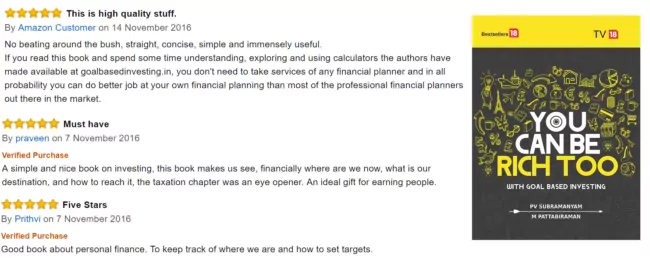
If you wish to understand and implement simple money management ideas quickly, do consider buying my new book with Subra(money.com) at Amazon.in (Rs. 359) or Flipkart(Rs. 359) or Bookadda (Rs. 339). Infibeam(Rs. 307) or Sapnaonline.com(Rs. 339).