Last Updated on August 30, 2021 at 4:16 pm
Here is a 7-minute video that discusses the differences and similarities between the two types of annualized returns: the Compound Annual Growth Rate (CAGR) and the extended internal rate of return (XIRR).
An annualized return treats an investment in a volatile instrument (gold, stocks, debt funds) as one that compounds and calculates an average year-upon-year return. This enables easy comparison with the return from fixed income products like fixed deposits and bonds.
First the definition of an absolute return:
Absolute refers to growth without considering the investment time period. It is simply the percent difference in the money you had before investing and the money you have now.
🔥Secure your future with our Robo-advisory tool trusted by over 3,500 investors and advisors. From effortless retirement planning to funding your children’s biggest dreams, turn your financial goals into reality. 🔥
Subscribe for money management solutions via email! (Link takes you to our email sign-up form) Join 32,000+ readers in our community.
👉 New Tool Alert! NaviPlan: A Privacy-Focused Multi-asset Tracker and Goal Planner 👈
current value = total investment x (1 + absolute return)
Absolute return = (value-investment)/investment = total gain/total investment.
The investment period is not taken into account.
A portal like money control only gives you absolute returns which is useless. Even for a SIP, it calculates return using the above formula.
Here is a screenshot from its portfolio tracker with the absolute returns marked by black rectangles.
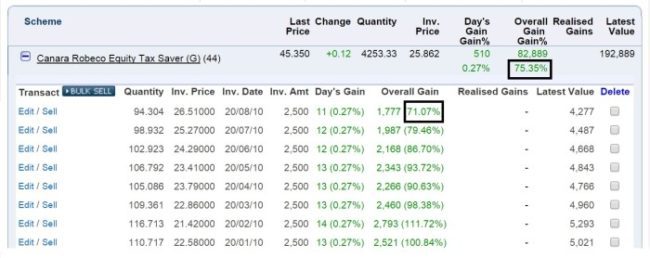
Always consider only annualized returns for measuring portfolio growth.
Annualized Return: CAGR and XIRR
The XIRR illustrations are taken from these posts:
My take:
My exact XIRR as on date is 16.56%. Quantum says this is twice as much as bencmark returns. Too lazy to calculate net equity XIRR as I need to enter few transactions, but I am pretty sure QLTE is either an average or just above average performer in my folio. So I am going to continue investing in QLTE.
Also, regarding my investment strategy: I invest each month regardless of market levels. Sometimes, I change the amounts I invest in the funds. based on portfolio weights and performance. It is done without too much analysis. I would like to reiterate that fund reviews should only be based on personal investment performance.
Calculating Returns from a Mutual Fund SIP
You can also try out this Internal Rate of Return -XIRR Calculator
Other links
What is CAGR – Compound Annual Growth Rate: Video
What is Compound Annual Growth Rate (CAGR)? Part I: Lump Sum Investing