Last Updated on December 29, 2021 at 5:55 pm
A few days ago, I rebalanced my son’s future portfolio from 67% equity to about 54%. This means selling a big chunk of equity mutual funds and reinvesting them into fixed income. In this article, I explain why I choose ICICI Gilt fund as one component of the fixed income portfolio. I would like to reiterate that this is a partial switch for goal-based rebalancing purposes. I am still invested in ICICI Multi-asset fund and will continue to invest more in future.
The portfolio was started in Dec 2009 a month before my son was born. From what was once an 18-year old goal, it is now an 8-year old goal. The “how fast they grow” adage applies to risk management as well. To be frank, I have got away with maintaining 60% equity all this while and realized a need to drastically cut it short going forward.
In the past 11 years, I have rebalanced thrice and each time it was from equity mutual funds into PPFs (one in my son’s name and one in mother name which also help her to save tax). This way I was able to gradually accumulate enough corpus in debt if he were to start a UG course today.
The challenge this time was different. The chunk of equity redemption was significant (enough for the ICICI MF relationship manager to call it a mistake). Now, where should the proceeds be invested? I did not want to lock too much away into PPF -although it is one of the best and underutilized features of PPF – variable investments.
🔥Secure your future with our Robo-advisory tool trusted by over 3,500 investors and advisors. From effortless retirement planning to funding your children’s biggest dreams, turn your financial goals into reality. 🔥
Subscribe for money management solutions via email! (Link takes you to our email sign-up form) Join 32,000+ readers in our community.
👉 New Tool Alert! NaviPlan: A Privacy-Focused Multi-asset Tracker and Goal Planner 👈
In addition to PPF, I have been gradually rebalancing into ICICI Equity Arbitrage Fund as well (there is a 1.5 lakh per year limit on PPF). This time around too, a part of the rebalancing was done into the Arbitrage fund. However, I was uncomfortable about adding too much into arbitrage.
We had about eight years until the first redemption (first, assuming he might study further and waste time like his parents) and then a little more time later on. Going ahead I would like the equity allocation to be close to 50% and then lower. This means I need to go beyond investing in PPF and arbitrage.
An arbitrage fund held for several years might be an underutilization of funds. I wanted the possibility of a bit more return than arbitrage – meaning more volatility but not as much equity. That is quite a pickle.
Find a fund suitable for redemption in eight years; more rewarding than overnight, liquid, money market, arbitrage categories but without the problems of credit risk and not as risky as equity. There are hybrid options available excluding the equity-like aggressive hybrid fund.
Take for example the balance advantage or dynamic asset allocation funds. They are not as volatile as diversified equity but they would certainly react to an equity market fall. More importantly, they are subject to strategy change. If the AUM does not flow in, the AMC would release a “change in fundamental attribute circular” and change the strategy.
So I figured let us stick to debt funds investing predominantly in gilts to avoid credit risk. There two categories here: the 10-year gilts and the normal gilts. The 10-year gilt is the closest we have to a debt index fund but is the most volatile among the lot.
The volatility is constant. It will work very well for a goal much more than ten years away as demonstrated before: Can we invest via SIP in gilt mutual funds for the long term? In fact, my (mandatory) NPS which is close to 11 years old is stocked up in long-term gilt and has quite rewarding. See Ten years of investing in the NPS: Performance report.
So I wanted a gilt fund less volatile than a 10-y constant maturity gilt fund. This means investing in a gilt fund that needs to only invest in 80% of GOI bonds and can vary the maturity profile of the portfolio. This means they would buy long-term bonds when the rates are going to fall or stay constant and move to shorter-term when the rates are about to increase again. This is indeed a big fund manager risk, but not as much risk as investing 20% in risky bonds.
I have had my eye on ICICI Gilt Fund for a while now. The first check is to look at portfolio history. I use ACE MF; others can check random fund factsheets from the past.
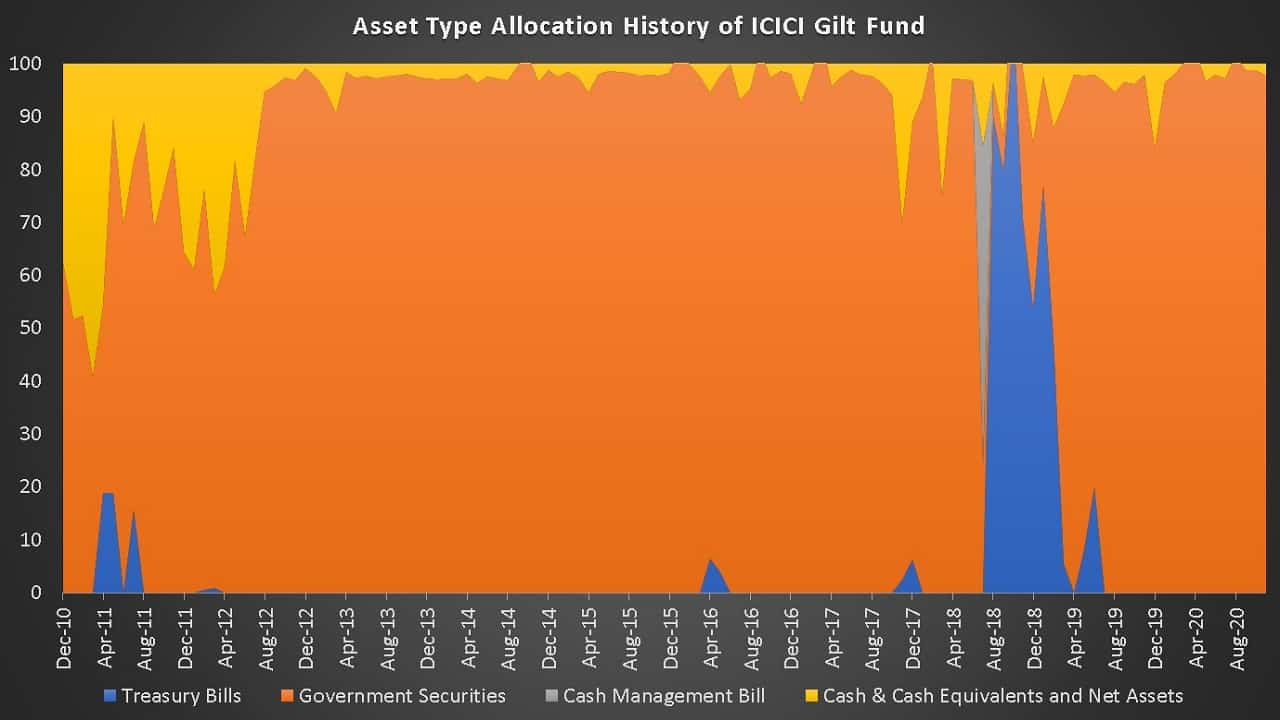
The fund has only held gilts (of widely varying maturity; see below) and cash; cash equivalents including derivatives. See for example Interest Rate Swaps: A way for MFs to reduce interest rate risk
The scheme aggressively makes duration calls as mentioned above. This can be measured with the modified duration. This is a risk measure (quantified in years!). For a simple explanation see: Why you need to worry about “duration” if your mutual funds invest in bonds. Higher the modified duration, higher the duration of the bond and more the interest rate risk. That is if the change in NAV will be high if the interest rate changes. Shown below is the modified duration history of the fund.
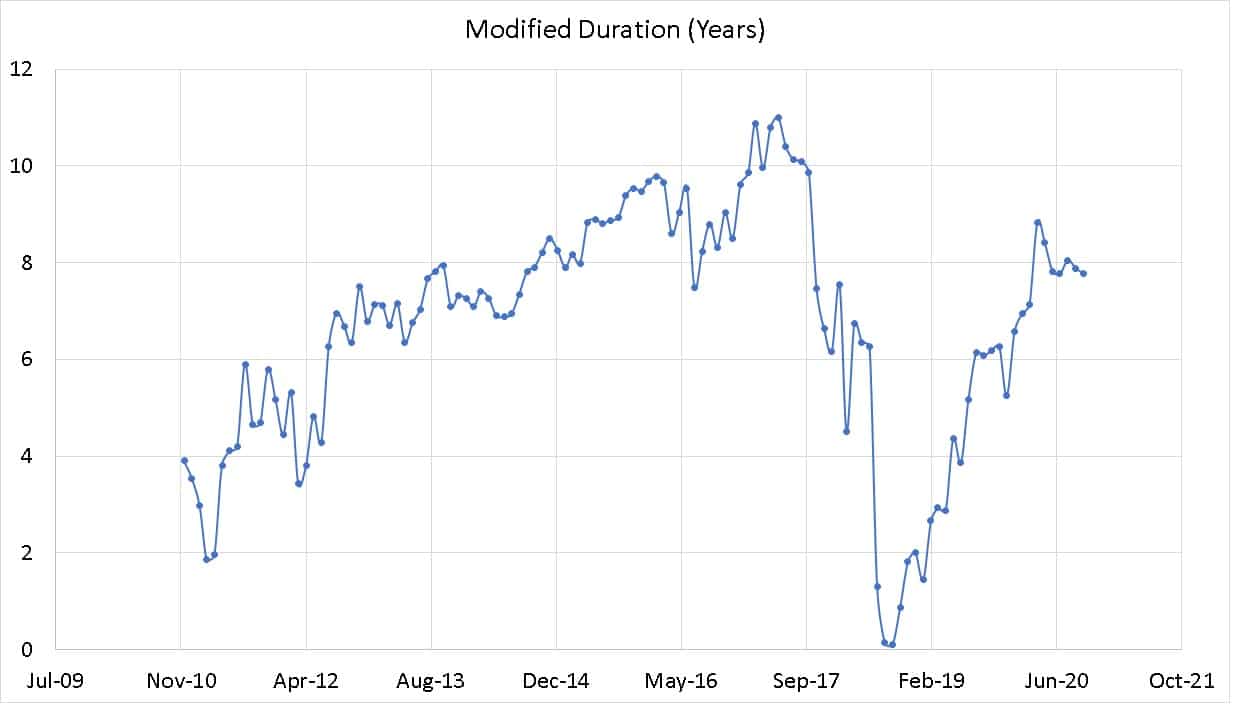
When interests have peaked (meaning about to fall), the fund portfolio will hold long-duration bonds with a high modified duration. That is it will hold long term bonds which will be become more valuable when new bonds with lower rates are issued.
When the interest rates have hit a bottom (like now!) the fund will move towards a shorter duration. This means holding shorter-term bonds. This lowers interest rate risk as the NAV would fall less. Naturally, there is a risk in getting the strategy wrong which is why I would advise most investors to stay away from dynamic bond funds. Most investors do not appreciate interest rate risk and particularly gilts funds. They are better off avoiding them.
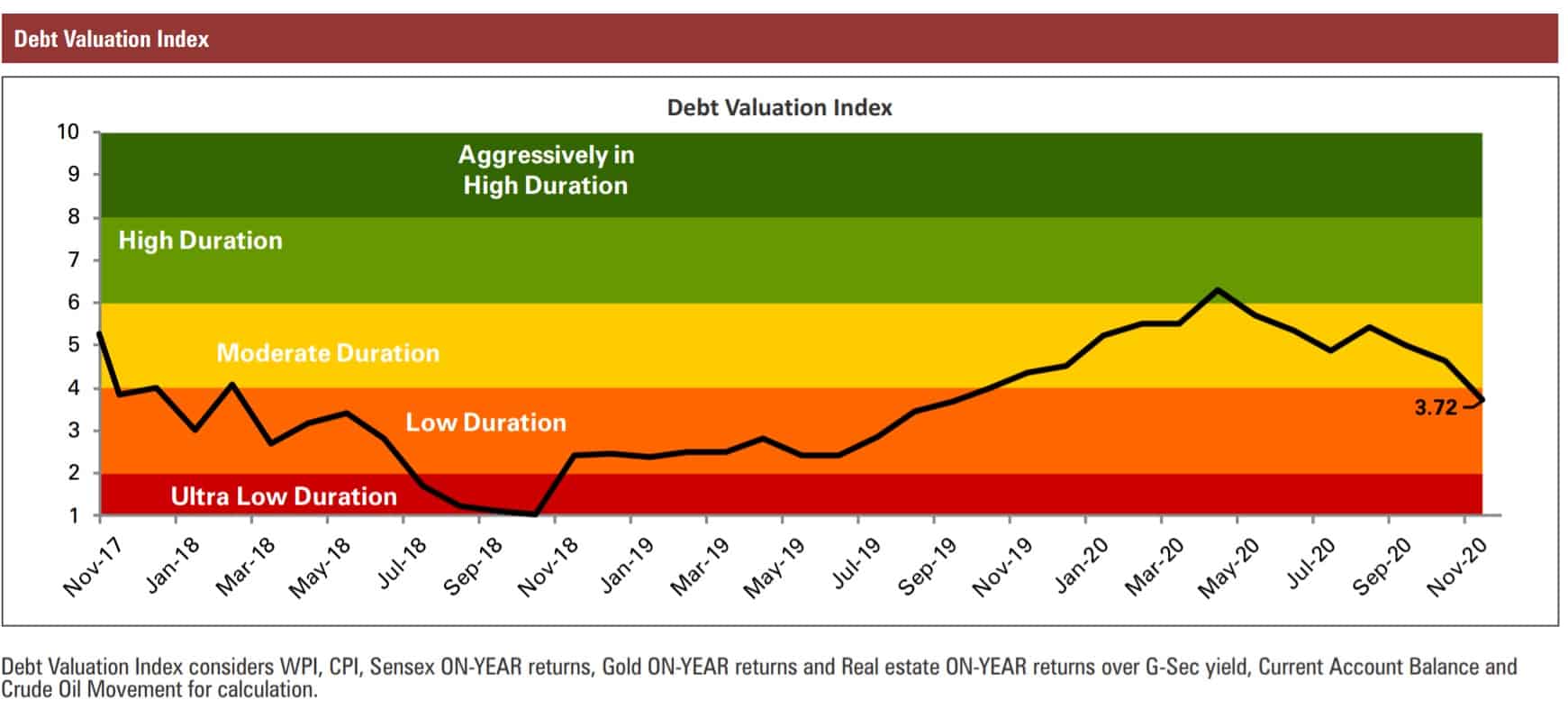
The fund will use the AMC’s debt valuation index published each month in their factsheets.
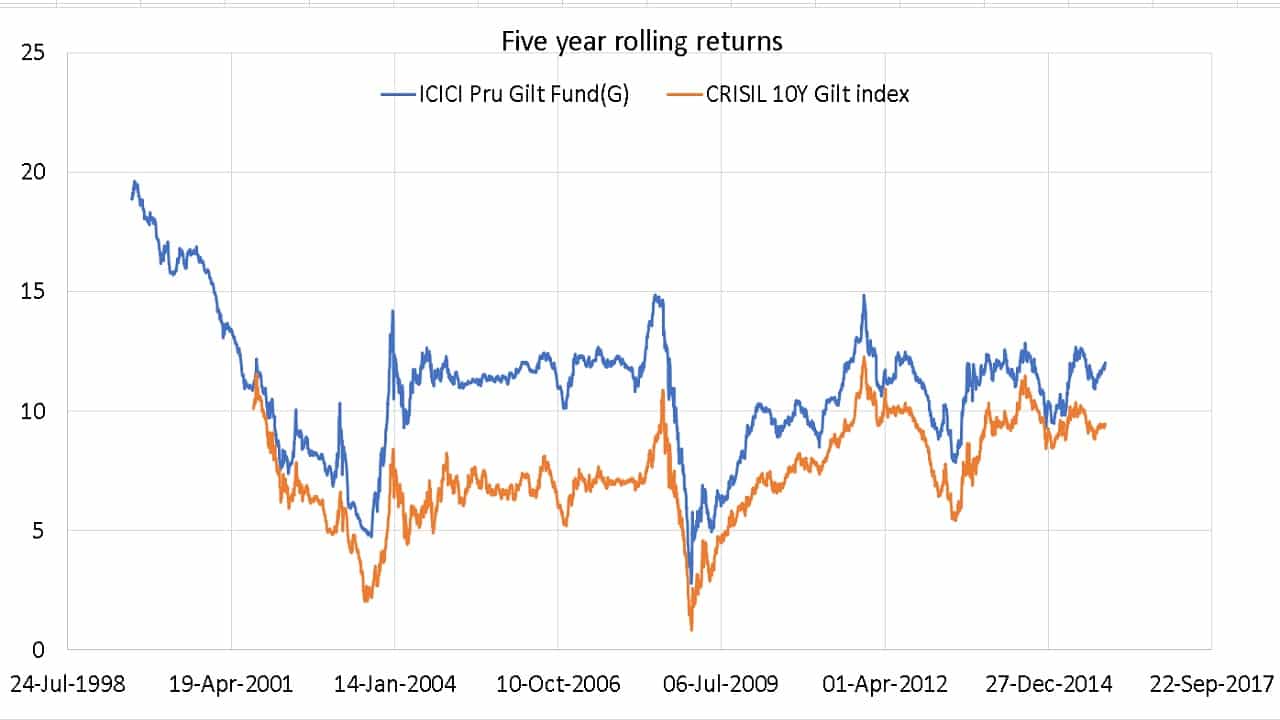
Finally, the rolling returns over five years compared with a ten-year gilt index. That is reasonable outperformance (the regular plan was used for history)
The plan: Invest each in ICICI Gilt Fund along with other equity investments. Whenever there is a large gain, shift some of it to the arbitrage fund.
Caution: I have chosen ICICI Gilt Fund because I have experience with gilt volatility; my financial goal can afford this volatility. I can afford to invest at a time when rates are about to increase and returns from these funds would turn negative (because that is not a consideration for my need). Kindly do not choose the fund based on this article.