In this edition of the reader story, we meet a 41-year-old unmarried woman who freelances to earn a monthly income of Rs 50,000.
Opinions expressed in reader stories do not necessarily represent the views of freefincal or its editors. We must appreciate multiple solutions to the money management puzzle and empathise with diverse views. Articles are typically not checked for grammar unless it is necessary to convey the right meaning and preserve the tone and emotions of the writers.
If you would like to contribute to the DIY community in this manner, send your audits to freefincal AT Gmail dot com. You can publish them anonymously if you wish.
Please note: We welcome such articles from young earners who have just started investing. See, for example, this piece by a 29-year-old: How I track financial goals without worrying about returns. We also have a “mutual fund success stories” series. See, for example, how mutual funds helped me achieve financial independence. Now, over to the reader.
I belong to a middle-class family and have two siblings. Both my parents worked in the private sector and, like most people of their generation, were extremely hardworking and frugal. Growing up, our parents ensured we (the kids) always had everything, but wasting anything was frowned upon.
Join 32,000+ readers and get free money management solutions delivered to your inbox! Subscribe to get posts via email! (Link takes you to our email sign-up form)

🔥Want to create a complete financial plan? Learn goal-based investing? Exclusive access to our DIY tools? Increase your income with your skills? Use this link to enjoy massive discounts on our robo-advisory tool & courses! 🔥
My parents stayed away from Mutual Funds but had some stocks because my mother (who worked in a private company) got some ESOP. She never even wanted it, but a Gujarati colleague of hers browbeat her into opting for it, telling her ‘Madam, you will never regret it’. She didn’t. It helped them fund the purchase of our house and some other assets, yet they never ventured beyond that in stocks. Growing up, I learned to put safety before everything else when it came to money.
I began working when I was 23 with a salary of 15000. I gave some for household expenses and saved the rest. My parents never demanded any money from us and, in fact, encouraged us to save. This resulted in a LIC policy sold by an uncle (who else) as well as several FDs. Another uncle, a friend of my parents, sold me an MF in which I invested Rs 50,000 and got Rs 50,010 at the end of three years.
I worked in a newspaper for some time and was surrounded by people who spoke about MFs and stocks. I would wonder at the audacity of people who were willing to put their money in them. For me, FDs were the holy grail of investing, and I regularly invested in them. I had no understanding of inflation and always assumed jobs were permanent and salaries always went up, even if the hike was 1%.
One of my bosses, a Gujarati, was keen on getting young people to invest in MFs, and he asked me to do so. He even recommended a few MFs (he was not a distributor), but other than peppering him with queries, I never actually invested in anything. Eventually, he convinced me to invest Rs 2000 per month, and so after 5-6 years of researching, I finally decided to invest in an MF but only invested Rs 500 per month for 5 years and then stopped.
His constant talk about MFs and stocks however got me interested, and I began reading up on them. Eventually, I invested in a few MFs of HDFC (Rs 2000) through banks (I thought I was investing directly, but did not realise it was not a direct investment). My monthly investments did not cross Rs 5000 per month, even though my salary had increased. It took some more years before I realised why I needed to up my investments. Now I went full throttle, sometimes investing up to 60% to 70% of my income via SIP. I had also shifted most of my MFs to direct.
It helped that I was unmarried, lived with my parents, who, though uninsured, were healthy, and I only had to contribute a fixed amount to my household expenses. I also read up on PPF and, in 2010/11, opened one after being lured by a PPF calculator about how much money I could get at the end of 15 years. In those days, the max PPF limit was Rs 70,000, but the interest was good (I think 8%). Since I understood FD, PPF was a no-brainer, and I maxed out my investment limits before April 5 in most years.
I also dabbled in stocks and even hired a stock advisor (talk about going from one extreme to another) after reading too many blogs on stocks (in those days, blogs often gave stock recommendations). I stopped the service of my stock advisor after just 2 years, mostly because of poor service (note: it was because of poor service, not poor advice).
I have no clue what I gained or lost in following his advice, but most of it worked out (just dumb luck). However, since the amount I invested was low (never buying more than 100 units of each stock, most of which were priced in double digits), my gains were not substantial. I also did some stock buying of my own (after reading blogs) and on the advice of my stockbroker, most of which were hits and misses. The price of most stocks I own is now more than their purchase price, but in % terms, the returns are minuscule.
The one thing that truly helped me in my financial journey is automation. Once I automated my MFs, I checked them only once a month when the statement was sent. Eventually, I hired the services of a financial advisor after reading Freefincal. I have been following Freefincal, Asan Ideas for Wealth and some other blogs and now have a better understanding of personal finance. Most of my knowledge is self-gained. I also used to read Jagoinvestor and later got myself a term life insurance.
Interestingly, despite reading so much on personal finance, I never had health insurance and bought it only after COVID. In fact, COVID scared me into buying it. I delayed health insurance because I wanted the best of the best, and never got around to buying it until COVID.
Another thing that helped me in my financial journey was debt avoidance. My parents never got a loan. They always taught us to gather the funds before buying something. That’s how they bought their assets (which are mostly illiquid). This created in me an aversion to debt. I never buy anything on EMI, can resist impulsive purchases, often think twice before spending money and have an unnatural fear of credit cards.
The fact that I chose to remain unmarried also helped me a lot in my financial journey. With no one to dictate how I handle my finances (my dad once got angry with me when I told him of my term life insurance. He called it a waste of my money and an example of how easily I get fooled!), I don’t have the pressure that a lot of other women face from their in-laws, spouse and kids. My parents are also pretty non-interfering; they never ask me what I earn and go out of their way to tell us again and again to save.
I lost my job in 2019 and began freelancing, but somehow, through the ups and downs of my career, I never stopped my SIPs. Sometimes I reduced it, sometimes I jacked it up, but never stopped it. Though my MFs are not top performers, I today have a net worth of around 30% of my targeted retirement fund.
Given the job sector, I don’t think I will work past 55, but am trying to upskill myself to earn better.
Over the years, having read a lot about personal finance and having interacted with a lot of knowledgeable people in various groups, I realise that women like me are the exception, not the norm. Most people are ignorant about finance and investment, and most women hardly know anything about it. I am not sure if you can call me a successful investor, but I am happy with where I am. I made many mistakes, but I also realise I have been very, very lucky. I have realised that the more I work on my finances, the better my luck gets. Moreover, I am not in a hurry to reach my target.
I am now learning to slow down, do the things I want to do and enjoy life because there is no point in reaching your retirement target only to realise your body won’t support you for the activities you want to do. Hence, I also withdraw money from my savings/investments for travel and such, again, no one to question me because I am not married. I believe consistency is the key to managing your finances. Also, there will always be someone who does better than you, but the trick is to keep walking your unique path, however small the steps you take.
What I did right
Never stopped my SIPs once I started them. Changed funds, reduced/increased SIP amount, but never stopped since I began when I was 29.
Fully invested in PPFs and continue to do so even after the 15-year period came to an end.
Reading up on finance and investments. This has single-handedly been my greatest advantage.
Joint family. Living with my parents and siblings helped split expenses even during financially difficult times, ensuring I rarely had to shell out big money and could continue my investments.
Keeping track of my expenses. I always write down what I am spending to know how much I am spending. Earlier, I never included insurance payments and such in the list, but now I do that too, and it has been an eye-opener. I found out I am not as frugal as I thought. I spend a lot on things such as hair oil, massage and body massage!
Having parents who are extremely non-demanding (no demands for clothes, tours or anything else). My mother recently got operated on, and she offered us money from her FD for the procedure. We did not accept it and funded it on our own, but you get the gist.
Ok, now this is going to be controversial, but I think part of my success comes from being unmarried. We (my siblings and I) have so far chosen to remain unmarried. This has saved my parents a lot of money (although that is not why we remained unmarried). As a result, they still have a reasonably good net worth. As a single woman, I have the freedom to do with my money as I please, something that would have been extremely difficult if I were married (husband/in-laws wanting your earnings/ deciding how you spend it is the reality of many Indian marriages). Since my siblings are also unmarried, there are no fights about household expenses. We divide everything into three. We three give a fixed amount for household expenses, and split all the bills. Any shortfall in household expenses is covered by parents (who don’t have a pension). We have told them not to do it, but they do it anyway.
What I did wrong
Not starting early. I know my net worth would be at a different level had I started at 23 or even 25 and just increased my SIP by 10%.
Not getting health insurance early. I got my health insurance when I was in my late 30s. Had I got it early, I would have been able to increase the Sum Insured for a small rise in premium when I was relatively younger.
Sticking to one job for too long. I was in the same company for 15 years, and as a result, my hikes and earnings suffered. Got many offers, but never jumped because I liked the place and the people.
Putting my work before my health, never asking for a hike and accepting what I got. Big mistake. You get what you ask for.
Being nice. It will get you a lot of praise, but that will not take you far. Standing your ground is important, be it in office or personal life. Women get labelled as aggressive, dominant and difficult for asking too many questions and challenging what is generally accepted. Most of my male friends have no clue about my net worth and often ignore me when they talk about finance (saying tujhe nahi samaj ayega). I often play dumb and ask questions, absorb the knowledge, and silently make changes in my finances after due diligence.
My weaknesses
Decision paralysis: I struggle with this a lot. I collect a lot of information, read and research like crazy on a subject and then fail to act on it.
Getting obsessed with retirement targets: I believe I have done reasonably well, yet I struggle to spend my money without guilt or fear of not having enough for the future. I hate it when I travel and weigh every decision on how much it will cost me. I want to be able to spend my money without guilt, but struggle to do so.
Real estate: This is one aspect of personal finance that I find extremely dense and struggle to understand. It has made me wary of buying real estate simply because I don’t know how it works.
Technology: I struggle with technology and only recently started using net banking. I used to fill out my MF forms manually until a few years ago. I am so wary of it that every time I invest online or transact online, it gives me anxiety.
What can drown my boat?
My parents’ illness: This is a serious risk I carry. My parents are uninsured. They are both 75+ and never got insured. We tried to get them on insurance when they were below 65, but they called it a waste of money and absolutely refused, since I had company insurance. So far, they have not had any major operations (except for cataract and such), and we were able to cover them from corporate insurance or our own money. But if they were to be hospitalised for long, it truly has the potential to sink us. They have clearly said that if they ever require long-term hospitalisation, we should never opt for it, and they would prefer to be at home and die…but they know, and we know, we are not going to give up on them so easily.
My siblings: I enjoy excellent relationships with my siblings, and we hardly fight, but they are financially very imprudent. They have no bad habits and earn well, but don’t save anything. They are not big spenders, but don’t invest much either, and I fear they won’t have enough when they retire. This means I will have to support them, which means the retirement money I need goes up.
Job loss: I do freelancing and am not sure how long my income will continue. I find the job market very shaky, and with AI, I worry about my future income.
Reader stories published earlier:
As regular readers may know, we publish a personal financial audit each December – this is the 2024 edition: Portfolio Audit 2024: The Annual Review of My Goal-Based Investments. We asked regular readers to share how they review their investments and track financial goals.
- First audit: How Suhas tracks his MF investments and reviews financial goals.
- Second audit: How Avadhoot Joshi evaluates his investment portfolio.
- Third audit: How a single mom is on track to financial freedom
- Fourth audit: How Gowtham started goal-based investing & took control of his money
- Fifth audit: Why my financial independence & early retirement plans were postponed by four years
- Sixth audit: How Abhisek funded his marriage & is on track to financial freedom.
- Seventh audit: How Rohit’s early struggles defined his investment journey
- Eighth audit: Why my investments are still on track despite job loss and lower income.
- Ninth audit: How a retirement planning calculation scared me to take action
- Tenth audit: I made several investment mistakes but have turned my life around.
- Eleventh audit: My net worth doubled in the last financial year, thanks to patient investing!
- Update: How I achieved investing nirvana.
- Twelfth audit: My financial journey: from novice to goal-based investor.
- Thirteenth audit: My journey: from a negative net worth to goal-based investing.
- Fourteenth audit: From Fixed Deposits to Goal-based investing in MFs.
- Fifteenth audit: My 10-year financial journey – mistakes made and lessons learnt.
- Sixteenth audit (part 1): How I achieved financial independence without mutual funds or stocks.
- Sixteenth audit (part 2): Lessons from my financial independence journey and future investment plans.
- Seventeenth audit: How I plan to achieve financial independence and move to my native place
- Eighteenth audit: I used the current bull run to reduce my mutual funds from 14 to 4!
- Nineteenth audit: How a conservative investor created his financial plan
- Twentieth audit: I plan to achieve financial independence by 46; this is my master plan
- Twenty-first audit: I have made many investment mistakes but am on course to financial independence by 45.
- Twenty-second audit: I felt worthless six years ago but have achieved financial stability today
- Twenty-third audit: My financial journey was directionless until age 40: this is how I made up for lost time
- Twenty-fourth audit: Why I increased equity MF investments by 275% and reduced PPF contributions.
- Twenty-fifth audit: How I track financial goals without worrying about returns
- Twenty-sixth audit: I am 24 and started investing 1Y ago, but what am I investing for?
- Twenty-seventh audit: How we plan to achieve a retirement corpus 50 times our annual expenses.
- Twenty-eighth audit: I thought equity investing was a gamble, but now I aim to hold 60% equity for retirement
- Twenty-ninth audit: My journey: From 5 lakhs in debt to building a corpus worth six years in retirement
- Thirtieth audit: My investment journey: From random purchases to a goal-based portfolio
- Thirty-first audit: My investment journey: from product-driven to process-driven
- Thirty-second audit: How a young couple is trying to balance travelling and investing
- Thirty-third audit: My journey: From Rs. 30 bank balance to financial independence
- Thirty-fourth audit: Our journey: From scratch to a net worth of 18 times annual expenses.
- Thirty-fifth audit: From a net worth of Rs. 6000 to auto-pilot goal-based investing
- Thirty-sixth audit: How I retired from corporate bondage at 46, two years ago!
- Thirty-seventh audit: How I learnt to keep it simple and build a net worth 19 times my annual expenses
- Thirty-eighth audit: How Abhineeth plans to achieve financial independence and build a house.
- Thirty-ninth audit: How Sahil plans to achieve financial independence by efficient tracking
- Fortieth audit: My Journey to a Ten Crore Portfolio
- Forty-first audit: Burdened with debt for several years, I am now aggressively investing in equity
- Forty-second audit: From Engineer to Librarian after Financial Independence and Early Retirement (FIRE)
- Forty-third audit: I lost six months’ income in F&O and ditched it for systematic investing
- Forty-fourth audit: My retirement plan to handle the harsh realities of the IT industry
- Forty-fifth audit: My investment journey: mistakes, 10 years of MF investing and recovery
- Forty-sixth audit: My MF portfolio is worth six crores despite multiple mistakes
- Forty-seventh audit: Saving, Investing, and Running Marathons: My 25-year Journey to Financial Independence
- Forty-eighth audit: Never Too Late to Start: How I Became Financially Savvy at 40
- Forty-ninth audit: My Investment Journey to a net worth 29 times my annual expenses
- Fiftieth audit: How I audit my portfolio without tracking returns
- Fifty-first audit: Financial Lessons Learned During and After a PhD
- Fifty-second audit: Investment & Financial journey of a 23 year old
- Fifty-third audit: The system I use to draw income and spend after retirement securely
- Fifty-fourth audit: From Start-Up Employee to Millionaire: A Success Story of Resilience and Smart Investing
- Fifty-fifth audit: 25-Year-Old Software Engineer’s Investment Journey: From Stocks to Mutual Funds and Beyond
- Fifty-sixth audit: Crossing the Million Mark: Our Journey to the First Crore
- Fifty-seventh audit: Navigating Market Volatility: How an IT Professional Transformed His Investment Approach for Retirement
- Fifty-eighth audit: How Sahil achieved a 10X retirement corpus by efficient portfolio tracking
- Fifty-ninth audit: How I achieved financial freedom by 45 without onsite assignments or ESOPs
- Sixtieth audit: Building Wealth on a Government Salary: Lessons Learned
- Sixty-first audit: Minimalism, Index Funds, and Staying Calm: My Investing Journey at 28
- Sixty-second audit: Building Wealth and Breaking Barriers: How Swati Took Control of Her Financial Future
- Sixty-third audit: My financial journey: How I missed the Compounding Bus!
- Sixty-fourth audit: My MF investment journey: From thematic funds to a 3-fund portfolio
- Sixty-fifth audit: From Debt to ₹1 Crore Liquid Net Worth: My Journey of Financial Awareness.
These published audits have had a compounding effect on readers. If you would like to contribute to the DIY community in this manner, send your audits to freefincal AT Gmail. You can also publish them anonymously.

Use our Robo-advisory Tool to create a complete financial plan! ⇐More than 3,000 investors and advisors use this! Use the discount code: robo25 for a 20% discount. Plan your retirement (early, normal, before, and after), as well as non-recurring financial goals (such as child education) and recurring financial goals (like holidays and appliance purchases). The tool would help anyone aged 18 to 80 plan for their retirement, as well as six other non-recurring financial goals and four recurring financial goals, with a detailed cash flow summary.
🔥You can also avail massive discounts on our courses and the freefincal investor circle! 🔥& join our community of 8000+ users!
Track your mutual funds and stock investments with this Google Sheet!
We also publish monthly equity mutual funds, debt and hybrid mutual funds, index funds, and ETF screeners, as well as momentum and low-volatility stock screeners.
You can follow our articles on Google News

We have over 1,000 videos on YouTube!

Join our WhatsApp Channel
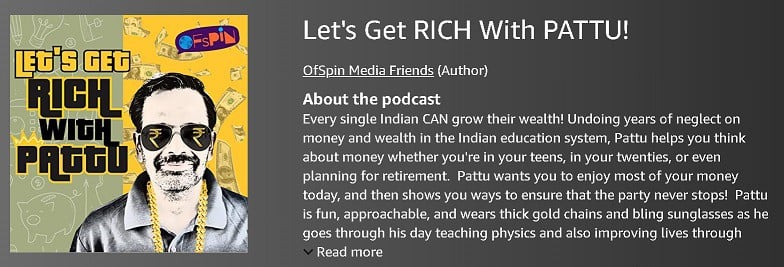
- Do you have a comment about the above article? Reach out to us on Twitter: @freefincal or @pattufreefincal
- Have a question? Subscribe to our newsletter using the form below.
- Hit 'reply' to any email from us! We do not offer personalised investment advice. We can write a detailed article without mentioning your name if you have a generic question.
Join 32,000+ readers and get free money management solutions delivered to your inbox! Subscribe to get posts via email! (Link takes you to our email sign-up form)
About The Author
 Dr M. Pattabiraman (PhD) is the founder, managing editor and primary author of freefincal. He is an associate professor at the Indian Institute of Technology, Madras. He has over 13 years of experience publishing news analysis, research and financial product development. Connect with him via Twitter(X), LinkedIn, or YouTube. Pattabiraman has co-authored three print books: (1) You can be rich too with goal-based investing (CNBC TV18) for DIY investors. (2) Gamechanger for young earners. (3) Chinchu Gets a Superpower! for kids. He has also written seven other free e-books on various money management topics. He is a patron and co-founder of “Fee-only India,” an organisation promoting unbiased, commission-free, AUM-independent investment advice.
Our flagship course! Learn to manage your portfolio like a pro to achieve your goals regardless of market conditions! ⇐ More than 3,500 investors and advisors are part of our exclusive community! Get clarity on how to plan for your goals and achieve the necessary corpus no matter the market condition!! Watch the first lecture for free! One-time payment! No recurring fees! Life-long access to videos! Reduce fear, uncertainty and doubt while investing! Learn how to plan for your goals before and after retirement with confidence.
Increase your income by getting people to pay for your skills! ⇐ More than 800 salaried employees, entrepreneurs and financial advisors are part of our exclusive community! Learn how to get people to pay for your skills! Whether you are a professional or small business owner seeking more clients through online visibility, or a salaried individual looking for a side income or passive income, we will show you how to achieve this by showcasing your skills and building a community that trusts and pays you. (watch 1st lecture for free). One-time payment! No recurring fees! Life-long access to videos!
Our book for kids: “Chinchu Gets a Superpower!” is now available!


Must-read book even for adults! This is something that every parent should teach their kids right from their young age. The importance of money management and decision making based on their wants and needs. Very nicely written in simple terms. - Arun.Buy the book: Chinchu gets a superpower for your child!
How to profit from content writing: Our new ebook is for those interested in getting a side income via content writing. It is available at a 50% discount for Rs. 500 only!
Do you want to check if the market is overvalued or undervalued? Use our market valuation tool (it will work with any index!), or get the Tactical Buy/Sell timing tool!
We publish monthly mutual fund screeners and momentum, low-volatility stock screeners.
About freefincal & its content policy. Freefincal is a News Media organisation dedicated to providing original analysis, reports, reviews and insights on mutual funds, stocks, investing, retirement and personal finance developments. We do so without conflict of interest and bias. Follow us on Google News. Freefincal serves more than three million readers a year (5 million page views) with articles based only on factual information and detailed analysis by its authors. All statements made will be verified with credible and knowledgeable sources before publication. Freefincal does not publish paid articles, promotions, PR, satire or opinions without data. All opinions will be inferences backed by verifiable, reproducible evidence/data. Contact Information: To get in touch, please use our contact form. (Sponsored posts or paid collaborations will not be entertained.)
Connect with us on social media
- Twitter @freefincal
- Subscribe to our YouTube Videos
- Posts feed via Feedburner.
Our publications
You Can Be Rich Too with Goal-Based Investing
 Published by CNBC TV18, this book is designed to help you ask the right questions and find the correct answers. Additionally, it comes with nine online calculators, allowing you to create custom solutions tailored to your lifestyle. Get it now.
Gamechanger: Forget Startups, Join Corporate & Still Live the Rich Life You Want
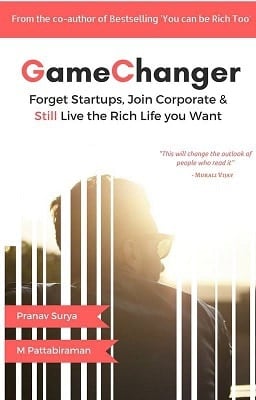 This book is designed for young earners to get their basics right from the start! It will also help you travel to exotic places at a low cost! Get it or gift it to a young earner.
Your Ultimate Guide to Travel
 This is an in-depth exploration of vacation planning, including finding affordable flights, budget accommodations, and practical travel tips. It also examines the benefits of travelling slowly, both financially and psychologically, with links to relevant web pages and guidance at every step. Get the PDF for Rs 300 (instant download)